
Table of Contents
- What Botanical Ingredients Are and Why They Matter for Skin
- How Botanical Extracts Protect and Nourish Skin
- Botanical Ingredients for Sensitive Skin and Mature Skin Concerns
- Botanical Skincare Ingredient Safety and What You Need to Know
- How to Patch Test Skincare Products Before Full Application
- Botanical Ingredients Compared With Synthetic Actives
- Building a Botanical Skincare Routine That Works for You
- Frequently Asked Questions
Last Updated: October 10, 2026
What Botanical Ingredients Are and Why They Matter for Skin
Botanical ingredients are plant-derived compounds, oils, extracts, waters, and powders that have been used in skincare for centuries, and understanding the benefits of botanical ingredients in skincare helps you make informed choices about what touches your face. When we talk about benefits of botanical ingredients in skincare, we're referring to how these natural plant components work to cleanse, protect, nourish, and heal skin. At Charmed Valley Farm, we believe that understanding what botanicals actually do, beyond marketing claims, helps you make informed choices about what touches your face.
The difference between a botanical ingredient and a synthetic one isn't just philosophy. It's about how your skin responds. Plant extracts contain multiple active compounds working together, while synthetic actives are often isolated molecules. For mature skin, sensitive skin, or anyone tired of chemical-heavy formulas, botanicals offer a gentler entry point into targeted skincare.
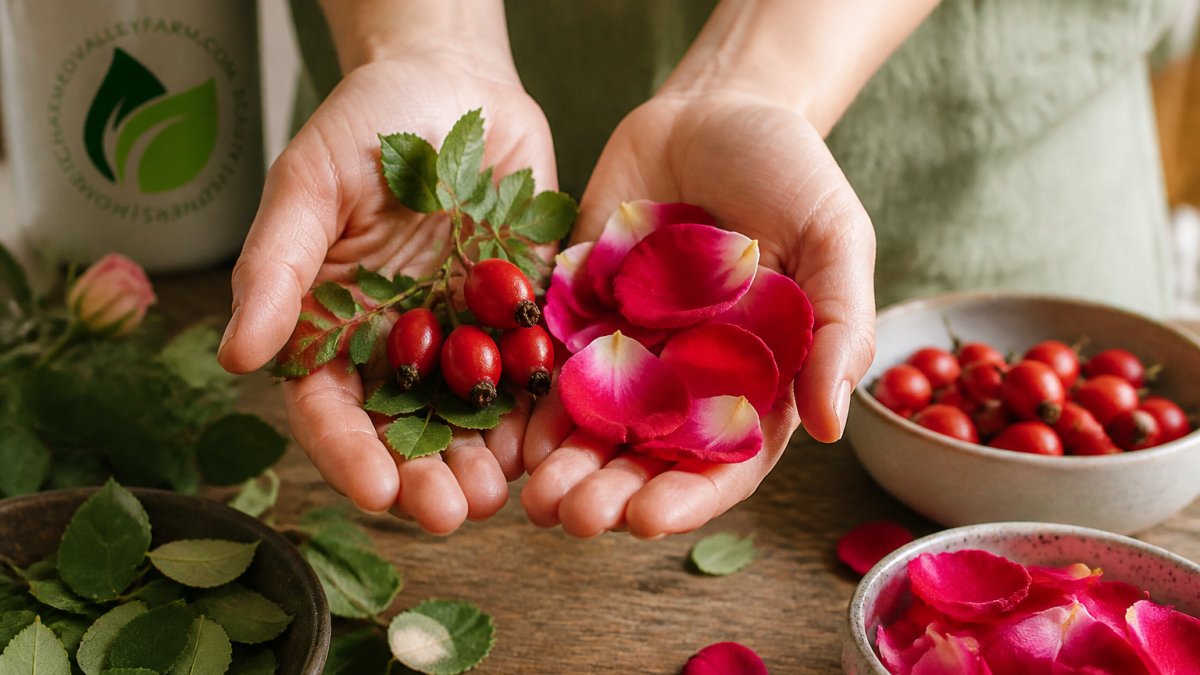
How Botanical Extracts Protect and Nourish Skin
Plant extracts deliver their benefits through natural compounds that have evolved to protect the plant itself, and those same protective mechanisms can benefit your skin, but the strength of evidence varies widely by ingredient, and marketing claims often outpace the research.
Antioxidant Protection Against Environmental Stressors: Evidence and Limits
Antioxidants from botanical ingredients neutralize free radicals, unstable molecules that damage skin cells when exposed to pollution, UV rays, and oxidative stress. Green tea, grape seed extract, and rosehip oil are rich in polyphenols that shield skin from environmental damage.
However, the evidence for botanical antioxidants is not uniform. Green tea extract has the strongest research backing: multiple peer-reviewed studies show that topical green tea polyphenols reduce UV-induced skin damage and improve skin elasticity in human trials.
This matters because a product labeled "antioxidant botanical blend" may contain one well-researched ingredient (green tea) and several with only preliminary or traditional-use evidence. The antioxidant benefit you experience depends on which botanicals are present, in what concentration, and how stable they remain in the formulation.
What the research actually shows: Topical antioxidants slow visible signs of aging and protect against further environmental damage, but they do not reverse existing sun damage or deep wrinkles. This protection matters most for prevention and for mature skin trying to slow further deterioration.
Hydration, Nourishment, and Skin Barrier Support
Your skin barrier, the outermost layer that holds moisture in and irritants out, weakens with age and exposure. Botanical oils like cold-pressed sunflower oil, rosehip, and cacay oil contain essential fatty acids and vitamins that restore barrier function. When your barrier is strong, hydration stays locked in, and irritation decreases.
Unlike antioxidant claims, the mechanism here is well-established: essential fatty acids (linoleic acid, oleic acid) are structural components of the skin barrier. Topical oils that contain these fatty acids measurably improve barrier function and reduce transepidermal water loss (TEWL), the amount of water that evaporates from your skin.
The difference between botanical oils and synthetic moisturizers is consistency and tolerability, not necessarily superior efficacy. A botanical oil may feel lighter or absorb differently than a silicone-based moisturizer, making it preferable for certain skin types, but both can hydrate and support barrier function.
Applied to damp skin, botanical oils plump fine lines and improve skin texture within weeks of consistent use because water acts as a carrier, helping the oil penetrate deeper and spread more evenly.
Anti-Inflammatory and Soothing Effects: Traditional Use vs. Clinical Evidence
Redness, reactivity, and inflammation are signs your skin barrier is compromised. Botanical ingredients like lavender, clary sage, and yarrow have been used for centuries to calm irritated skin. These ingredients contain compounds (such as linalool in lavender and azulene in chamomile) that reduce inflammatory markers in laboratory studies.
However, the evidence for anti-inflammatory botanicals in human skin is mixed. Chamomile and calendula show promise in clinical trials for reducing redness and supporting wound healing, with several peer-reviewed studies supporting their use in sensitive or irritated skin. Lavender has strong traditional use but fewer rigorous human studies; some people find it soothing while others experience irritation or allergic reactions.
For sensitive skin, anti-inflammatory botanicals mean you can address concerns like acne or hyperpigmentation without the irritation that comes with stronger synthetic actives like retinoids or acids. But the soothing effect is often gentler and slower than prescription-strength anti-inflammatory treatments, making botanicals better suited for prevention and maintenance than for acute inflammation.
Botanical Ingredients for Sensitive Skin and Mature Skin Concerns
Plant Extracts for Dryness, Redness, and Reactivity
Sensitive skin often means your skin barrier is compromised, making it reactive to both environmental triggers and skincare ingredients themselves. Botanical ingredients for sensitive skin work because they're gentler and less likely to trigger inflammation.
Chamomile, calendula, and honeysuckle reduce redness and soothe reactive skin without the harshness of chemical irritants. If you've experienced irritation from conventional skincare, botanical alternatives give your skin a chance to heal while still addressing your concerns.
Botanicals for Fine Lines, Hyperpigmentation, and Visible Aging
Mature skin concerns, fine lines, uneven tone, loss of elasticity, respond well to botanical ingredients that support collagen synthesis and cell turnover. Rosehip oil contains vitamin A and antioxidants that stimulate collagen production. Grape seed extract and green tea polyphenols protect against further collagen breakdown.
Hyperpigmentation and sunspots fade more slowly with botanicals than with prescription-strength actives, but the gentler approach means less irritation and a lower risk of creating new sensitivity issues.
Botanical Skincare Ingredient Safety and What You Need to Know
Allergies, Irritation, and Essential Oil Risks
Not all botanical ingredients are safe for all skin types. Essential oils, concentrated plant extracts, can irritate sensitive skin or trigger allergic reactions. The Flower Water Face Toner contains trace amounts of essential oils.

If you have a history of plant allergies or sensitive skin, start with products that list their botanical ingredients clearly and avoid those you know trigger reactions.
Formulation Quality, Extraction Methods, and Ingredient Stability
The botanical ingredient itself matters far less than how it's extracted, concentrated, preserved, and packaged. Two products containing rosehip oil can deliver vastly different results depending on formulation quality.
Extraction methods determine which compounds end up in the final product. Cold-pressed oils (like cold-pressed sunflower oil) retain heat-sensitive vitamins and fatty acids that hot-pressed or solvent-extracted versions lose. Look for products that specify their extraction method, transparency here signals quality control.
Concentration and standardization are equally critical. A botanical extract listed fifth in the ingredient list contributes less active benefit than one listed first.
Oxidation and shelf life determine whether active compounds degrade before you use the product. Botanical oils oxidize when exposed to light, heat, and air.
Preservation systems prevent bacterial and mold growth in water-based botanical products like toners and hydrosols. Without preservatives, a botanical toner becomes unsafe within days. Understanding the preservation method helps you choose a product that balances safety with your skin's tolerance.
Reading Labels and Identifying Quality Formulations
Quality botanical skincare products preserve the active compounds in plant ingredients. Look for products stored in dark glass bottles, kept away from direct sunlight, and used within 12 months of purchase.
The ingredient list tells you everything. Botanical ingredients should appear early in the list (within the first 5-6 ingredients) and be listed by botanical name (Latin name, not just common name). For example, "Rosa canina" (rosehip) is more specific and traceable than "rosehip oil."
When comparing two products with similar botanical ingredients, check for these markers of quality: extraction method stated on the label or website, dark or opaque packaging, and a use-by date within 12-18 months of purchase. Products that list "botanical extract" without specifying the plant, extraction method, or concentration are likely lower-potency formulations.
How to Patch Test Skincare Products Before Full Application
Patch testing prevents allergic reactions and irritation before you apply a product to your entire face. Here's how:
- Choose a small area of skin (inner arm or behind ear) that's similar in sensitivity to your face
- Apply a dime-sized amount of the product and leave it for 24-48 hours
- Watch for redness, itching, burning, or swelling
- If no reaction occurs, the product is likely safe for your face
This simple step protects sensitive skin and lets you confidently introduce new botanical products into your routine.
Botanical Ingredients Compared With Synthetic Actives
Synthetic actives are isolated, lab-created molecules designed to target specific skin concerns. Retinol, niacinamide, and salicylic acid are synthetics. Botanical ingredients contain multiple compounds working together, less targeted, but often gentler and less irritating.
For mature skin or sensitive skin, botanicals are often the better starting point. You can always layer in a synthetic active later if needed. But starting with synthetic actives and then trying botanicals usually means your skin is already irritated, making it harder to see the botanical benefits.
Building a Botanical Skincare Routine That Works for You
A simple botanical routine starts with cleansing, toning, and moisturizing. The Flower Face Duo pairs the Flower Water Face Toner with the Flower Oil Face Serum, two steps that address hydration, barrier support, and antioxidant protection. For those ready to deepen their routine, the Flower Face Spa Box adds a rose quartz gua sha stone for improved circulation and reduced puffiness.

Consistency matters more than complexity. Use your botanical products daily for at least 4 weeks before deciding if they're working. Skin cell turnover takes time, and the benefits of botanicals build gradually.
Botanical skincare works best when you understand what each ingredient actually does and choose products formulated with care and transparency. Our Flower Oil Face Serum and Flower Water Face Toner deliver the antioxidant protection, hydration, and soothing effects that mature and sensitive skin need, without synthetic chemicals or fillers. Learn more about our botanical skincare line and discover how plant-based beauty can transform your skin.
Frequently Asked Questions
What are the main benefits of botanical ingredients in skincare?
Botanical ingredients deliver multiple benefits: antioxidants protect skin from environmental stressors and free radicals, polyphenols and flavonoids support skin health, essential fatty acids and vitamins hydrate and nourish, and plant extracts reduce inflammation and soothe redness. Many botanicals also support collagen synthesis and skin repair, helping address fine lines, hyperpigmentation, and visible signs of aging across all skin types.
Are botanical ingredients safe for sensitive skin?
Many botanical ingredients are well-tolerated by sensitive skin, but not all. Some plant extracts, especially essential oils, can trigger irritation or allergic reactions in reactive skin. Patch test any new botanical skincare product on a small area first. Look for formulations with known soothing botanicals, and avoid products with high concentrations of essential oils if your skin is prone to sensitivity.
How do I know if a botanical skincare product is actually effective?
Check the ingredient list for named plant extracts rather than vague terms like 'plant complex.' Look for cold-pressed or distilled formulations, which preserve active botanical properties. Quality matters: products without preservatives require proper storage and shorter shelf lives (typically 12 months).
How should I patch test a new botanical skincare product?
Apply a small amount of the product to a discreet area like your inner arm or behind your ear. Wait 24-48 hours and watch for redness, itching, burning, or other signs of irritation. If no reaction occurs, introduce the product to your face gradually, starting 2-3 times per week before daily use. This approach helps identify sensitivities before the product affects your entire face.