
Table of Contents
- Why Fresh Ingredients Matter in Farm to Face Beauty
- The Organic Botanical Skincare Benefits You Can See
- Understanding the Shelf Life of Natural Skincare Products
- How to Evaluate Clean Beauty Claims
- Are Farm to Face Products Worth the Cost?
- Farm to Face Beauty vs. Conventional Skincare
- The Bottom Line on Farm to Face Beauty
- Frequently Asked Questions
Last Updated: September 9, 2026
Farm to face beauty is a skincare philosophy built on fresh, nutrient-dense botanicals that travel directly from farm to skin with minimal processing. At Charmed Valley Farm, we grow this through our #Farm2Face flower-based skincare line, where organic ingredients remain at peak potency.

Why Fresh Ingredients Matter in Farm to Face Beauty
Fresh ingredients matter because bioactive compounds degrade over time; an oil pressed shortly after harvest retains more phytonutrients than one sitting on a warehouse shelf for months (peer-reviewed research).
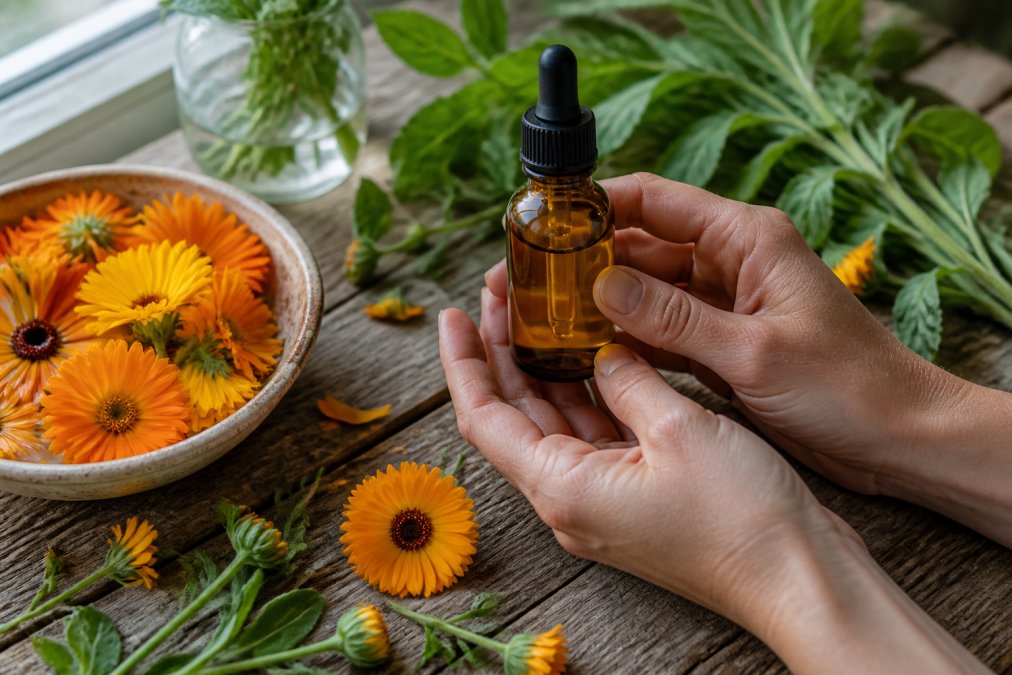
Cold-pressed, small-batch skincare avoids the high heat and chemical solvents that strip oils of their fatty acid profile, making them gentler for reactive skin (PubMed).
The Organic Botanical Skincare Benefits You Can See
Organic botanical skincare benefits extend beyond the absence of synthetic chemicals: antioxidant-rich plant extracts neutralize stressors that accelerate visible aging, while vitamin-rich formulas support natural repair.
Realistic expectations from consistent use: improved hydration and plumpness, reduced fine lines as antioxidants support collagen, and balanced oils with decreased redness from calming flower-based ingredients.
Many women report calmer, less reactive skin, but the shift requires patience since natural actives work more gently than lab-engineered counterparts.
Understanding the Shelf Life of Natural Skincare Products
Natural skincare products generally have a shorter shelf life than conventional ones because they lack strong synthetic preservatives (the FDA).
A practical preservation checklist: look for opaque or dark glass packaging, check for harvest dates or batch codes, expect smaller bottle sizes (a 30 ml serum lasting about 30 days), and store products in a cool, dark place.
How to Evaluate Clean Beauty Claims
Identifying clean beauty labels means reading beyond the front of the bottle; the FDA does not approve cosmetics before they go on the market, so brands carry responsibility for honest labeling.
Signals of a genuinely farm to face product: named botanical sources rather than vague "fragrance," a short recognizable ingredient list, small-batch production with transparent harvest-to-bottle timing, and clear shelf-life guidance.
Red flags suggesting greenwashing: heavy reliance on "natural" without naming plant sources, no sourcing or production date info, and marketing claims that outpace the ingredient list.
Are Farm to Face Products Worth the Cost?
Farm to face beauty products often cost more per ounce because you are paying for freshness, traceability, and smaller yields.
What the higher price typically covers: hand-harvested botanicals with higher nutrient density, small-batch production, sustainable sourcing, and packaging designed to preserve potency.
For many women in their 40s to 60s, the value shifts when a product calms reactive skin or smooths crepey texture without irritation.
Farm to Face Beauty vs. Conventional Skincare
The difference comes down to processing, preservation, and the source of active ingredients. Conventional products rely on synthetic additives for uniform texture and extended shelf life, while farm to face formulations embrace the variability of real botanicals.
| Aspect | Farm to Face Beauty | Conventional Skincare |
|---|---|---|
| Ingredient source | Fresh, farm-grown botanicals | Often lab-synthesized or mass-sourced |
| Processing | Minimal, cold-pressed | High-heat, chemical extraction |
| Shelf life | Shorter, needs refrigeration or dark storage | Longer, uses synthetic preservatives |
| Nutrient density | Higher at time of use | Variable, depends on storage time |
| Environmental footprint | Lower, supports sustainable sourcing | Higher, mass production and shipping |
Fresh flower waters and cold-pressed oils work with your skin's natural ecosystem rather than stripping it, supporting a healthier barrier over time.
The Bottom Line on Farm to Face Beauty
Choosing farm to face beauty is as much a lifestyle decision as a skincare one, asking you to accept shorter shelf lives, smaller batches, and a higher price point in exchange for ingredient transparency. The science supports the logic: nutrient-dense, minimally processed botanicals are more likely to deliver the compounds your mature skin craves.
Navigating clean beauty can feel overwhelming. Charmed Valley Farm makes the decision easier with a #Farm2Face philosophy rooted in chemical-free, organic ingredients grown on our own farm. Our Flower Face Duo pairs the clarifying Flower Water Face Toner with the nutrient-rich Flower Oil Face Serum to brighten, tighten, and hydrate mature skin, while the Flower Face Spa Box adds a rose quartz gua sha stone for a complete nightly ritual. Get started with Charmed Valley Farm and experience skincare that honors both your skin and the earth. Learn More Here.
Frequently Asked Questions
What does farm to face beauty mean?
Farm to face beauty means skincare products made directly from plants grown on a farm, with minimal processing between harvest and bottle. Instead of buying extracts shipped across the globe, these brands grow, harvest, and process their own botanicals. This shortens the supply chain so ingredients arrive fresh and potent. For Charmed Valley Farm, it means growing flowers and then infusing them into serums and toners. The goal is ingredient transparency and products that retain more of their natural nutrient content.
Are farm to face products better for sensitive skin?
They can be, because the formulas typically skip harsh synthetic chemicals and preservatives that often irritate reactive skin. Farm to face products rely on fewer, simpler ingredients like natural oils and plant extracts. With fewer additives, there is less chance of triggering a reaction. That said, even natural botanicals can cause sensitivity for some people. Always patch test a new product on your inner arm for a few days before applying it to your face, especially if your skin reacts easily.
How can you tell if a beauty product is truly farm to face?
Look beyond the label claims and check for traceability. A true farm to face brand should be able to tell you where its plants are grown and how the products are made. Look for clear naming of the farm or grower. Ask questions about harvest methods and processing. Check if the brand uses minimal processing like cold-pressing or infusion rather than heavy extraction. Also review the ingredient list for preservatives and fillers. If a brand mentions its own farm and shows harvest-to-bottle photos, that is a strong sign.