
Table of Contents
- What You'll Need Before You Start
- How to Trim Flower Stems the Right Way
- Flower Food Ingredients That Actually Work
- How to Extend Vase Life of Flowers Through Smart Placement
- Water Quality and Vase Cleanliness
- How Long Do Cut Flowers Last by Variety
- Extend Vase Life with Eco-Friendly Alternatives
- Conclusion
Last Updated: August 14, 2026
What You'll Need Before You Start
Most bouquets begin losing freshness the moment they're cut, with the first hour after you bring them home being the most critical window. Getting set up properly makes every step that follows more effective.
Here's what to gather:
- Sharp floral shears or scissors, dull blades crush the xylem instead of slicing cleanly through it
- A clean vase, residual bacteria from previous arrangements will colonize fresh water within hours
- Cool, fresh water, tap water works for most flowers
- Flower food packet, most bouquets come with one; you can make your own if needed
- A clean cutting surface, a wooden board or kitchen counter works fine
How to Trim Flower Stems the Right Way
Trimming stems correctly is the single most impactful step to extend vase life of flowers. It determines how well your blooms can drink.
Cut at an Angle to Maximize Water Uptake
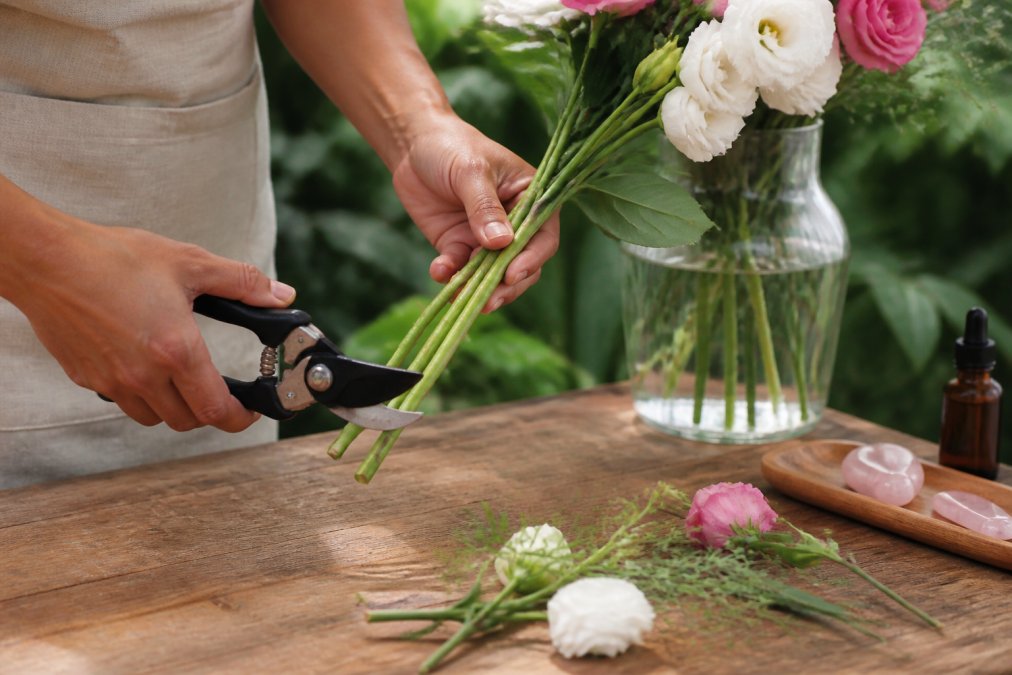
Cut stems at roughly a 45-degree angle rather than straight across. This increases the surface area exposed to water, allowing more water to move up through the xylem into the bloom. A straight cut allows the stem to sit flat against the vase bottom, sealing it off from water almost entirely.
Re-cut stems underwater or immediately transfer them into water after cutting. When a stem is exposed to air, an air bubble can form inside the xylem and block water flow. Re-cutting removes the blocked section and restores flow. Do this every two to three days as part of your regular maintenance routine.
Remove Foliage Below the Waterline
Any leaves sitting below the waterline will rot. Decomposing plant matter accelerates bacteria growth, clogging stems and clouding the vase within a day or two. Strip every leaf that would be submerged, but leave foliage above the waterline intact to support photosynthesis. Excessive leaves above the waterline also pull water away from blooms through transpiration, making a noticeable difference for water-hungry flowers like hydrangeas.
Flower Food Ingredients That Actually Work
Flower food is not a marketing add-on. Commercial packets contain three functional components: a sugar source to feed the bloom, an acidifier to lower water pH and improve uptake, and a biocide to slow bacteria growth.
According to University of Massachusetts Extension floriculture resources, using a proper floral preservative significantly extends vase life compared to plain water alone. Cut flowers still need energy; sugar replaces what they'd normally produce through roots and leaves. Acidification mimics slightly acidic soil conditions most flowers prefer and helps water move efficiently through stems. The biocide keeps bacterial populations low enough that stems stay clear.
DIY Flower Food Recipes You Can Make at Home
If you've lost the packet, a homemade solution works well.
Classic DIY Recipe:
- 1 quart of lukewarm water
- 1 tablespoon of sugar
- 1 tablespoon of white vinegar or lemon juice
- A few drops of liquid bleach (no more than 1/4 teaspoon)
The sugar feeds the bloom. Vinegar or lemon juice provides citric acid, lowering water pH and improving uptake. Bleach acts as the biocide, keeping bacteria in check.
Lemon-lime soda method: Many florists use a half-and-half mix of clear lemon-lime soda and water, which provides both sugar and citric acid. Add a tiny drop of bleach to handle bacteria.
How to Extend Vase Life of Flowers Through Smart Placement
Where you put your bouquet affects temperature, ethylene exposure, and light, three variables that directly control how fast your flowers age.
Keep Flowers Away from Ripening Fruit
Ripening fruit releases ethylene gas, a plant hormone that accelerates aging in cut flowers. A bowl of bananas or apples next to your vase can take days off the life of your arrangement. Keep your bouquet on the opposite side of the room from any fruit bowl.
Avoid Direct Sunlight and Heat Sources
Cut flowers do best in cool temperatures and indirect light. Direct sunlight warms the water, speeds bacteria growth, and drives transpiration beyond what flowers can sustain.
Keep arrangements away from:
- South- or west-facing windows with strong afternoon sun
- Heating vents and radiators
- Appliances that generate heat
- Drafty spots near air conditioning units
A cool room with ambient natural light is ideal.
Water Quality and Vase Cleanliness
Tap water in many areas contains dissolved minerals like calcium and magnesium that can interfere with water uptake. Filtered water or water left overnight (allowing chlorine to dissipate) can improve results for sensitive varieties. The USDA Agricultural Research Service post-harvest technology resources notes that water quality is meaningful for post-harvest flower longevity.
Vase cleanliness is equally important. Wash your vase with hot soapy water between uses and rinse thoroughly. A tablespoon of white vinegar in the rinse water helps neutralize residue. Change the vase water every two days, re-cut stems, wipe the vase interior, and refresh the flower food solution.
Care Step |
Frequency |
Why It Matters |
|---|---|---|
Re-cut stems |
Every 2-3 days |
Clears stem blockage, restores water uptake |
Change vase water |
Every 2 days |
Reduces bacteria growth, keeps water clear |
Remove dead foliage |
As needed |
Prevents decay that clouds water |
Refresh flower food |
With each water change |
Maintains sugar, acid, and biocide balance |
Wipe vase interior |
With each water change |
Removes bacteria clinging to glass |
How Long Do Cut Flowers Last by Variety
How long cut flowers last depends heavily on the species.
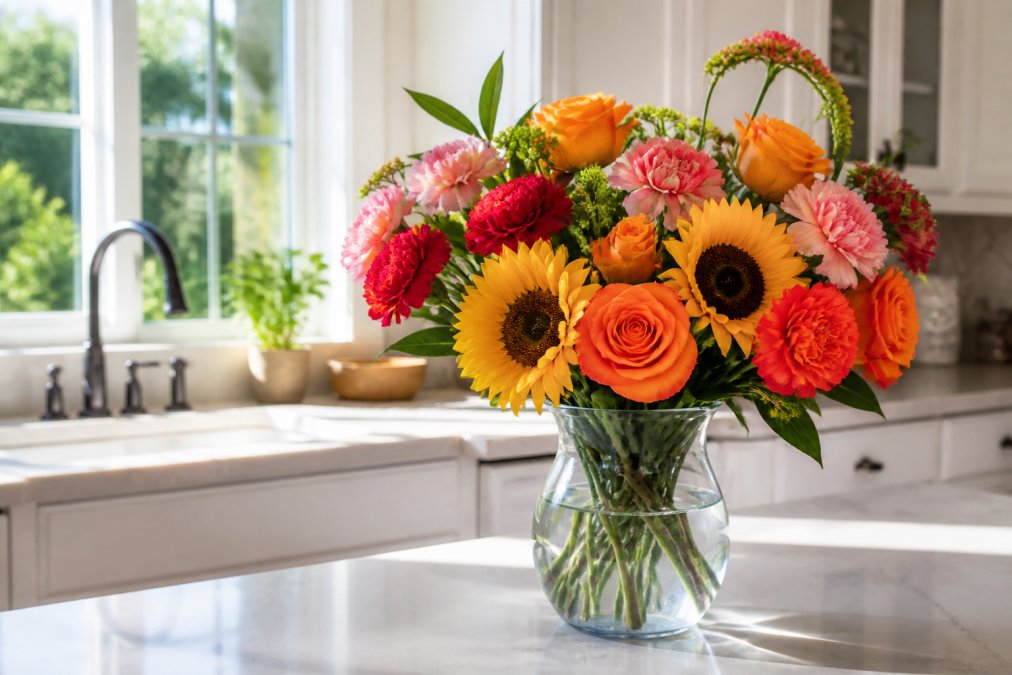
Here's a practical reference for common varieties:
- Carnations: Two to three weeks with proper care
- Chrysanthemums: Two to three weeks
- Roses: One to two weeks
- Sunflowers: Seven to twelve days; sensitive to cold
- Tulips: One to two weeks; continue growing in the vase
- Lilies: One to two weeks; remove anthers to prevent pollen staining
- Daisies and gerbera: Around one week; prone to stem rot
- Peonies: Five to seven days at peak bloom
Ethylene-Sensitive Flowers That Need Extra Care
Some flowers age dramatically faster when exposed to ethylene gas from ripening fruit, exhaust, or dying flowers. The most ethylene-sensitive varieties include carnations, snapdragons, sweet peas, orchids, and delphinium. For arrangements containing these, placement is critical, keep them away from fruit bowls, kitchens during cooking, and dying blooms.
According to Penn State Extension post-harvest flower care guides, ethylene management is one of the primary factors professional florists use to control vase life.
Extend Vase Life with Eco-Friendly Alternatives
Standard advice often leans on bleach and commercial preservatives. Gentler, more sustainable options include:
Apple cider vinegar: A teaspoon provides mild acidification and antimicrobial action.
Copper coins: A copper coin acts as a natural biocide; copper ions inhibit bacterial and fungal growth.
Vodka: A few drops inhibit ethylene production, useful for ethylene-sensitive varieties.
Aspirin: A crushed tablet acidifies water and improves uptake.
Fresh water alone, changed daily: For those avoiding additives, daily water changes and stem re-cutting remove bacteria before they accumulate. It requires more attention but no products.
Fresh flowers deserve more than a quick trim and hope for the best. The difference between a bouquet lasting five days and one lasting twelve comes down to consistent habits: clean cuts, clean water, smart placement, and attention to what each variety needs. Charmed Valley Farm's wholesale and bucket program gives florists and DIY hosts access to high-quality, locally farmed cut flowers. From there, the care is in your hands. Start with the steps in this guide, stay consistent with water changes, and you'll get far more from every arrangement you bring home.
Frequently Asked Questions
What should I put in a vase to help flowers last longer?
A commercial flower food packet is the most reliable option. These contain three things blooms need: sugar for energy, an acidifier to improve water uptake through the xylem, and a biocide to slow bacteria growth. If you don't have a packet, a simple DIY mix of one teaspoon of sugar, one teaspoon of white vinegar, and a half teaspoon of household bleach per quart of water provides a similar effect. Always start with a clean vase to get the most out of any preservative.
How often should you change the water in a flower vase?
Change the water every two days at minimum. Bacteria multiply quickly in standing water, blocking the stem's xylem and cutting off the water supply to the bloom. Each time you change the water, rinse the vase thoroughly, re-trim the stems by about half an inch, and add a fresh dose of flower food. This routine alone can add several days to the vase life of most cut flowers, including roses, tulips, and lilies.
Does sugar actually help cut flowers last longer?
Yes, with an important caveat. Sugar feeds the bloom and replaces the carbohydrates the flower can no longer produce through photosynthesis once it's cut. However, sugar alone accelerates bacteria growth in the water, which shortens vase life. It works best when paired with an acidifier like lemon juice or citric acid and a small amount of bleach to control bacterial decay. Commercial flower food packets already balance these three ingredients, which is why they outperform sugar-only solutions.
Does vinegar help prolong the life of cut flowers?
Vinegar works as an acidifier, lowering the pH of the water so it moves more easily up the flower's stem. This mimics the effect of citric acid found in commercial preservatives. A teaspoon of white vinegar per quart of tap water, combined with a small amount of sugar, creates a basic conditioning solution. On its own, though, vinegar doesn't control bacteria growth, so pair it with a tiny drop of bleach for best results.
This article was written using GrandRanker