
Table of Contents
- Start With a Patch Test: The Non-Negotiable First Step
- Calming Botanical Ingredients for Redness and Reactive Skin
- How to Layer Serums for Sensitive Skin Without Irritation
- Step-by-Step: Your First Two Weeks With Botanical Serums
- Common Mistakes That Trigger Reactions to Botanical Serums
- When to See a Dermatologist (and When to Keep Going)
- Conclusion
- Frequently Asked Questions
Last Updated: September 19, 2026
Start With a Patch Test: The Non-Negotiable First Step
Learning how to use botanical serums for sensitive skin starts with one rule: never apply a new serum to your whole face on day one. A patch test is the single best way to find out how your skin reacts before you commit.
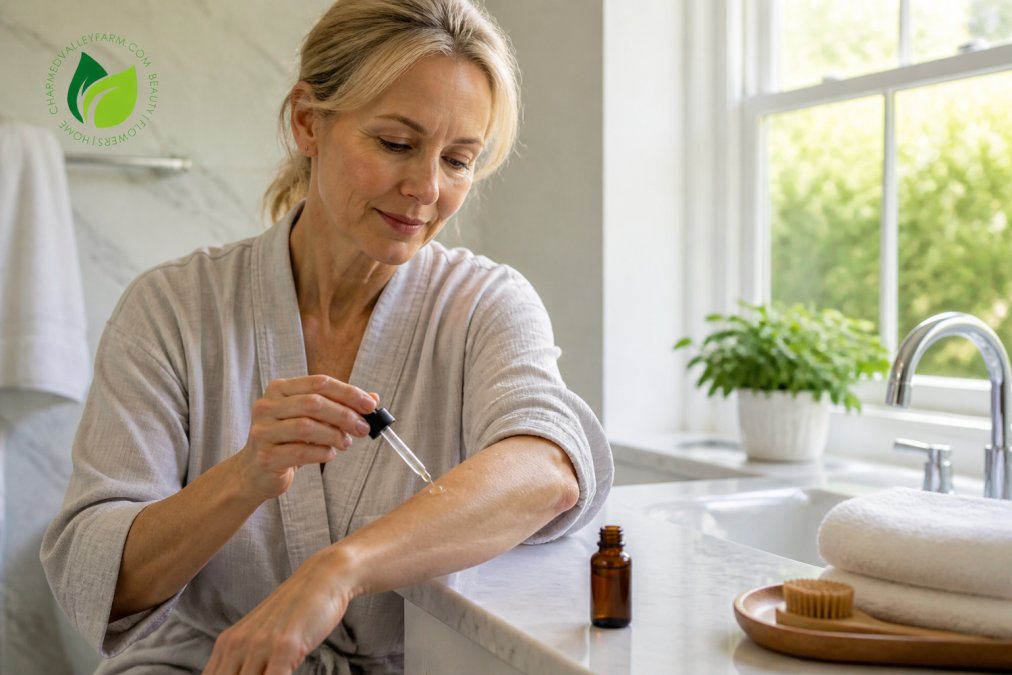
Here is how to do it right:
- Wash and dry a small patch of skin on your inner forearm or behind your ear.
- Apply one or two drops of the serum and let it absorb.
- Wait 24 hours without washing the area.
- Check for redness, itching, burning, or bumps.
- If your skin stays calm, repeat the test for two more days.
Calming Botanical Ingredients for Redness and Reactive Skin
Some botanicals soothe reactive skin, while others trigger it. The difference comes down to a handful of ingredients with well-known calming properties, and to how those ingredients are formulated, dosed, and paired.
Botanicals With Real Calming Mechanisms
Look for these first, and understand why each one works:
- Colloidal oatmeal, Contains avenanthramides, compounds that have been shown to reduce inflammatory cytokines in skin. It is one of the few botanicals with a well-documented mechanism and is recognized by the FDA as a skin protectant.
- Aloe vera, Cooling and hydrating, with polysaccharides that help hold water in the upper layers. Best used in water-based or gel formulas, not heavy oils.
- Calendula, Rich in triterpenoid saponins and flavonoids that support anti-inflammatory activity. Common in balms and infused oils.
- Shea butter, High in stearic and oleic acids plus unsaponifiables that reinforce the skin barrier. Comedogenic rating is typically 0-2, making it a reasonable choice for most sensitive skin.
- Jojoba oil, Actually a liquid wax ester that closely mimics human sebum, so it absorbs without a heavy film. Comedogenic rating around 2.
- Rose geranium and lemon balm, Gentle aromatic botanicals, but they are essential-oil-adjacent and should be patch tested.
- Sunflower oil, A mild carrier high in linoleic acid, which is often deficient in reactive, barrier-compromised skin.
The Safety Gap Most Guides Skip
Phototoxic botanicals. Cold-pressed citrus oils (bergamot, lime, lemon, bitter orange) contain furanocoumarins that react with UV light and can cause phytophotodermatitis, a burning, blistering rash that can leave dark marks for months. If a serum contains these, use it only at night and never before sun exposure. Even "natural" citrus extracts count.
Clinical Backing vs. Traditional Use
It helps to separate ingredients with real evidence from those with only folk tradition behind them:
- Strong clinical backing: colloidal oatmeal, niacinamide (often derived from botanicals), green tea polyphenols, and vitamin C from botanical sources.
- Moderate evidence: aloe vera, calendula, chamomile.
- Mostly traditional: rose water, lavender, most floral essential oils.
Match the Botanical to Your Skin Type
Sun damage and reactivity show up differently depending on your skin type, so the "best" botanical serum depends on yours:
- Oily or acne-prone: Choose lightweight, linoleic-acid-rich oils like sunflower, safflower, and jojoba. Avoid coconut, wheat germ, and heavy butters.
- Dry or barrier-compromised: Shea butter, squalane, and avocado oil help rebuild lipids. Layer under a ceramide moisturizer.
- Sensitive or rosacea-prone: Stick to short ingredient lists with colloidal oatmeal, aloe, and calendula. Avoid essential oils and fragrance entirely.
- Combination: Use a jojoba- or squalane-based serum and spot-treat drier areas with a richer balm.
How to Layer Serums for Sensitive Skin Without Irritation
The order you apply products matters as much as the products themselves. Thin formulas go first, thicker ones go last, but for sensitive skin, the details of timing, pH, and pairing matter even more.
The Basic Sequence
Follow this order every morning and evening:
- Cleanse with lukewarm water and a gentle, fragrance-free cleanser. Hot water strips the barrier.
- Tone or mist with a hydrating, alcohol-free toner while skin is still damp.
- Apply your botanical serum, one full dropper, pressed gently into the skin. Do not rub.
- Follow with a simple moisturizer to seal everything in. Look for ceramides, glycerin, or squalane.
- Finish with SPF 30 or higher every morning. This is non-negotiable if you are treating sun damage.
Wait Times and pH: The Part Most Guides Skip
"Wait 60 seconds" is common advice, but the real rule depends on what you are layering:
- Water-based serum → oil-based serum: Wait 30-60 seconds. Oil creates a barrier that blocks water-based products applied after it.
- Vitamin C (low pH, around 3-3.5) → anything else: Wait 1-2 minutes. Applying a higher-pH product too soon can neutralize the vitamin C and reduce its effectiveness.
- Niacinamide → acids: These can be layered, but if your skin is reactive, use them on alternating nights instead.
- Retinoids → anything: Apply retinoids last at night, after moisturizer if you are sensitive (the "buffering" method). Never layer with acids or vitamin C on the same night.
Skin-Type-Specific Layering
How you layer should shift based on your skin type:
- Oily or acne-prone: Skip heavy creams. Use a gel moisturizer or a lightweight lotion after your serum. If you use SPF, choose a gel or fluid formula.
- Dry or barrier-compromised: Layer a hydrating toner, then serum, then a ceramide cream, then a facial oil if needed. You can use more layers, not fewer.
- Sensitive or rosacea-prone: Keep it to three steps, cleanse, serum, moisturize, plus SPF in the morning. Every extra product is another chance for a reaction.
- Combination: Apply serum all over, then use a richer moisturizer only on dry zones (cheeks, around the mouth) and a lighter one on the T-zone.
What Not to Layer Together
Some combinations overwhelm a sensitive barrier even when each product is fine on its own:
- Retinoids + exfoliating acids (AHA/BHA), Same-night use can cause burning, peeling, and barrier damage.
- Vitamin C + benzoyl peroxide, Can oxidize and cancel each other out.
- Multiple essential-oil-heavy serums, Stacking fragrance and aromatic compounds increases irritation risk.
- Physical exfoliants + serums, Scrubs create micro-tears that let actives penetrate too deeply.
A Note on "Natural" Layering
Botanical serums are not automatically compatible with clinical actives just because they are plant-based. Some plant extracts (like citrus) are photosensitizing, and some (like witch hazel) are astringent and can dry out reactive skin. Read the full ingredient list before adding a serum to an existing routine, and introduce only one new product at a time.
Step-by-Step: Your First Two Weeks With Botanical Serums
New serum routines fail when people do too much too fast. This two-week plan eases your skin in.
Week 1
- Days 1-3: Use the serum every other night, one drop only.
- Days 4-7: If skin stays calm, increase to one full dropper every other night.
Week 2
- Days 8-11: Move to nightly use if there is no redness or stinging.
- Days 12-14: Keep going nightly. Add a second product, like a toner, only if skin feels settled.
| Phase | Frequency | Amount | Watch For |
|---|---|---|---|
| Days 1-3 | Every other night | 1 drop | Redness, itching |
| Days 4-7 | Every other night | Full dropper | Dryness, stinging |
| Days 8-11 | Nightly | Full dropper | Breakouts, flaking |
| Days 12-14 | Nightly | Full dropper | Overall comfort |
Common Mistakes That Trigger Reactions to Botanical Serums
Even good serums cause problems when they are used the wrong way. These are common mistakes.
- Skipping the patch test. It takes three days and saves weeks of recovery.
- Using too many new products at once. If something goes wrong, you cannot tell what caused it.
- Applying to dry, compromised skin. A damaged skin barrier reacts to almost everything.
- Mixing strong actives. Retinoids, acids, and vitamin C can overwhelm sensitive skin. Space them out.
- Storing serum in sunlight. Heat and light break down delicate oils. Keep bottles cool and dark.
When to See a Dermatologist (and When to Keep Going)
Most mild reactions settle within a week of scaling back. Some signs mean it is time to call a professional.
See a dermatologist if you notice:
- Swelling, hives, or blisters
- A rash that spreads or worsens after three days
- Pain, oozing, or signs of infection
- Persistent hyperpigmentation or changing moles
Conclusion
Sensitive skin does not have to mean giving up on a real skincare routine. Start slow, patch test everything, and choose short ingredient lists you can actually read.
Frequently Asked Questions
How do you patch test botanical serums for sensitive skin?
Apply one or two drops to a small area on your inner forearm, then wait 24 to 48 hours. Check for redness, itching, burning, or bumps before using the serum on your face. If your skin stays calm, repeat the test behind your ear or along your jawline for another 24 hours. Patch testing natural skincare matters because botanical ingredients like essential oils can still trigger reactions even when they are organic and chemical-free.
What are the best botanical ingredients for calming sensitive skin?
Look for oils and extracts with soothing, anti-inflammatory properties: rosehip, raspberry leaf, rose geranium, lemon balm, calendula, shea butter, and jojoba oil. These support the skin barrier and help reduce redness without harsh additives. Formulas built on cold-pressed carrier oils rather than synthetic fragrance tend to suit reactive skin best. Always patch test a new ingredient first, since calm-sounding botanicals can still cause irritation for some people.
How often should you apply botanical serums to sensitive skin?
Start with one application every other night for the first week, then move to nightly use if your skin stays calm. A full dropper massaged into freshly cleansed, damp skin is enough for the face, neck, and chest. More frequent use does not speed up results and can overwhelm a reactive skin barrier. If you notice stinging or redness, drop back to every third night before increasing again.
Can botanical serums cause allergic reactions on sensitive skin?
Yes. Natural does not automatically mean hypoallergenic. Essential oils, plant extracts, and even cold-pressed carrier oils can trigger contact dermatitis in some people. That is why patch testing natural skincare is essential before you commit to a full-face routine. Stop using any product that causes persistent burning, swelling, or a spreading rash, and speak with a dermatologist if symptoms do not settle within a few days.