
Table of Contents
- What Gua Sha Does for Facial Glow (and What It Can't)
- What You'll Need Before You Start
- Step-by-Step: A Gua Sha Facial Routine for Beginners
- The Best Oil for Gua Sha Face (and Why Glide Matters)
- How Long to Use Gua Sha on Face for Best Results
- Gua Sha Side Effects and When to Stop
- Tool Hygiene and Care Between Sessions
- Conclusion
- Frequently Asked Questions
Last Updated: October 18, 2026
What Gua Sha Does for Facial Glow (and What It Can't)
Gua sha is a traditional technique that uses a smooth stone to gently pull across oiled skin, and it has become a staple in modern facial routines. At Charmed Valley Farm, we think of it as a slow, calming practice rather than a quick fix. The honest answer is that gua sha can support a healthy facial glow, but it will not erase deep lines or change your skin overnight.
What the Research Actually Supports
Many estheticians and skin care writers report that gua sha helps move excess fluid and eases morning puffiness. That temporary de-puffing is the most reliable benefit. Some people also notice a brighter look right after a session, because the massage brings blood to the surface.
What it cannot do is rebuild collagen or reverse sun damage. If a product listing or a video promises permanent lifting, treat that with caution.
Setting Realistic Expectations
Think in weeks, not days. A common approach is to use the tool most mornings and judge the results after a month of steady practice. You may see less puffiness and a softer jawline. You should not expect a facelift.
What You'll Need Before You Start
You need three things: a clean face, a tool, and something to help the stone glide. That's it. No machines, no serums you have to buy, no complicated setup.
- A gua sha tool. Our Goa Sha Stone is $9.00 and small enough for a beginner's hand.
- A facial oil or serum for slip. Dry skin plus a stone equals tugging, which you want to avoid.
- Clean hands and a clean tool. More on hygiene below.
A common mistake is starting with a heavy hand. Light pressure is the whole game, and it takes almost no force to get the benefit.

Step-by-Step: A Gua Sha Facial Routine for Beginners
Here is the beginner routine we walk people through. It takes about five minutes once you know the moves. Keep it gentle the entire time.
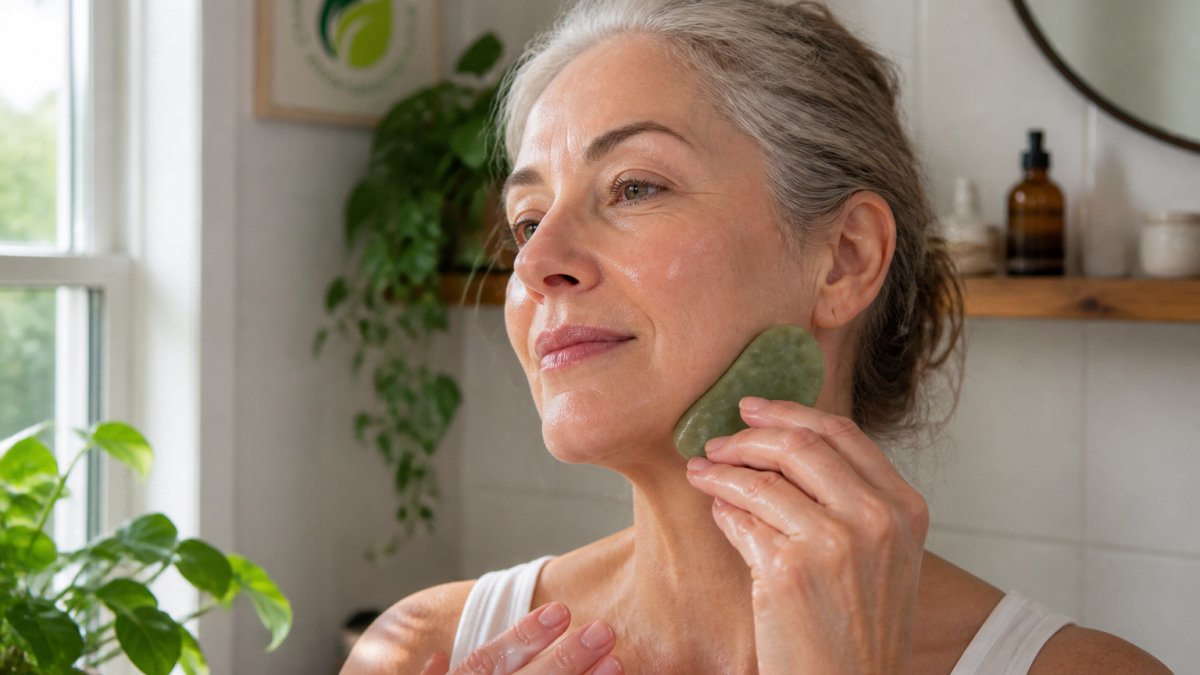
Step 1: Cleanse and Prepare the Skin
Start with clean skin. Wash your face with a gentle cleanser and pat dry. Then apply a few drops of facial oil so the stone can glide without pulling.
Our Flower Oil Face Serum is $45.00 and made with cold-pressed sunflower oil, rosehips, and rose geranium. One full dropper is plenty for the face, neck, and chest.

Step 2: Start at the Neck, Then Work Upward and Outward
Begin at the neck, not the face. Hold the stone at a shallow, almost flat angle and use light pressure. Make slow strokes upward along the sides of the neck, working toward the jaw.
This order matters. The idea is to support lymph flow before you work on the face. Move in upward and outward strokes, always with a gentle pull, never a scrape.
Step 3: Follow the Facial Contours in Sections
Work the face in sections so you don't miss spots:
- Jawline: stroke from the chin out toward the ear.
- Cheeks: sweep from the nose outward and up toward the temple.
- Under the eyes: use the lightest pressure, moving outward only.
- Forehead: stroke upward from the brow to the hairline.
Do a few slow passes per area. Consistent movement beats fast, hard strokes every time.
The Best Oil for Gua Sha Face (and Why Glide Matters)
The best oil for gua sha is one that stays slippery long enough for your whole routine and suits your skin. Glide is not a luxury here. It's the difference between a soothing massage and irritated skin.
Look for a simple facial oil with few ingredients. A botanical oil like our Flower Oil Face Serum fits this well, and a little goes a long way.
How Long to Use Gua Sha on Face for Best Results
The honest answer to how long to use gua sha on face is: long enough to cover each area with slow, deliberate strokes, and short enough that you do it consistently. For most beginners, that lands at 4 to 6 minutes per session, 3 to 5 times per week. More time is not better, more consistency is.
A Precise Beginner Routine (Timed and Counted)
Use this as your baseline for the first two weeks. Adjust only after you know how your skin responds.
| Area | Strokes per side | Pressure | Time |
|---|---|---|---|
| Neck (sides, upward) | 5 to 7 | Light, the stone barely indents | ~45 seconds |
| Jawline (chin to ear) | 5 to 7 | Light to medium | ~45 seconds |
| Cheeks (nose to temple) | 5 to 7 | Light to medium | ~45 seconds |
| Under eyes (outward only) | 3 to 5 | Feather-light | ~30 seconds |
| Forehead (brow to hairline) | 5 to 7 | Light | ~45 seconds |
| Brow bone (outward) | 3 to 5 | Feather-light | ~30 seconds |
That totals roughly 4 to 5 minutes for a full pass. One pass per area is enough for a beginner. Do not stack multiple passes in the first week, build tolerance first.
How to Calibrate Pressure
Pressure is the variable most beginners get wrong. Use this check:
- Too light: the stone skips or stutters instead of gliding. Add a drop more oil, not more pressure.
- About right: the stone moves smoothly, the skin shifts slightly with it, and you feel a gentle pull, not a drag.
- Too much: the skin reddens quickly, you feel a scraping sensation, or you see a bruise forming. Back off immediately.
A useful anchor: the pressure you would use to spread a thin layer of lotion over your eyelid is roughly the pressure for under-eye strokes. Jawline and neck can take slightly more, but never enough to leave a mark.
Frequency: How Often Is Too Often
- Normal-to-combination skin: 5 sessions per week is a reasonable ceiling. Many people do it every morning as part of cleansing.
- Sensitive or reactive skin: start with 2 to 3 sessions per week and add one session per week only if there is no lingering redness or tenderness.
- After a bruise: wait until it fully fades (typically 5 to 10 days) before returning to that area.
A Sample Week
| Day | Session | Focus |
|---|---|---|
| Monday | 5 min | Full routine |
| Tuesday | 5 min | Full routine |
| Wednesday | Rest | , |
| Thursday | 5 min | Full routine |
| Friday | 5 min | Full routine |
| Saturday | 3 min | Neck and jaw only |
| Sunday | Rest | , |
Signs You're Doing Too Much
Cut back if you notice persistent redness that lasts past an hour, tenderness the next morning, or new bruising. These are signals to reduce frequency or pressure, not to push through. The goal is a sustainable habit, not a longer session.
Gua Sha Side Effects and When to Stop
Most gua sha side effects are mild and short-lived, but the difference between a normal reaction and a warning sign matters. Knowing which is which is the part most tutorials skip.
What's Normal After a Session
- Transient redness along the stroke path that fades within 10 to 30 minutes. This is surface circulation, not damage.
- A faint warm or tingling feeling while the skin settles.
- Mild, fleeting tenderness if you used slightly more pressure than usual, gone by the next morning.
These are expected. They are not a reason to stop.
What's Not Normal, and When to Stop
Stop the session immediately and reassess if you notice any of the following:
- Bruising that appears during or right after a stroke. This means pressure was too high or the skin was too dry. Wait for it to fully fade, usually 5 to 10 days, before working that area again, and use noticeably lighter pressure next time.
- Broken skin, scratches, or a raw feeling. The stone edge may be chipped, or you pressed through the glide. Check the tool (see the hygiene section) and skip the face until the skin closes.
- Active acne, cystic breakouts, or open blemishes. Working over inflamed lesions can spread bacteria and worsen redness. Go around them, not over them.
Skip the Face Entirely If You Have:
- Sunburn, windburn, or any compromised skin barrier. Wait until the skin is fully healed.
- A recent facial procedure, chemical peel, microneedling, laser, injectables, or facial surgery. Ask the provider when it is safe to resume; a common window is 1 to 2 weeks for superficial treatments and longer for deeper ones, but follow their guidance, not a general rule.
- An active skin condition such as eczema, rosacea in a flare, or psoriasis on the face. A dermatologist can tell you whether gentle massage is appropriate for your skin.
A Simple Rule
If a sensation feels sharp, hot, or wrong, stop. Gua sha should feel like a slow, gliding massage, never a scrape. When in doubt, take a day off and use less pressure next time. A stone is a self-care tool, not a medical treatment, and it does not replace a dermatologist's advice.
Tool Hygiene and Care Between Sessions
Clean your stone after every use. Wash it with mild soap and warm water, then dry it fully.
Wipe the edges too. Oil and skin cells collect there, and a dirty tool can cause breakouts. A quick wash takes seconds and protects your skin.
Keep your serum in a cool, dark place away from direct sunlight, as the label advises.
Conclusion
Building a gua sha habit takes patience, and the payoff is a calmer routine and a fresher look most mornings. The trick is light pressure, plenty of glide, and starting at the neck before you work upward.
If you want a simple starting kit, our Goa Sha Stone and Flower Oil Face Serum are made to pair together. If you'd like to explore more of our botanical line, the Flower Face Skincare collection gathers our facial oils and related products in one place.
Frequently Asked Questions
How do you use gua sha for a facial glow?
Cleanse your face, then apply a few drops of facial oil so the tool glides without tugging. Hold the gua sha at a 45-degree angle and use light pressure, starting at the neck and moving upward and outward across the jawline, cheeks, and forehead. Work in short strokes along the facial contours for about five minutes. The glow comes from increased circulation and reduced puffiness, so consistency matters more than force.
What should you apply before using gua sha?
You need a slip product, and the best oil for gua sha face is a botanical facial oil that stays slick long enough for several minutes of strokes. Charmed Valley Farm's Flower Oil Face Serum ($45.00) is formulated for exactly this: apply one full dropper to freshly cleansed, damp skin on the face, neck, and chest. Dry skin plus a stone equals tugging, which is the fastest way to irritate your face.
How long should you use gua sha on your face?
Keep a full session to about five to ten minutes, with three to five gentle strokes per area. Many people do it in the morning to address puffiness before the day starts. Daily use is fine if your skin tolerates it, but start with every other day and watch for redness or soreness. More pressure or longer sessions do not speed up results and can cause bruising.
What are the side effects of gua sha?
The most common gua sha side effects are temporary redness, mild tenderness, and occasionally bruising if you press too hard. Skip the face entirely if you have active acne, a sunburn, broken skin, or a skin infection, and check with a dermatologist if you have a bleeding disorder or are on blood thinners. Stop immediately if you feel sharp pain rather than gentle pressure.
The real challenge is consistency, not technique. A five-minute morning routine beats an occasional long session every time. Get started with Charmed Valley Farm and give your skin a gentle, botanical ritual it can count on.