Last Updated: October 27, 2026
Quick Summary
To verify cruelty-free skincare claims, check the packaging wording, confirm any certification in its public directory, and read the brand's policy for suppliers and parent companies. A label is a company's statement, not a government certification, so trace the evidence behind it. Record the exact claim, its scope, and its date.
- Vague phrases like "natural" or "gentle" say nothing about animal testing.
- A brand-created in-house seal is marketing, not independent verification.
- Match any certification to the exact product you are buying, not the brand homepage.
- Ingredient supplier testing is a common blind spot even when finished products are not tested.
- Cruelty-free and vegan are separate claims, so check each one on its own evidence.
Table of Contents
- What Cruelty-Free Actually Means on a Skincare Label
- How to Check Product Packaging and Labels
- Cruelty-Free Skincare Certification: What the Logos Cover
- How to Check a Brand's Animal Testing Policy
- Cruelty-Free vs. Vegan Skincare: Why the Labels Differ
- Questions to Ask Skincare Brands About Animal Testing
- Your Next Step: Building a Claim-Checking Routine for Your Shopping
- Frequently Asked Questions
What Cruelty-Free Actually Means on a Skincare Label
Cruelty-free skincare is a label, and labels can mean different things. Shoppers deserve a simple way to verify cruelty-free skincare claims and check what they really say. Market research from Market Reports World found that 76% of global consumers agreed brands should not test on animals in 2024. Yet the same report found that many shoppers still struggle to know which claims they can trust.
Here is the core problem. A "cruelty-free" label does not follow one universal definition. Face Reality Skincare notes that meanings and verification processes can vary from brand to brand, so a label alone may not show what a company or its suppliers actually do (Face Reality Skincare guide on cruelty-free skincare).
Think of the label as a starting point, not the finish line. Your job is to verify cruelty-free skincare claims by checking the evidence behind them. Read how one farm-based brand's founder describes her own story and how the business operates.
How to Check Product Packaging and Labels
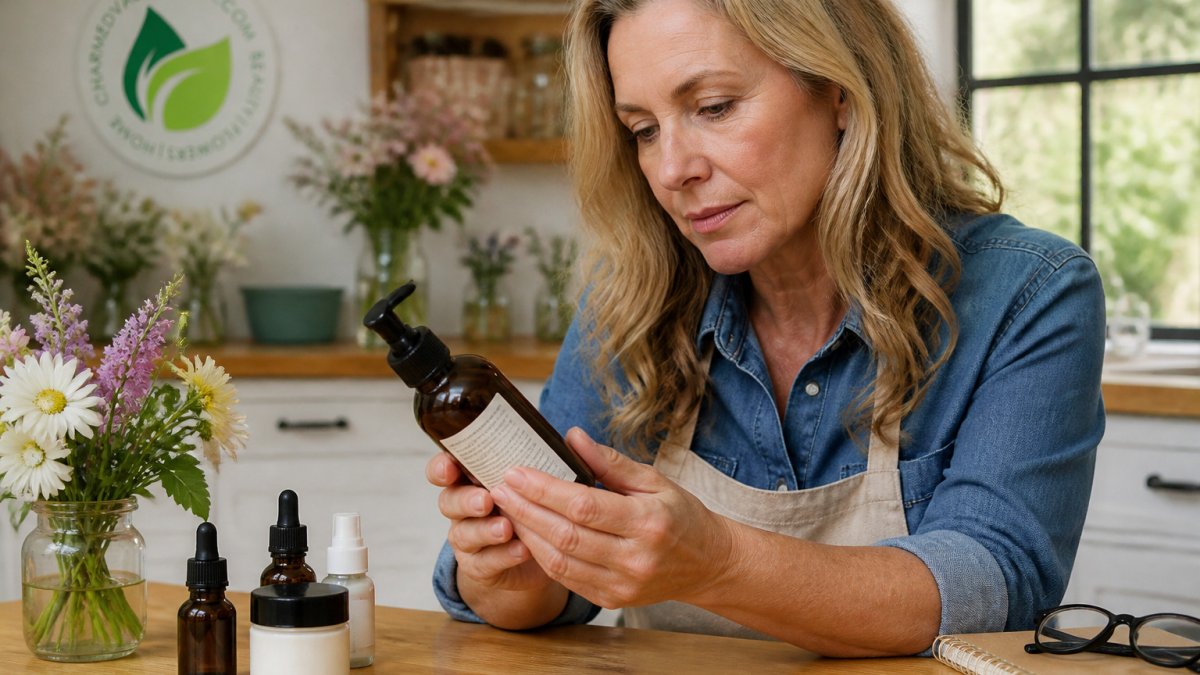
Start with the bottle in your hand. Look for clear wording like "not tested on animals" or a recognized certification mark. Vague phrases like "natural" or "gentle" say nothing about testing.
Next, read the back of the package and the ingredient list. This is where you spot products that need a closer look:
- Claims that name no standard or certifier
- Logos you cannot trace to a published program
- Ingredient lists full of unfamiliar chemicals with no explanation
- Marketing words that promise more than the label backs up
The FDA cautions that "cruelty-free" and "not tested on animals" appear on cosmetic labels, but U.S. law does not specifically ban animal testing for cosmetics (U.S. Food and Drug Administration on cosmetic labeling). A label is a company's statement, not a government certification. Treat it that way.
Cruelty-Free Skincare Certification: What the Logos Cover
A certification logo is only as strong as its scope and its auditing. Two programs can both say "cruelty-free" while covering completely different parts of the supply chain. Before you trust a mark, treat it as a claim to verify, not a verdict.
Separate the program from the logo
Start by identifying who runs the certification. An independent nonprofit or third-party program publishes its standards, its brand directory, and its complaint process. A brand-created in-house "seal" is a marketing asset, not independent verification. Look for a program website you can visit, a published standard document, and a searchable list of certified companies.
Ask what the certification actually covers
Certification scope varies in ways that matter to a shopper:
- Finished product only vs. full supply chain. Some programs certify that the finished product was not tested on animals but do not verify ingredient-level or supplier-level testing. Others require a monitored supplier declaration across the ingredient list.
- Brand-wide vs. product-line. A company may certify one line while other lines remain uncertified. Match the certification to the exact SKU you are holding, not to the brand's homepage banner.
- Fixed date vs. rolling recertification. Check whether the certification has an expiration or renewal cycle. A logo printed on packaging can outlive the certification if the brand has not updated the artwork.
Evaluate audit rigor, not just the mark
A common pattern among independent programs is a combination of a signed supplier declaration, a periodic review, and a public directory. The practical questions are:
- Does the program require the brand to obtain written confirmation from ingredient suppliers that no animal testing was conducted on the raw materials?
- Is there a scheduled audit or renewal, and how often?
- Does the program publish a directory you can search by brand and product?
- Is there a way to report a brand that misuses the mark?
If the program cannot answer these on its own website, treat the logo as a self-declared claim with a nicer font.
Cross-check the directory against the package
Find the brand in the program's public directory and confirm the specific product line is listed. Then compare the directory entry to the package: the certifier name, the program name, and any license number should match. A logo with no traceable program name is a red flag, not a credential.
Independent certification program directories and standards
Know what certification does not prove
Certification addresses animal testing. It does not automatically mean the product is vegan, that every ingredient is plant-derived, or that the brand's parent company shares the same policy. Keep those questions separate, and verify each one on its own evidence.
The table below summarises what different certification scopes cover, so you can match a logo to the product you are buying.
| Certification scope | What it covers | What to verify |
|---|---|---|
| Finished product only | Finished product not tested on animals | Ingredient-level or supplier-level testing |
| Full supply chain | Monitored supplier declarations across ingredients | Renewal cycle and supplier records |
| Brand-wide | Whole brand's product range | Whether the specific SKU is listed |
| Product-line | Only the certified line | Other lines may remain uncertified |
| Fixed date | Certification valid until expiry date | Whether packaging still shows a current mark |
| Rolling recertification | Renewed on a continuing cycle | Last audit date in the public directory |
How to Check a Brand's Animal Testing Policy
A policy page is a starting point, not proof. The goal is to move from a brand's statement to evidence about the specific product, its ingredients, its suppliers, and its ownership. Use a fixed set of questions and a consistent evidence standard so you can compare brands on equal terms.
Read the policy for specificity, not sentiment
A strong policy names what is covered and what is not. Weak language includes "we are committed to cruelty-free practices," "we love animals," or "we strive to avoid animal testing." Strong language is specific: "Neither our finished products nor our ingredient suppliers conduct or commission animal testing, except where required by law." Note any exception clause, because that is where the real answer usually lives.
Trace the supply chain, not just the brand
Ingredient and supplier-level testing is the most common blind spot. A brand can truthfully say it does not test finished products while an ingredient supplier tests raw materials. Ask:
- Does the brand obtain written supplier declarations for each ingredient?
- Are those declarations renewed, and how often?
- Does the brand name any ingredient categories that are exempt from its policy?
If the brand cannot describe its supplier verification process, the policy covers less than the headline suggests.
Check ownership and market requirements
A parent company, distributor, or contract manufacturer may have different practices than the brand you are buying. Search the brand's website and public filings for parent-company names, then check whether the parent sells in markets that require animal testing for cosmetics. A brand-level policy does not automatically extend to a parent company's other brands.
Also separate legal requirements from voluntary policy. Some markets require animal testing for certain products or ingredients; a brand selling there may face testing obligations that its home-market policy does not mention. The policy should state how the brand handles those requirements, not just that it opposes animal testing.
Use a claim-evidence checklist
For each claim, record four things:
- Exact wording of the claim as printed or published.
- Scope, product, line, brand, supplier, or parent company.
- Evidence type, certification directory entry, supplier declaration, published policy, or customer-service statement.
- Date, when the evidence was published or last updated.
A claim with no scope, no evidence type, and no date is unverified, regardless of how confident the wording sounds.
Contact the brand with targeted questions
If the website leaves gaps, email the brand and ask for specifics: which certification program covers the product, whether supplier declarations are on file, whether a parent company sells in testing-required markets, and when the policy was last reviewed. A specific, dated answer is a good sign. A reply that restates the marketing line without addressing suppliers or ownership is itself useful evidence.
Our Flower Oil Face Serum ($45.00) lists its ingredients on its product page, so you can compare what the listing says against your own checklist: https://charmedvalleyfarm.com/products/floweroil

Cruelty-Free vs. Vegan Skincare: Why the Labels Differ
These two words get mixed up all the time, but they answer different questions. "Cruelty-free" is about animal testing. "Vegan" is about whether ingredients come from animals.
A product can be cruelty-free and still contain animal-derived ingredients, such as beeswax or lanolin. See how one brand defines ethical ingredient sourcing to compare it with the labels you are reading. A product can be vegan and still be tested on animals, if a required test applies. So a vegan label does not prove the product was never tested, and a cruelty-free label does not prove the ingredients are plant-based.
Check both claims separately. Your values may care about one, the other, or both.
Questions to Ask Skincare Brands About Animal Testing
If the website leaves you unsure, contact the brand directly. Useful questions include:
- Does the company, or anyone on its behalf, test finished products on animals?
- Do your ingredient suppliers test on animals?
- Which certification program, if any, covers your products, and when was it last audited?
- Does any parent company or distributor sell in markets that require animal testing?
A clear, specific answer is a good sign. A vague reply that avoids the question is worth noting before you buy.
Your Next Step: Building a Claim-Checking Routine for Your Shopping
Turn these checks into a routine you repeat for every new product:
- Read the label and note the exact wording of any claim.
- Find the certification program, if one is listed, and confirm the brand on its public list.
- Read the brand's animal testing policy, including suppliers and parent company.
- Email the brand if a key answer is missing.
- Save what you found, so you can check again later.
This routine takes a few minutes per product and gives you evidence instead of guesses. Once you build the habit, it becomes second nature. You can explore our Flower Face Skincare line here: https://charmedvalleyfarm.com/collections/flower-face
Frequently Asked Questions
Do Maybelline test their products on animals?
Check the brand's published animal-testing statement. A brand's own statement is useful evidence to review.
What does a cruelty-free certification mean?
Certification scope varies, so read what the logo covers, whether it includes suppliers, and how often audits occur.
Does a cruelty-free claim mean a product is vegan?
No. Cruelty-free addresses animal testing, while vegan addresses whether animal-derived ingredients are used. A product can be cruelty-free and still contain beeswax, lanolin or carmine. Check the ingredient list against your standards, and look for a separate vegan certification if that matters to you.
How can you tell if a skincare brand is cruelty-free?
Start with the label, then check the brand's published animal-testing policy and any third-party certification. Verify the certification in its official database rather than trusting the logo alone. Ask the company whether it tests finished products or ingredients on animals, including through suppliers and in markets that require testing. Clear, specific answers are a good sign. Vague answers or no answer at all are a reason for caution.
