
Table of Contents
- What Makes Organic Beauty Products Safe for Sensitive Skin
- Natural Ingredients to Avoid for Sensitive Skin
-
Top Organic Beauty Products for Sensitive Skin, Reviewed
- 1. Charmed Valley Farm #Farm2Face Flower Face Line
- 2. Pai Skincare Chamomile & Rosehip Calming Day Cream
- 3. True Botanicals Calm Pure Radiance Oil
- 4. OSEA Malibu Seabiotic® Water Cream
- 5. Bee You Organics Organic Face Moisturizer
- 6. 100% PURE Rose Water Gentle Cleanser
- 7. KORA Organics Milky Mushroom Cleansing Oil
- 8. Herbivore Botanicals Lapis Blue Tansy Facial Oil
- 9. Annmarie Skin Care Herbal Facial Oil for Sensitive Skin
- 10. ILIA Super Serum Skin Tint SPF 40
- Building an Organic Skincare Routine for Redness
- Seasonal Skincare Adjustments and DIY Organic Alternatives
- How to Patch Test and Introduce New Products Safely
- Conclusion
Last Updated: August 13, 2026
Choosing the right organic beauty products for sensitive skin is harder than it should be. The clean beauty market is crowded with vague claims, incomplete ingredient lists, and products that promise botanical purity but deliver synthetic shortcuts. At Charmed Valley Farm, we believe your skin deserves better, which is why our #Farm2Face philosophy starts with real flowers grown baturally, not compounds synthesized in a lab.
This guide cuts through the noise. Below, you'll find a curated list of genuinely effective organic beauty products for sensitive skin, a clear breakdown of ingredients to avoid, and a practical routine you can build today.
Quick Picks:
- Best Farm-to-Face Overall: Charmed Valley Farm #Farm2Face Flower Face Line, flower-based, chemical-free, rooted in a genuine farm philosophy
- Best Lightweight Day Cream: Pai Skincare Chamomile & Rosehip Calming Day Cream, fragrance-free, certified organic
- Best Budget Pick: Bee You Organics Organic Face Moisturizer, waterless, essential oil-free, $28
- Best Multi-Tasker: ILIA Super Serum Skin Tint SPF 40, coverage, hydration, and mineral SPF in one step
What Makes Organic Beauty Products Safe for Sensitive Skin
Organic beauty products for sensitive skin rely on certified organic, plant-derived ingredients while excluding synthetic fragrances, parabens, sulfates, and petrochemicals that trigger inflammation in reactive skin. Sensitive skin has a compromised lipid barrier, meaning irritants penetrate more easily and trigger redness, itching, or breakouts faster than on resilient skin types.
The most effective organic formulas address three things simultaneously: soothing active inflammation, repairing the skin barrier, and maintaining the skin's natural pH. According to the National Eczema Association's ingredient guidance, fragrance is the leading cause of allergic contact dermatitis in skincare, "natural fragrance" on a label is not automatically safe.
Genuinely gentle formulas tend to share these characteristics:
- No added fragrance (not just "unscented")
- pH-balanced between 4.5 and 5.5 to match the skin's acid mantle
- Non-comedogenic plant-based oils that support rather than clog pores
Clear and recognizable ingredients just like our food, if you can’t figure out what it is, you might not want It on your body.
How to Read Labels and Spot Greenwashing
Greenwashing is marketing a product as natural or organic when it contains synthetic fillers, undisclosed fragrance compounds, or token botanicals buried at the bottom of an ingredient list. The most reliable defense is learning to read an INCI (International Nomenclature of Cosmetic Ingredients) list.
Red flags to watch for:
- "Natural fragrance" or "parfum", umbrella terms hiding dozens of undisclosed allergens
- Botanical ingredients listed last, if calendula appears after preservatives, there's barely any in the product
- "Hypoallergenic" without clinical backing, this term has no FDA regulatory definition
Natural Ingredients to Avoid for Sensitive Skin
Not everything natural is gentle. Essential oils are the biggest offender. Lavender, peppermint, eucalyptus, tea tree, and citrus oils are all naturally derived and well-documented causes of contact dermatitis in sensitive skin. According to the American Contact Dermatitis Society's allergen database, fragrant plant extracts consistently rank among the top skin sensitizers, regardless of their organic origin.
Other natural ingredients to avoid if your skin is reactive:
- Witch hazel, the tannins and alcohol content can strip the skin barrier
- Lemon juice or citrus extracts, photosensitizing and highly acidic
- Cinnamon, clove, or spice-derived extracts, strong irritants even in small concentrations
- High-concentration retinol alternatives, high-potency vitamin C can cause flushing
- Walnut or apricot scrubs, physical exfoliants with jagged edges that micro-tear skin
A product can be 100% organic and still cause a reaction if it contains any of the above.
Top Organic Beauty Products for Sensitive Skin, Reviewed
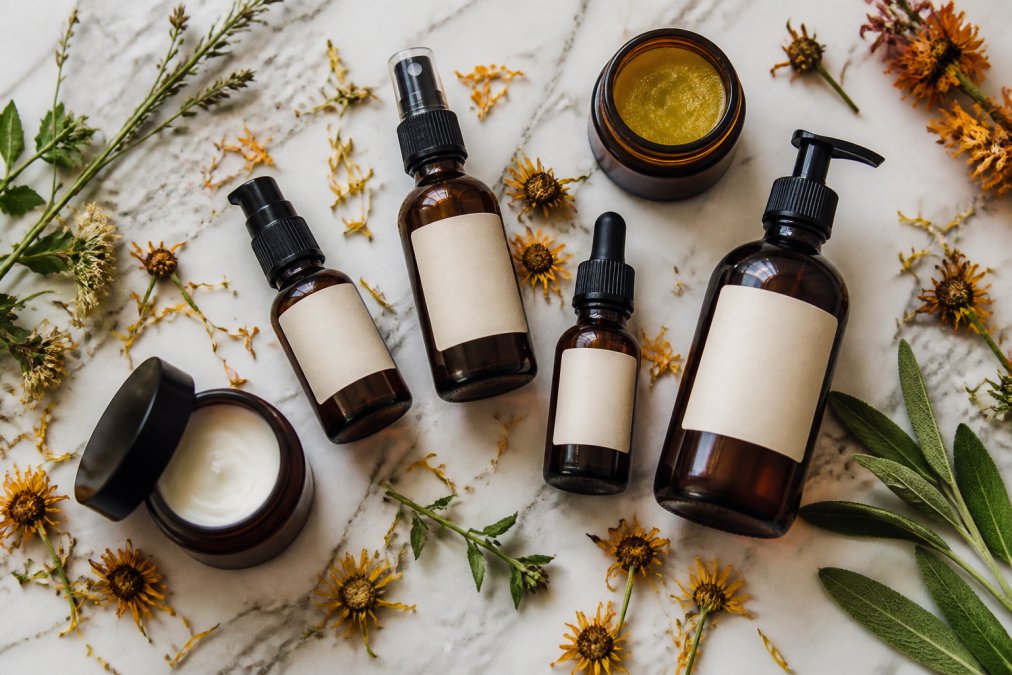
The products below were selected based on ingredient transparency, certification status, suitability for reactive skin, and formulation quality.
Product |
Best For |
Key Ingredient |
Starting Price |
|---|---|---|---|
Charmed Valley Farm #Farm2Face |
Mother Nature’s secrets for mature skin |
Flower-based botanicals |
$45 |
Pai Chamomile & Rosehip Day Cream |
Daily redness relief |
Chamomile, rosehip oil |
$60 |
True Botanicals Calm Radiance Oil |
Nourishing + anti-inflammatory |
Calendula, cucumber seed |
$120 |
OSEA Seabiotic Water Cream |
Microbiome support, lightweight |
Seaweed, prebiotics |
$54 |
Bee You Organics Face Moisturizer |
Budget, essential oil-free |
Shea, argan, calendula |
$28 |
100% PURE Rose Water Cleanser |
Gentle daily cleansing |
Rose water |
$30 |
KORA Organics Cleansing Oil |
Makeup removal, sensitive |
Mushroom extract |
$48 |
Herbivore Lapis Blue Tansy Oil |
Oily + sensitive skin |
Blue tansy, squalane |
$48 |
Annmarie Herbal Facial Oil |
Barrier repair, wildcrafted |
Sacha inchi, camellia |
$59.95 |
ILIA Super Serum Skin Tint SPF 40 |
Coverage + sun protection |
Hyaluronic acid, squalane |
$48 |
1. Charmed Valley Farm #Farm2Face Flower Face Line
The #Farm2Face Flower Face Line is built on chemical-free, flower-based ingredients rooted in the belief that Mother Nature provides the best solutions. For women with mature, sensitive skin dealing with fine lines, uneven tone, or reactive episodes, this is a starting point worth trusting.
Visit Charmed Valley Farm for current product details and pricing.
Best for: Mature, sensitive skin seeking simple, chemical-free botanical care with full ingredient transparency.
2. Pai Skincare Chamomile & Rosehip Calming Day Cream
Pai's day cream earns its reputation among sensitive skin specialists. Organic chamomile delivers genuine anti-inflammatory calming, while rosehip oil provides lipid-rich moisture that supports skin barrier repair without heaviness. The formula is fragrance-free, paraben-free, and sulfate-free, certified organic throughout. At $60, it absorbs quickly and layers well under SPF without pilling.
Best for: Sensitive, redness-prone skin needing a reliable, fragrance-free daily moisturizer.
3. True Botanicals Calm Pure Radiance Oil
True Botanicals holds MADE SAFE certification, meaning the formula has been screened against more than 15,000 known toxins. The Calm Radiance Oil combines calendula oil, ginger root oil, and cucumber seed oil, all calming agents with genuine anti-inflammatory properties. At $120, the ingredient sourcing and certification depth justify the cost for those prioritizing clean beauty standards.
Best for: Sensitive or mature skin needing nourishing, anti-inflammatory support without synthetic additives.
4. OSEA Malibu Seabiotic Water Cream
The skin microbiome is an often-overlooked factor in sensitive skin management. OSEA's Seabiotic Water Cream addresses it directly with a prebiotic-probiotic formula built around nutrient-rich seaweed. At $54, it's dermatologist-tested and non-comedogenic. The texture is genuinely light, ideal for sensitive skin that runs oily or combination.
5. Bee You Organics Organic Face Moisturizer
For an essential oil-free, fragrance-free formula at $28, Bee You Organics delivers a concentrated, waterless formula with organic shea butter, argan oil, coconut oil, and calendula-infused olive oil. A small amount goes a long way, and it doubles as an eye cream.
6. 100% PURE Rose Water Gentle Cleanser
100% PURE's Rose Water cleanser uses organic rose water as its base, a natural soothing agent with mild astringent properties that won't strip moisture. At $30, it's one of the most accessible certified-organic cleansers available. The lightly foaming formula removes impurities without the tight, dry feeling that harsher cleansers leave behind.
7. KORA Organics Milky Mushroom Cleansing Oil
The oil-to-milk transformation is the most effective format for removing makeup from sensitive skin without mechanical friction. KORA's version uses certified organic ingredients and converts to a milky rinse on contact with water. At $48, the mushroom extract addition helps balance moisture levels and reduce redness.
8. Herbivore Botanicals Lapis Blue Tansy Facial Oil
Blue tansy's azulene content delivers anti-inflammatory properties. Combined with squalane, a plant-derived lipid that mimics the skin's natural sebum, the Lapis oil balances oil production while calming redness. At $48, it's one of the better-value options for sensitive skin that also runs oily or blemish-prone.
9. Annmarie Skin Care Herbal Facial Oil
Annmarie's herbal facial oil blends sacha inchi oil and camellia seed oil with wildcrafted botanical extracts, sourced from their natural habitats rather than farmed monocultures. At $59.95, it's competitively priced for a wildcrafted formula.
10. ILIA Super Serum Skin Tint SPF 40
The ILIA Skin Tint solves a real problem for sensitive skin: most tinted SPF products are loaded with synthetic fragrances and chemical UV filters that cause flushing. This formula uses mineral SPF 40, hyaluronic acid, and plant-based squalane to deliver light coverage, broad-spectrum protection, and barrier-supporting hydration in a single step. At $48, it's clinically shown not to cause reactions in sensitive skin.
Building an Organic Skincare Routine for Redness
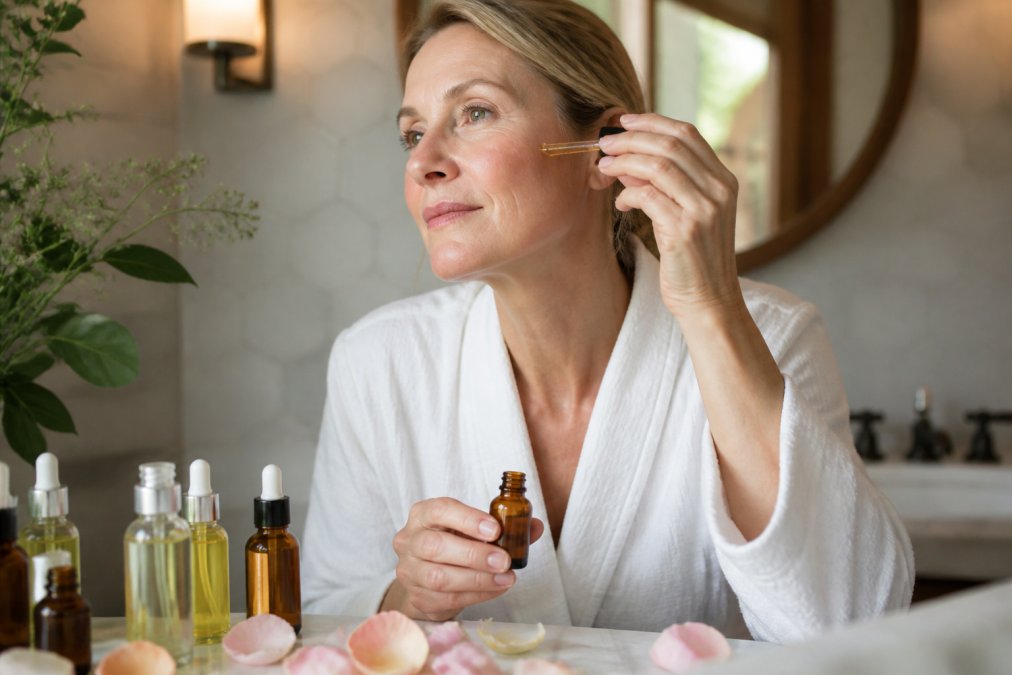
An organic skincare routine for redness works best when it follows a clear logic: morning protects, evening repairs.
Morning Routine: Protect and Calm
- Cleanse with a fragrance-free, pH-balanced cleanser like 100% PURE Rose Water Gentle Cleanser. Use lukewarm water to maintain the skin's acid mantle.
- Tone with an alcohol-free astringent that brightens and tightens naturally
- Treat and Moisturize with a calming serum or facial oil for barrier support and hydration.
- Protect with mineral SPF. The ILIA Super Serum Skin Tint SPF 40 combines this step with light coverage.
Evening Routine: Repair and Restore
- Double cleanse with an oil cleanser to remove sunscreen and environmental residue, then follow with your gentle water-based cleanser.
- Tone with an alcohol-free astringent that adds moisture while purifying pores.
- Seal and Repair with a nourishing facial oil like Herbivore Lapis or Charmed Valley Farm's #Farm2Face line to deliver plant-based lipids overnight.
Skip active exfoliation if your skin is currently reactive. Introduce exfoliating steps only after redness has calmed, and never more than twice weekly.
Seasonal Skincare Adjustments and DIY Organic Alternatives
Sensitive skin doesn't behave the same year-round. Environmental stressors shift dramatically between seasons.
Winter: Cold air and indoor heating deplete moisture retention rapidly. Swap lightweight water creams for richer formulas like Bee You Organics' waterless moisturizer or Annmarie's herbal oil. Add a humidifier to your bedroom.
Summer: Heat and UV exposure increase inflammation risk. Prioritize mineral SPF every morning and reduce heavy oils that can trap heat.
Spring and Fall: Transition seasons are when allergic flares peak. Stick to your most minimal routine during high-pollen periods.
Budget-Friendly DIY Organic Alternatives
- Oat water rinse: Colloidal oatmeal has FDA-recognized skin protectant status. Steep rolled oats in cool water, strain, and use as a gentle final rinse after cleansing.
- Aloe vera gel: Pure aloe vera gel applied directly from the plant provides immediate soothing for reactive flares. Avoid commercial aloe gels with alcohol or synthetic preservatives.
- Jojoba oil as a single-ingredient moisturizer: Jojoba oil closely mimics the skin's natural sebum and is non-comedogenic. According to the Environmental Working Group's Skin Deep database, jojoba oil consistently scores as one of the lowest-hazard cosmetic ingredients available.
How to Patch Test and Introduce New Products Safely
Patch testing is the single most important practice for anyone with sensitive or reactive skin introducing new organic beauty products.
The standard patch test process:
- Apply a small amount of the new product to the inner forearm or behind the ear
- Leave it on for 48 hours without washing off
- Check at 24 hours and again at 48 hours for redness, itching, swelling, or breakout
- If no reaction occurs, apply a small amount to the side of the jaw for 24 hours before full facial use
- Introduce only one new product per week so you can identify the cause if a reaction does occur
The one-product-at-a-time rule is especially important when building an organic skincare routine for redness. Many people introduce multiple products simultaneously and then can't identify which one triggered a flare.
If you're currently experiencing an active flare, significant redness, burning, or broken skin, hold off on introducing any new products. Restore your skin barrier first with a single trusted product, then expand your routine once the flare has resolved.
For those managing diagnosed conditions like eczema or rosacea, the American Academy of Dermatology's skincare guidance for sensitive conditions recommends consulting a board-certified dermatologist before making significant changes to your skincare routine.
Finding organic beauty products that genuinely work for sensitive skin takes patience and a willingness to read past the marketing. The reactive skin barrier is real, the triggers are specific, and the right botanical ingredients can make a meaningful difference, but only when they're chosen carefully and introduced thoughtfully. Charmed Valley Farm's #Farm2Face Flower Face Line is built on exactly this philosophy: flower-based, chemical-free ingredients grown and formulated to respect Mother Nature’s properties with full transparency, for skin that deserves to know what it's putting on. Learn More Here.
Frequently Asked Questions
What are the best organic beauty products for sensitive skin?
The best organic beauty products for sensitive skin share a few traits: they have no added fragrance, free from synthetic dyes and harsh preservatives, and formulated with calming botanical ingredients like calendula, chamomile, jojoba oil, and ceramides. Products certified by recognized bodies such as USDA Organic or MADE SAFE carry third-party verification that goes beyond marketing claims. Patch testing any new product before full application is still the safest first step, regardless of how gentle the formula appears.
Are organic beauty products actually better for skin inflammation and redness?
Many certified organic formulas do outperform conventional ones for reactive skin because they exclude common irritants like synthetic fragrance, sulfates, and parabens, which are frequent triggers for inflammation. Botanical ingredients such as blue tansy, calendula, and rosehip oil have documented anti-inflammatory properties that can reduce redness over time. That said, 'organic' alone is not a guarantee — some plant-derived essential oils can irritate reactive skin just as much as synthetic ingredients, so reading the full ingredient list still matters.
What natural ingredients should people with sensitive skin avoid?
Even in organic formulas, several natural ingredients commonly trigger reactions in sensitive skin. Citrus-derived essential oils like bergamot, lemon, and orange can cause photosensitivity and irritation. Peppermint and eucalyptus oils disrupt the skin's lipid barrier. Witch hazel in alcohol-based forms strips moisture. Cinnamon and clove extracts are known contact irritants. High concentrations of retinol-adjacent plant actives can also cause redness in reactive skin. Choosing essential oil-free, fragrance-free formulas significantly lowers the risk of a reaction.
Can organic skincare help with mature, sensitive skin issues like fine lines and uneven tone?
Organic beauty products for sensitive skin can address mature skin concerns when formulated with the right actives. Plant-based oils like rosehip and camellia seed oil deliver antioxidants that support skin renewal. Ceramides and jojoba oil reinforce the lipid barrier, which thins with age and contributes to crepiness. Calendula and matcha extracts calm inflammation while supporting moisture retention. The key is choosing products designed for both sensitivity and maturity, rather than assuming any gentle formula will also address fine lines or sunspots.
This article was written using GrandRanker