
Table of Contents
- Why Rosacea-Prone Skin Needs a Different Approach
- How to Identify Rosacea Triggers in Skincare
- Daily Skincare Steps for Reactive Skin
- Soothing Botanical Ingredients for Rosacea-Prone Skin
- Ingredients to Avoid When Building Your Rosacea Skincare Routine
- How Seasonal Changes Affect Your Rosacea Skincare Routine
- The Mind-Skin Connection: Stress, Diet, and Flare-Up Management
- Conclusion
- Frequently Asked Questions
Last Updated: September 29, 2026
Why Rosacea-Prone Skin Needs a Different Approach
An organic skincare routine for rosacea prone skin works differently than standard regimens: reactive skin has a compromised barrier that cannot tolerate the acids, scrubs, and synthetic fragrance in most conventional products. The goal shifts from aggressive correction to gentle protection.
Rosacea involves vascular dilation and chronic inflammation, so anything that heats the skin, strips its oils, or triggers an immune response makes redness worse. That's why an organic skincare routine for rosacea-prone skin built around fragrance-free, hypoallergenic formulas tends to calm flare-ups rather than provoke them.
How to Identify Rosacea Triggers in Skincare
Finding your triggers requires one change at a time, not a full overhaul. Most people react to a combination of ingredients rather than a single culprit, which makes patch testing essential.
Start with a simple elimination method:
- Introduce one new product every 10-14 days
- Track redness, stinging, and texture changes in a written log
- Remove the product if symptoms appear within 48 hours
- Retest after two weeks to confirm the reaction
Daily Skincare Steps for Reactive Skin
A consistent daily routine matters more than any single product. The structure below keeps transepidermal water loss low, avoids flushing triggers, and sequences products by texture so nothing pills or stacks into an irritant load.
The Core AM / PM Protocol
| Step | Morning | Evening | Why It Matters |
|---|---|---|---|
| Cleanse | Rinse with lukewarm water (about 90-95°F) | Non-foaming cleanser on damp skin | Removes debris without stripping the acid mantle |
| Tone | Skip, or mist if tight | Hydrating, alcohol-free toner | Restores pH-balanced surface after cleansing |
| Treat | None (keep AM minimal) | Emollient serum on damp skin | Seals in water and delivers soothing botanicals overnight |
| Moisturize | Light humectant layer (glycerin, hyaluronic acid) | Richer cream with ceramides or squalane | Locks in hydration and supports barrier repair |
| Protect | Mineral sunscreen SPF 30+ | None | UV is a documented rosacea trigger |
Sequencing rule: thinnest to thickest, toner, serum, cream, then sunscreen in the morning. Wait about 60 seconds between layers so each sets; rushing causes pilling.
Morning Routine
Keep mornings minimal and protective. Splash with lukewarm water, never hot, since heat drives vascular dilation within minutes. If skin feels tight, mist a hydrating toner and press it in with clean palms. Finish with mineral sunscreen before sun exposure, reapplying every two hours outdoors.
Evening Routine
Evenings are when repair happens. Use a non-foaming cleanser with lukewarm water, then apply a botanical serum while skin is still damp. This is where soothing, calming ingredients work best overnight.
Adjusting the Routine by Season
Rosacea flares track the weather, so the routine should not run year-round. The two adjustments that matter most:
Cold months (indoor heating + dry outdoor air):
- Swap the light humectant for a ceramide or squalane cream, and add a facial oil last to reduce transepidermal water loss.
- Run a humidifier; indoor humidity below 30% is a common flare driver.
- Avoid long hot showers, which strip the barrier before you even reach the sink.
Warm months (heat + UV):
- Switch to lighter, gel-cream textures so sweat does not trap product and trigger stinging.
- Reapply mineral sunscreen every two hours outdoors and wear a wide-brim hat, UV and heat are documented triggers.
- Keep a thermal water mist in the fridge for midday flushing; cold mist calms vascular dilation faster than a fan.
Transition windows (spring and fall):
- Change one product at a time, giving skin two full weeks before the next swap.
- Reintroduce richer creams in fall before the first cold snap, not after the first flare.
Soothing Botanical Ingredients for Rosacea-Prone Skin
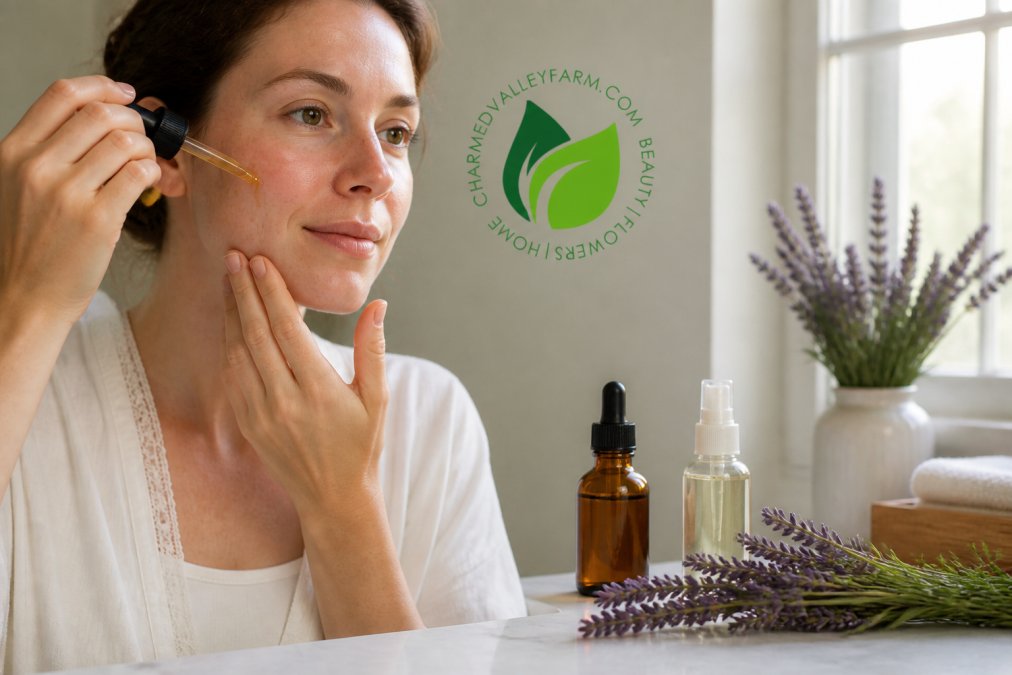
The most effective soothing botanicals for rosacea-prone skin reduce inflammation without adding irritants: german chamomile, rose geranium, niacinamide, and lactic acid in very low concentrations.
Ingredients to Avoid When Building Your Rosacea Skincare Routine
Certain ingredients reliably worsen rosacea, and avoiding them matters more than chasing miracle actives. The "no-go" list is longer than most guides admit, and several culprits hide behind the word "natural."
The Label-Reading No-Go List
Scan the full INCI list, not the marketing panel, for these:
- Synthetic fragrance and parfum. Fragrance is the most common cause of contact sensitization in reactive skin. "Fragrance-free" is not the same as "unscented," which often means a masking fragrance was added.
- Essential oil blends. Lavender, citrus, peppermint, eucalyptus, and tea tree oils are common "natural scent" offenders. Even organic-certified essential oils can drive vascular dilation and stinging.
- Denatured alcohol (alcohol denat.) and SD alcohol. These strip the lipid barrier on contact and leave skin more reactive to the next product you apply.
- Witch hazel distillate. Often marketed as soothing, the distilled form typically contains a high alcohol fraction that tightens and irritates.
- Physical scrub particles. Walnut shell, apricot kernel, salt, sugar, and jojoba beads cause micro-tears that trigger inflammation even on calm skin.
- Foaming surfactants. Sodium lauryl sulfate (SLS) and sodium laureth sulfate (SLES) disrupt the skin microbiome and the acid mantle. Look for glucosides or amino-acid surfactants instead.
- High-concentration acids. Glycolic, salicylic, and mandelic acids above roughly 5%, and any AHA/BHA used more than once weekly, commonly provoke flares.
- Chemical sunscreen filters. Oxybenzone, avobenzone, and octinoxate are frequent stingers for rosacea-prone skin; mineral filters (zinc oxide, titanium dioxide) are the safer default.
- Urea and propylene glycol at higher concentrations, which can sting compromised barriers.
Greenwashing Traps to Watch For
A product can carry an organic seal and still trigger a flare. "Botanical," "plant-derived," and "clean" are unregulated terms. The three claims that most mislead rosacea-prone shoppers:
- "Hypoallergenic", no federal standard defines it; it is a marketing claim, not a tested guarantee (the FDA).
- "Dermatologist-tested", does not mean tested on rosacea-prone skin, or that it passed.
- "Organic", refers to agricultural sourcing of ingredients, not to whether the finished formula is gentle.
- Niacinamide + strong acids (glycolic, lactic above 5%), can cause flushing and prolonged stinging.
- Vitamin C (L-ascorbic acid) + niacinamide, can cause temporary flushing in reactive skin; separate by at least 30 minutes or alternate days.
- Retinol/retinoid + any AHA/BHA, compounding barrier disruption; never layer in the same evening.
- Benzoyl peroxide + anything soothing, the peroxide oxidizes the soothing actives and defeats the purpose.
- Two exfoliants in one week, even "gentle" ones stack into an irritant load.
The safest "no-go" list is short and specific. If you cannot pronounce the first five ingredients or the label leads with fragrance, alcohol, or an acid, it does not belong on rosacea-prone skin, regardless of the organic seal on the front.
How Seasonal Changes Affect Your Rosacea Skincare Routine
Your routine should shift with the seasons. Cold air and indoor heating increase transepidermal water loss, while summer sun and heat drive flushing.
The Mind-Skin Connection: Stress, Diet, and Flare-Up Management
Stress and diet influence rosacea more than most people realize, this is where an organic skincare routine for rosacea-prone skin meets whole-body care. Emotional stress triggers inflammation through the same pathways that cause visible redness, and the psychological toll matters: many people with persistent redness report avoiding social situations.
Conclusion
Managing an organic skincare routine for rosacea prone skin takes patience, consistency, and products that respect a fragile barrier instead of fighting it. The right organic skincare routine for rosacea-prone skin replaces harsh actives with soothing, calming botanicals and shields skin from flare triggers.
Frequently Asked Questions
What is the best skincare routine for rosacea-prone skin?
A gentle, fragrance-free routine with four steps works best: cleanse with lukewarm water and a non-foaming cleanser, apply a soothing toner, moisturize with an emollient, and finish with mineral sunscreen every morning. Avoid physical scrubs, alcohol-based toners, and products with synthetic fragrance. Keep the routine consistent for at least four to six weeks before judging results, since reactive skin needs time to settle.
What soothing botanical ingredients help calm rosacea redness?
German chamomile, rose geranium, niacinamide, and cold-pressed oils like sunflower and rosehip are well tolerated by redness-prone skin. These ingredients support the lipid barrier and reduce inflammation without triggering flare-ups. Charmed Valley Farm's Flower Face Duo pairs a lavender and clary sage hydrosol toner with a rose geranium and rosehip serum, giving reactive skin a simple two-step option that avoids common irritants.
Which common skincare ingredients should I avoid if I have rosacea?
Skip physical scrubs, alcohol-based toners, synthetic fragrance, essential oils in high concentrations, and harsh chemical exfoliants like glycolic acid. Also avoid products with menthol, camphor, or sodium lauryl sulfate, which strip the skin barrier. Read labels carefully: 'fragrance-free' is safer than 'unscented,' since unscented products may still contain masking fragrances that trigger vascular dilation and redness.
How do I identify my rosacea triggers in skincare products?
Introduce one new product at a time and wait seven to ten days before adding another. Keep a simple log noting what you used and any redness, stinging, or flushing that followed. Patch test on your inner forearm first. If a reaction appears, stop the product and note the ingredients. Over time, patterns emerge, and you can pinpoint whether fragrance, preservatives, or exfoliating acids are behind your flare-ups.