
Table of Contents
- Understanding Sun Damage and Photoaging
- Natural Remedies for Sunspots and Hyperpigmentation
- How to Repair Skin Barrier Naturally After Sun Exposure
- Organic Beauty Products for Sensitive Sun-Damaged Skin
- Step-by-Step Routine: Treating Sun Damaged Skin With Natural Ingredients
- Common Mistakes to Avoid When Treating Sun Damage Naturally
- When to Seek Professional Dermatological Assessment
- Frequently Asked Questions
Last Updated: September 19, 2026
Understanding Sun Damage and Photoaging
Sun damage happens when UV rays penetrate your skin and create free radicals. These unstable molecules attack healthy cells and break down collagen. Over time, this causes visible signs of aging like fine lines, wrinkles, and sunspots.
Photoaging is the technical term for premature aging caused by sun exposure. It's different from natural aging because it accelerates the process. The sun damages skin cells' DNA, triggering inflammation and weakening your skin barrier.
What most people don't realize is that sun damage compounds over decades. A single bad sunburn in your 20s can show up as hyperpigmentation or rough texture in your 40s or 50s. The damage accumulates silently until one day you notice your skin looks tired and uneven.
At Charmed Valley Farm, we focus on treating sun damaged skin with natural ingredients because synthetic chemicals often irritate already-compromised skin. Our approach combines gentle botanical remedies with protective strategies to support skin repair.
The good news: you can support your skin's natural healing processes. The skin has a remarkable ability to heal when you give it the right support. Natural antioxidants, hydrating oils, and anti-inflammatory botanicals work with your skin's own repair mechanisms.
Natural Remedies for Sunspots and Hyperpigmentation
Sunspots and hyperpigmentation form when UV damage triggers excess melanin production. Your skin tries to protect itself by creating dark patches. These spots are stubborn because they're your skin's defense response, not just surface discoloration.
Natural ingredients work by addressing the root cause: oxidative stress and inflammation. Antioxidants neutralize free radicals. Anti-inflammatory botanicals calm the skin's overreaction. Together, they signal your skin to stop producing excess melanin.
Effective natural remedies include:
- Vitamin C from rosehips and kakadu plums (brightens and fades spots)
- Calendula (reduces inflammation and evens tone)
- Carrot seed oil (rich in carotenoids that support skin repair)
- Pomegranate seed oil (powerful antioxidant protection)
- Aloe vera (soothes and hydrates damaged areas)
- Helichrysum (promotes cell regeneration and reduces redness)
The challenge with natural remedies is consistency. Sunspots don't fade overnight. Visible improvement often requires consistent daily application. This is where many give up, they expect results in days, not weeks.
A practical approach: combine multiple ingredients for comprehensive support. Single-ingredient treatments work, but layering complementary botanicals can enhance the process. For example, a vitamin C serum followed by a pomegranate oil can offer both brightening and antioxidant defense.
How to Repair Skin Barrier Naturally After Sun Exposure
Your skin barrier is your first line of defense against damage. Sun exposure weakens this protective layer, leaving skin vulnerable to irritation, water loss, and deeper damage. A compromised barrier feels tight, looks dull, and becomes reactive to almost everything.
Repairing the skin barrier naturally means focusing on hydration and protective lipids. Your skin barrier is made of water and oils in a specific balance. Sun damage disrupts this balance. You need to restore both components.
Key steps to repair naturally:
- Use gentle cleansing to avoid stripping remaining protective oils
- Apply hydrating toners to replenish water content
- Layer nourishing oils to restore lipid barrier
- Avoid harsh exfoliation until barrier is healed
- Protect with antioxidants and SPF daily
The skin barrier can take time to repair when you're consistent. During this time, your skin may feel more comfortable, look less red, and respond better to other treatments.
Many people make the mistake of continuing aggressive skincare while their barrier is damaged. Exfoliating, using acids, or applying too many active ingredients slows healing. Sometimes doing less is the fastest path to recovery.
Natural oils like jojoba, sunflower, and shea butter are particularly effective because they mimic your skin's natural lipid composition. Your skin recognizes them as familiar, absorbs them easily, and integrates them into the barrier structure.
Organic Beauty Products for Sensitive Sun-Damaged Skin
Sensitive, sun-damaged skin needs products that heal without irritating. This rules out most conventional skincare, alcohol, synthetic fragrances, and preservatives often trigger reactions in compromised skin.
Organic beauty products designed for sensitive skin focus on purity and gentleness. When treating sun damaged skin natural ingredients, every ingredient should have a healing purpose. No fillers, no irritants, no unnecessary additives.
What to look for:
- Preservative-free or naturally preserved formulas (less irritation risk)
- Minimal ingredient lists (fewer chances for reactions)
- Cold-pressed or gently extracted oils (maximum potency)
- No synthetic fragrances or essential oils added for scent
- Certified organic when possible (higher purity standards)
The Flower Face line from Charmed Valley Farm represents this philosophy. The Flower Oil Face Serum combines organic cold-pressed sunflower oil with rosehips, raspberry leaves, and rose geranium, four ingredients that address sun damage directly. No fillers, no preservatives, no unnecessary complexity.

The Flower Water Face Toner uses distilled water infused with lavender, clary sage, amaranth, yarrow, and honeysuckle. These botanicals calm inflammation, balance skin pH, and prepare skin for serum absorption. It's the kind of simple, purposeful formula that sensitive skin responds to.
Many people assume "organic" means weak or ineffective. Organic ingredients can be potent because they're not diluted with synthetic stabilizers or preservatives. A pure botanical extract can offer significant benefits compared to a heavily processed alternative.
Step-by-Step Routine: Treating Sun Damaged Skin With Natural Ingredients
A proper routine for sun damaged skin follows a specific order. Each step prepares your skin for the next one. Skipping steps or changing the order reduces effectiveness.
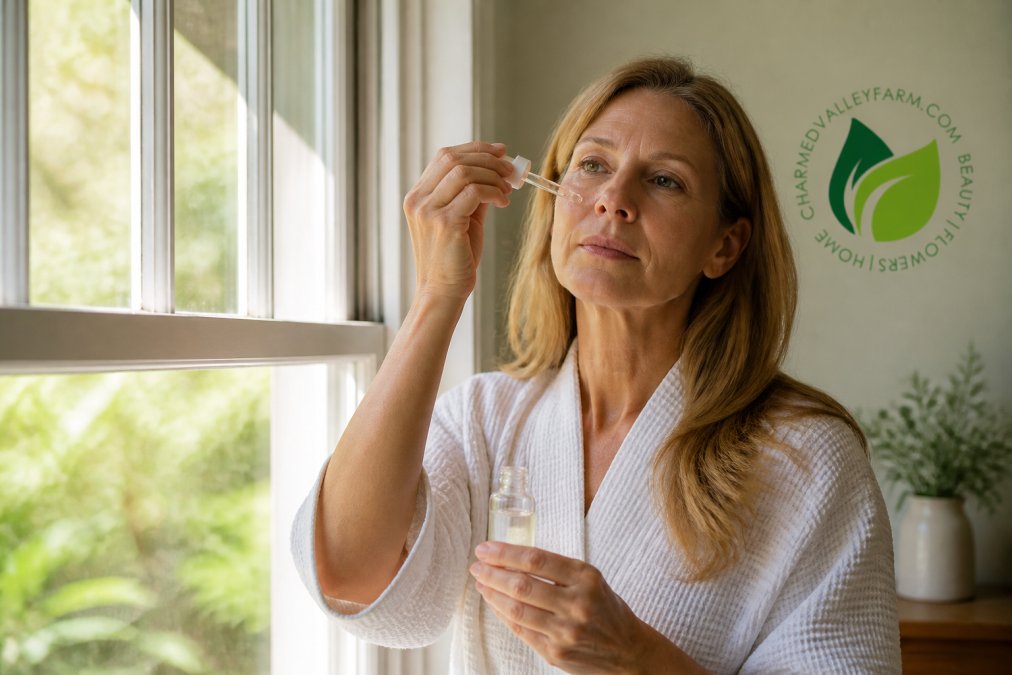
Step 1: Cleanse Gently Without Stripping
Start with a gentle cleanser that removes dirt and oil without damaging your barrier. Avoid hot water, which strips natural oils. Use lukewarm water and a soft touch.
Cleanse once daily, preferably at night. Morning cleansing can be as simple as rinsing with water. Your skin doesn't accumulate much dirt overnight, and over-cleansing irritates sensitive skin.
Look for cleansers with natural ingredients like oat extract, chamomile, or gentle plant-based surfactants.
Step 2: Apply Hydrating Toner to Restore Balance
After cleansing, apply a hydrating toner while your skin is still slightly damp. This locks in moisture and balances pH. Toners are often overlooked, but they're crucial for sun-damaged skin recovery.
Step 3: Nourish With Antioxidant-Rich Serum
This is where you address sun damage directly. A serum packed with antioxidants neutralizes free radicals and supports cell regeneration. Apply while skin is still damp from the toner.
Step 4: Protect and Prevent Further Damage
End your routine with daily sun protection. Even when treating sun damage, you must prevent new damage. SPF is non-negotiable.
Common Mistakes to Avoid When Treating Sun Damage Naturally
The biggest mistake people make is expecting overnight results. Natural ingredients work, but they work gradually. Sun damage took years to develop. Healing takes weeks to months. Patience is essential.
When to Seek Professional Dermatological Assessment
Natural remedies work for mild to moderate sun damage. But some conditions require professional evaluation. Knowing when to see a dermatologist prevents wasting time on treatments that won't help.
See a dermatologist if you have:
- Irregular or changing sunspots (potential skin cancer screening)
- Severe hyperpigmentation that doesn't improve after 3 months
- Deep wrinkles or significant loss of skin elasticity
- Persistent redness, inflammation, or sensitivity
- Signs of precancerous lesions or unusual growths
Frequently Asked Questions
Can you actually reverse sun damage with natural ingredients?
Natural ingredients can improve the appearance of sun damage and support skin repair, but they cannot fully reverse severe photoaging. Antioxidants like vitamin C and botanical oils reduce oxidative stress and support cell regeneration, while ingredients such as aloe vera and calendula soothe inflammation. Results depend on damage severity, consistency, and your skin type. Mild sunspots and fine lines often respond well to natural treatment, while deeper wrinkles or significant hyperpigmentation may require professional dermatological assessment alongside natural care.
What are the best natural remedies for sunspots?
Effective natural remedies for sunspots include vitamin C-rich ingredients that inhibit melanin production, pomegranate seed oil with its antioxidant properties, carrot seed oil for skin regeneration, and calendula for its anti-inflammatory benefits. Helichrysum oil supports skin elasticity and healing. These ingredients work best when applied consistently as part of a daily routine. The Flower Oil Face Serum combines rosehips, raspberry leaves, and rose geranium to address photoaging and support cell repair, making it a farm-to-face option designed for sun-damaged skin.
How do I know if natural ingredients are safe for my sensitive, sun-damaged skin?
Test any new natural ingredient on a small patch of skin first, waiting 24-48 hours for reactions. Organic beauty products for sensitive skin should be preservative-free or minimally processed to reduce irritation. Look for cold-pressed oils and botanical extracts without synthetic additives. If your skin is reactive after sun exposure, start with soothing ingredients like aloe vera and calendula before introducing stronger actives. Always store natural oils in cool, dark places to maintain potency and prevent oxidation that can irritate sensitive skin.
Should I use natural remedies or see a dermatologist for sun damage?
Natural remedies and professional care work best together. Start with a consistent routine using natural ingredients to address mild photoaging, sunspots, and skin texture. See a dermatologist if you have severe hyperpigmentation, deep wrinkles, suspicious lesions, or if natural treatment shows no improvement after 8-12 weeks. Professional options like chemical peels or laser resurfacing can complement natural care. A dermatologist can also assess whether your sun damage requires medical attention and recommend the safest approach for your skin type.