
Table of Contents
- What Farm to Face Beauty Philosophy Actually Means
- Farm to Face Skincare Ingredients: From Field to Bottle
- The Benefits of Botanical Skincare for Mature and Sensitive Skin
- How to Choose Organic Beauty Products for Sensitive Skin
- Farm to Face vs. Natural vs. Clean Beauty: What's the Difference?
- Shelf Life, Preservation, and Why Preservative-Free Skincare Needs a Date
- How to Verify a Farm to Face Claim Before You Buy
- Conclusion
- Frequently Asked Questions
Last Updated: September 16, 2026
What Farm to Face Beauty Philosophy Actually Means
Farm to face beauty traces every ingredient from the field where it was grown to the bottle on your shelf, prioritizing freshness, traceability, and minimal processing. At Charmed Valley Farm, our entire #Farm2Face line is built on this: flowers we grow ourselves, distilled in small batches, with nothing added that doesn't belong.
Farm to Face vs. Farm to Table: The Same Idea, Different Canvas
Both movements share one conviction: proximity and freshness change quality. Farm to table measures this in flavor and nutrition; farm to face measures it in the potency of bioactive compounds, the natural chemicals in plants that support skin health. The practical difference: you eat a tomato within days, while a serum sits on your shelf for months, so preservation and packaging become part of the philosophy.
Farm to Face Skincare Ingredients: From Field to Bottle
Farm to face skincare ingredients typically begin with cultivated botanicals grown without synthetic pesticides, harvested at a specific point in their growth cycle, and processed with methods like cold-pressing or steam distillation that protect delicate compounds.
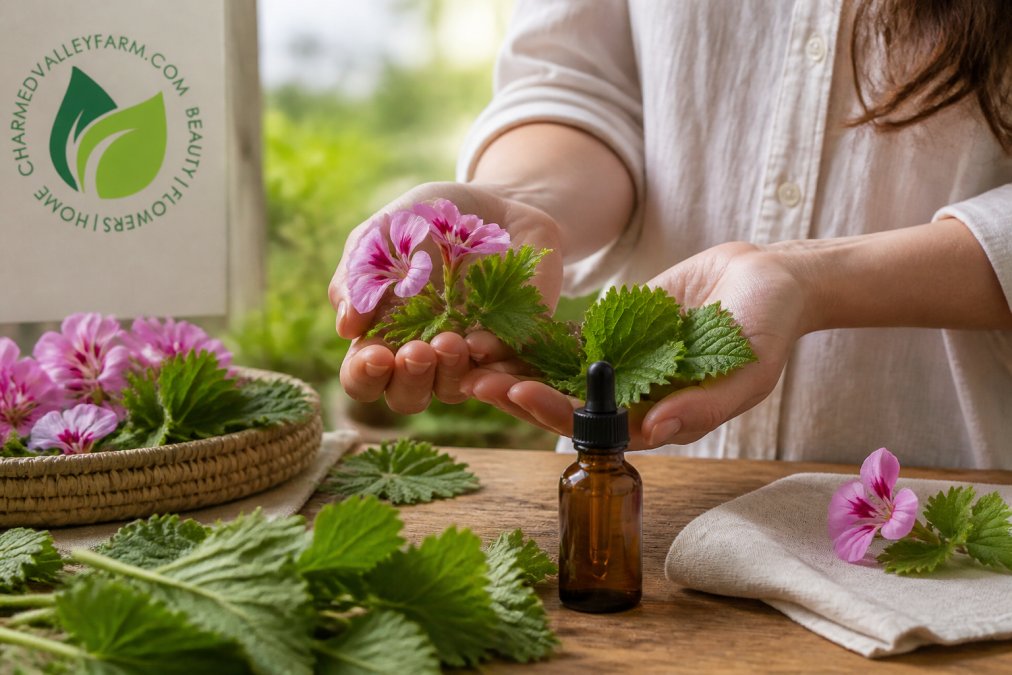
What Actually Counts as a Farm to Face Ingredient
"Grown locally and processed gently" is the philosophy, not the standard. In practice, a farm to face ingredient has to clear three checkpoints:
- A named origin. The grower, the field, or at minimum the region is documented. "Botanical extracts" is not an origin.
- A documented harvest window. The plant was cut at a defined stage, not whenever labor was available.
- A processing method that preserves actives. Cold-press, steam distillation, or low-temperature infusion, not solvent extraction or high-heat refining.
The Certification Landscape (and Why It's Thin)
There is no federal certification in the United States specifically for "farm to face" skincare. The term is not defined by the FDA, and it is not a regulated category the way "organic" is under the USDA National Organic Program, so any brand can print it on a label.
- USDA Organic, governed by the National Organic Program under the Organic Foods Production Act. It covers how ingredients are grown and handled, but says nothing about proximity or freshness.
- NSF/ANSI 305, a standard for personal care products containing organic ingredients, allowing a higher percentage of non-organic content than USDA Organic.
- Leaping Bunny, a cruelty-free certification run by the Coalition for Consumer Information on Cosmetics. Useful, but unrelated to sourcing.
Why Small-Batch Processing Changes the Chemistry
Small-batch production isn't nostalgia, it's a chemical decision. In large volumes, botanicals sit in holding tanks and wait for a production slot; every week in storage is a week of oxidation. A small batch shortens that window: the plant is harvested, dried or pressed, and formulated within a compressed timeline, meaning more intact fatty acids and retained volatile compounds.
The Shelf-Life Reality Nobody Mentions
Fresh botanicals and long shelf life are in direct tension. A cold-pressed oil rich in unsaturated fatty acids is more prone to rancidity than a refined oil stripped of those compounds, and preservative-free water-based products, hydrosols, toners, are vulnerable to microbial growth within weeks. That's why an honest farm to face brand prints a use-by window instead of an indefinite expiration, and why storage matters: cool, dark, sealed, away from bathroom humidity.
USDA National Organic Program overview
The Benefits of Botanical Skincare for Mature and Sensitive Skin
Botanical skincare offers gentler support for skin that has become reactive or thin with age, because plant-based oils and hydrosols tend to work with the skin barrier rather than against it. Many women in their forties, fifties, and beyond find that harsh actives trigger redness and irritation, while botanical formulas calm and nourish.
What's Actually Happening in the Skin
As skin ages, three things shift:
- The lipid barrier thins. Ceramides and natural oils decline, so water escapes faster and irritants get in more easily. This is why mature skin often becomes sensitive skin.
- Turnover slows. Dead cells linger, which dulls the surface and makes fine lines more visible.
- Sebum production drops. Less oil means less natural protection, especially on the cheeks and around the eyes.
Plant oils rich in linoleic acid, sunflower, rosehip, raspberry seed, mimic the lipids the barrier is missing. That's a structural claim, not a vague "nourishing" one: the oil fills gaps in the barrier so water stays in and irritants stay out. Hydrosols deliver water-soluble compounds and lightweight hydration without the occlusive weight of a cream.
Why "Gentle" Isn't the Same as "Weak"
There's a persistent myth that botanical formulas are for people who can't tolerate "real" skincare. The opposite is often true. Retinoids, acids, and high-percentage vitamin C are effective precisely because they disrupt the skin, they force turnover or exfoliation, which is also why they cause purging, peeling, and redness in reactive skin. Botanical formulas work on a different axis: they support the barrier rather than challenge it.
The Preservation Trade-Off in Botanical Formulas
The same unsaturated fatty acids that repair the barrier are the ones most prone to oxidation. A cold-pressed oil left in a warm bathroom will go rancid faster than a synthetic ester, and rancid oil can trigger the exact irritation the formula was meant to calm. Water-based botanical products face a sharper problem: a hydrosol or toner without preservatives is a hospitable environment for bacteria and mold.
How to Actually Judge Results
Botanical skincare rewards patience in a way that active-heavy routines don't. Users commonly report that the first two weeks feel like nothing is happening, then barrier-related improvements, less redness, less tightness, fewer reactive flare-ups, show up around weeks three and four. Texture and tone changes take longer, often two to three months of consistent use. That timeline is why patch testing and a two-week trial matter: if your skin feels calmer and less reactive after a month, the formula is working, even if the mirror hasn't caught up yet.
How to Choose Organic Beauty Products for Sensitive Skin
Choosing organic beauty products for sensitive skin comes down to reading the full ingredient list, not the front label. A product can call itself "natural" while still containing synthetic fragrance, preservatives, or fillers that irritate reactive skin. Here's a simple framework:
| What to Check | Green Flag | Red Flag |
|---|---|---|
| Ingredient list | Full botanicals named | "Fragrance" or "parfum" |
| Sourcing | Farm or origin stated | Vague "natural extracts" |
| Batch size | Small-batch noted | Mass-produced, no details |
| Preservatives | Disclosed honestly | Claims "preservative-free" with no date |
Farm to Face vs. Natural vs. Clean Beauty: What's the Difference?
Farm to face is the most specific of the three terms, because it requires a traceable origin for ingredients, not just a claim about what's absent. Natural and clean beauty describe what a product avoids; farm to face describes where it comes from.
Shelf Life, Preservation, and Why Preservative-Free Skincare Needs a Date
Preservative-free skincare has a shorter usable life, which is why an honest brand prints a clear window for use. Water-based products without preservatives are vulnerable to microbial growth, so freshness isn't a marketing angle, it's a safety requirement.
How to Verify a Farm to Face Claim Before You Buy
Verifying a farm to face claim means asking for specifics: named farms, harvest timing, batch sizes, and honest shelf-life guidance. Vague language like "farm-sourced botanicals" without a farm name is a signal to look closer.
Run through this checklist before you commit:
- Does the brand name the farm or growing operation?
- Is the harvest or production timing described?
- Are ingredients listed fully, with no hidden "fragrance"?
- Is the batch size stated as small or limited?
- Is there a clear shelf-life window for preservative-free items?
- Does the brand explain its processing method, such as cold-pressing?
Conclusion
The gap between real farm to face skincare and clever packaging comes down to one thing: whether a brand can tell you exactly where its botanicals grew and how quickly they reached the bottle. It's a standard that demands more work from the maker, and it's the reason we grow, harvest, and formulate the way we do.
Frequently Asked Questions
What does farm to face mean in skincare?
Farm to face means a skincare product's botanical ingredients are grown, harvested, and processed with traceable steps from a specific farm or growing operation, then formulated into the finished product with minimal delay and minimal processing. The term borrows from farm to table dining, where the emphasis is on freshness, local or known sourcing, and short supply chains. In practice, a farm to face brand can usually tell you which field, which harvest, and which method produced the oils or waters in your bottle, rather than sourcing anonymous commodity ingredients from a broker.
How does farm to face beauty differ from traditional organic skincare?
Organic certification tells you how ingredients were grown. Farm to face adds a second layer: where they came from and how quickly they moved from harvest to formulation. A product can be certified organic and still be made from ingredients that sat in a warehouse for a year before blending. Farm to face brands typically grow or directly partner with the farm, process in small batches, and can trace each input. That traceability, not just the organic label, is the defining difference.
Are farm to face beauty products better for sensitive skin?
They can be, mainly because fewer ingredients and no added synthetic preservatives or fillers means fewer things to react to. Charmed Valley Farm's Flower Oil Face Serum, for example, is built from cold-pressed sunflower oil infused with rosehips, raspberry leaves, and rose geranium, with no added chemicals or fillers. That said, botanical ingredients are still active ingredients. Patch test any new oil or toner on your inner arm for a few days before applying it to your face, especially if you have rosacea or reactive skin.
Does farm to face skincare use synthetic preservatives?
Often it does not, and that changes how you store and use the product. Charmed Valley Farm's Flower Water Face Toner and Flower Oil Face Serum are both preservative-free, which is why the brand recommends using them within 12 months of purchase and keeping them in a cool, dark place away from direct sunlight. Preservative-free formulas protect the potency of delicate botanical oils and distilled waters, but they also mean you should avoid leaving bottles in a hot bathroom or a sunny windowsill.
If you're ready to experience skincare with a traceable origin, Charmed Valley Farm offers the Flower Oil Face Serum, the Flower Water Face Toner, and the bundled Flower Face Duo, all made in small batches from organic, chemical-free botanicals. Start with the duo and see what fresh, farm-grown ingredients can do for your skin. Learn More Here