
Table of Contents
- How to Choose a Transformational Retreat That Isn't Just Marketing
- Wellness Retreat Itinerary Examples for Real Life Transitions
- How Long Should a Wellness Retreat Be for Lasting Change?
- Frequently Asked Questions
Last Updated: September 11, 2026
How to Choose a Transformational Retreat That Isn't Just Marketing
The wellness retreats industry has a credibility problem: luxury resorts have rebranded spa packages as "transformational journeys," and marketing has outrun substance. At Charmed Valley Farm, we host workshops and retreats rooted in a working flower farm.
Authentic wellness retreats for life transitions are designed around a specific change, a career shift, divorce, retirement or loss, where structure supports emotional processing rather than passive pampering.
The uncomfortable truth most guides skip: a retreat cannot transform you. It can only give you the conditions in which transformation becomes possible.
What separates a genuine retreat from a wellness-themed vacation
A genuine program has three markers: a stated purpose tied to a transition, a small group (usually under fifteen), and an integration plan for after you leave (apa.org). Without these, it is a holiday with lavender oil.
A retreat that acknowledges grief, uncertainty and discomfort is more useful than one promising bliss.
A vetting checklist you can use before you book
- Is the transition type named explicitly?
- Is the group size capped and stated?
- Are facilitators named, with relevant training?
- Is there a written post-retreat integration plan?
- Is the daily schedule published in full?
How to Choose a Transformational Retreat That Isn't Just Marketing
A transformational retreat earns that label through structure, not scenery: a published schedule, named facilitators, a capped group size and a follow-up plan. If any are missing, treat the marketing language as decoration.
The practical test: ask what happens on day three when a participant is struggling. A program built for real transitions will have an answer; one built for photos will not.
A high price does not correlate with depth. Many smaller, farm-based or nature-based programs focus overhead into facilitation rather than chandeliers.
Wellness Retreat Itinerary Examples for Real Life Transitions
A useful retreat itinerary alternates structured practice with unstructured processing time, because insight needs room to land. Three structures, mapped to common transitions:
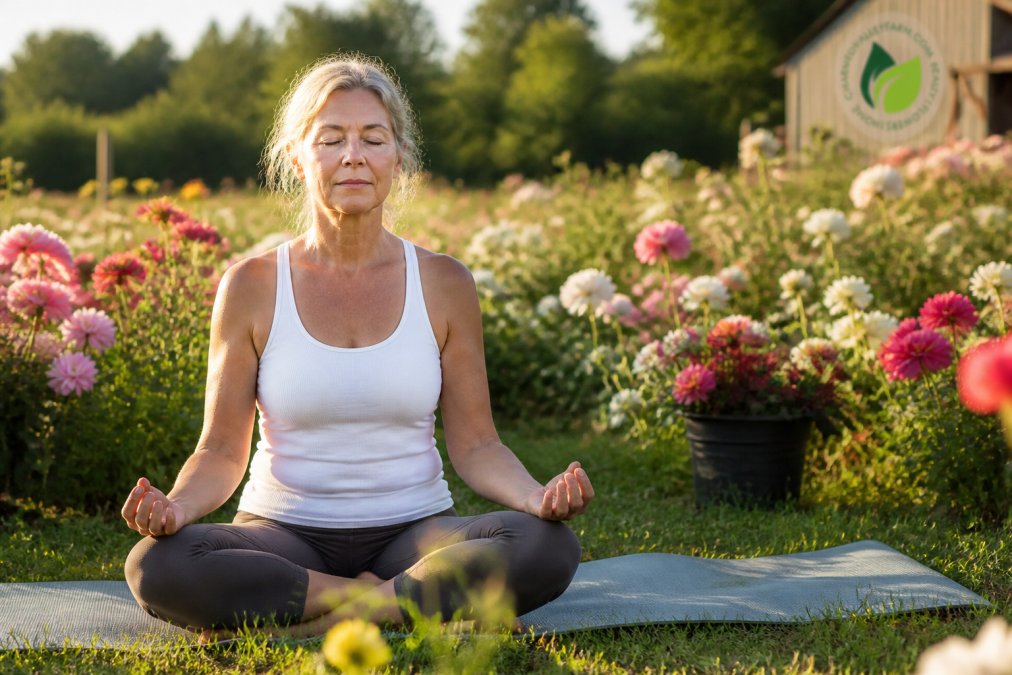
Career change or burnout recovery. Mornings begin with breathwork and gentle movement; midday holds a facilitated session on identity and work; afternoons are open for journaling or rest; evenings close with restorative practice.
Retirement or empty-nest transition. This structure leans on somatic healing and creative practice: flower arranging, garden work and hands-on making give the body something to do while the mind reorganizes, and sound baths settle a nervous system that has run on urgency for decades.

Loss or divorce. The most gentle of the three. Short practices, long breaks, one-to-one time with a facilitator, and no pressure to perform insight. Group sharing is optional, never compulsory.
| Transition | Daily Focus | Best Practices | Group Size |
|---|---|---|---|
| Career change | Identity and work | Breathwork, journaling | Under 15 |
| Retirement | Making and rest | Somatic work, creative | Under 12 |
| Loss or divorce | Gentle processing | Restorative, one-to-one | Under 10 |
None of these itineraries promise a breakthrough. They promise conditions, that is the honest offer.
How Long Should a Wellness Retreat Be for Lasting Change?
Three to five days is the practical minimum for a wellness retreat to produce lasting change, because the first day is spent arriving (peer-reviewed research). Shorter programs rarely move past surface relaxation; longer than ten days suits people in deep transition with the time and support to absorb it.
Habit research points to repetition and follow-through rather than intensity: a four-day retreat followed by six weeks of small daily practice will outperform a ten-day immersion with nothing afterward (apa.org).
What post-retreat integration actually looks like
Integration is where most programs quietly fail. A real plan includes a follow-up session, a written practice to continue, and a way to stay connected to the group; without these, effects fade within a month.
Ask what happens on day thirty. The answer tells you whether the organizer cares about outcomes or attendance.
Matching length to your situation
- Weekend (2 days): An introduction, not a transition program.
- Three to five days: The sweet spot for most life transitions.
- Seven to ten days: Suited to deep transition with support at home.
- Longer immersions: Require careful planning for re-entry.
Life transitions rarely announce themselves politely, and finding a program that treats them with honesty rather than decoration takes real effort. Charmed Valley Farm hosts yoga, sound bath and creative workshops on a working flower farm, alongside our #Farm2Face botanical skincare line, because we believe personal growth belongs in real places rather than polished ones. Our events are small, seasonal and grounded in the natural rhythm of the farm. Learn more about our workshops and retreats and see whether one fits where you are right now.
Frequently Asked Questions
What should I look for in an authentic wellness retreat?
Look for small group sizes, qualified facilitators, and a clear daily rhythm that includes rest. Ask whether the retreat offers post-program integration support, since lasting change depends on what happens after you leave. At Charmed Valley Farm, the Sound Bath Yoga session pairs gentle movement with crystal singing bowls for nervous system rest, and it costs $25.
How do wellness retreats help with major life transitions?
Transitions like divorce, retirement, or career pivots leave a gap between who you were and who you are becoming. A retreat creates structured space to process that gap through mindfulness practices, journaling, and therapeutic activities. The goal is not escape but recalibration: you leave with clearer priorities and a routine you can carry home.
How much does a wellness retreat typically cost?
Costs vary widely. Charmed Valley Farm's Yoga at the Flower Farm class is $25, and the Flower Face Spa Box at $99 brings a botanical self-care ritual home for daily use between retreats.