
Table of Contents
- Why Organic Botanical Oils Work for Sensitive Skin
- Best Facial Oils for Sensitive Skin
- Botanical Oil vs. Essential Oil: What's the Difference?
- How to Patch Test Facial Oil Before You Commit
- How to Use Facial Oil on Sensitive Skin
- Choosing Quality: Storage, Sourcing, and Oxidation
- Conclusion
- Frequently Asked Questions
Last Updated: October 6, 2026
Why Organic Botanical Oils Work for Sensitive Skin
The benefits of organic botanical oils for sensitive skin start with chemistry, not marketing. Plant oils are rich in fatty acids that mirror the lipids your skin already produces, so a well-chosen oil can support a compromised barrier instead of sitting on top of it.
Sensitive skin usually means a weakened lipid barrier. When that barrier is thin, water escapes and irritants get in, which shows up as redness, itchiness, and tightness. Oils high in linoleic acid, like sunflower and rosehip, tend to absorb quickly and help replenish those missing lipids.
How Plant Oils Differ from Synthetics
Synthetic emollients are engineered for shelf stability and a predictable feel. Botanical oils are messier and less predictable, but they bring antioxidants and fatty acids synthetics simply don't contain.
That trade-off matters for reactive skin. A single plant oil can deliver hydration, soothing compounds, and antioxidant protection at once. The catch is that natural doesn't automatically mean gentle, and that's where most "organic" labels fall short.
Best Facial Oils for Sensitive Skin
The best facial oils for sensitive skin are simple, low in fragrance, and high in linoleic acid. Fewer ingredients means fewer chances for a reaction, and linoleic-rich oils tend to feel lighter on reactive skin because linoleic acid is the same fatty acid that dominates a healthy skin barrier.
Here's how the common options compare, with the trade-offs that matter for reactive skin:
| Oil | Dominant Fatty Acid | Best For | Evidence Level | Watch Out For |
|---|---|---|---|---|
| Sunflower | Linoleic acid | Barrier support, most skin types | Strong: human studies on barrier repair and lipid replenishment | Goes rancid if stored warm; check for cold-pressed, unrefined |
| Rosehip | Linoleic acid | Redness, uneven tone | Moderate: small human trials plus lab data on antioxidant content | Oxidizes quickly; keep in amber glass, use within 6-12 months |
| Raspberry seed | Linoleic and alpha-linolenic acid | Antioxidant protection | Lab and in-vitro data; fewer human trials | Higher cost; often blended rather than used alone |
| Jojoba | Wax esters | Balancing oily-sensitive skin | Long traditional use; limited clinical trials | Heavier feel for some; not a true oil, so it behaves differently |
| Coconut | Lauric acid | Body hydration | Well-documented for body, not facial barrier repair | High comedogenic rating; can clog facial pores |
| Squalane (olive- or sugarcane-derived) | Squalane | Lightweight hydration, all skin types | Strong: mimics a lipid the skin already produces | Not technically a botanical oil if synthetically derived; check the source |
How to Read This Table Like a Formulator
Three columns do the real work here: fatty acid, evidence level, and watch-out. A high linoleic acid content usually means a lighter, faster-absorbing oil that suits reactive and acne-prone skin. A high oleic or lauric acid content usually means a richer, heavier oil that suits body care or very dry skin but can feel occlusive on the face.
Evidence level matters because not every oil has the same research behind it. Sunflower and squalane have human data on barrier support. Rosehip and raspberry seed lean more on lab studies and traditional use. That doesn't make them useless, but it means you should treat the claims on the label with appropriate skepticism.
Comedogenicity: A Rating, Not a Verdict
Comedogenicity ratings run from 0 to 5, and coconut oil is often listed at 4. That number is a useful starting point, not a rule. Ratings come from rabbit-ear studies that don't perfectly predict human facial skin, and a comedogenic ingredient in a well-formulated product at a low percentage may cause no problems at all.
For acne-prone sensitive skin, the practical move is to favor oils rated 0-2 (sunflower, rosehip, squalane, jojoba) and to introduce one new oil at a time so you can attribute any breakout to the right product.
What to Look for on the Label
Short ingredient lists beat long ones for sensitive skin. You want the carrier oil named plainly, no added fragrance, and a cold-pressed or unrefined note, since heat processing strips some of the beneficial compounds.
Our Flower Oil Face Serum follows that logic: organic, cold-pressed sunflower oil infused with rosehips, raspberry leaves, and rose geranium, formulated with a proprietary method that protects the active botanical properties. No fillers, no added chemicals.

Botanical Oil vs. Essential Oil: What's the Difference?
A botanical oil is a carrier oil pressed from a plant's seeds, nuts, or fruit, and it can be applied directly to skin. An essential oil is a highly concentrated volatile extract, often steam-distilled, and it should almost never touch your face undiluted.
That distinction is where a lot of sensitive-skin irritation begins. Carrier oils are the base; essential oils are the accent, and the accent is what usually causes trouble.
For reactive skin, the safest approach is to choose a finished product where any essential oil is already diluted to a low level, or to skip fragrance entirely.
How to Patch Test Facial Oil Before You Commit
Patch testing is the single step most people skip, and it's the one that prevents a week of redness. The process takes a few days, and it's worth every minute. It also helps you tell the difference between a temporary irritation and a true allergic reaction, which are not the same thing and require different responses.
Irritation vs. Allergy: Why the Distinction Matters
An irritant reaction is a direct response to something harsh. It usually shows up within minutes to hours, stays confined to where you applied the product, and fades once you stop using it. A true allergy is an immune response.
That timing difference is why a three-day patch test beats a one-day test. Sensitization builds slowly, and a reaction on day three is just as meaningful as one on day one. If you've reacted to a product before, note whether it was immediate (irritation) or delayed (possible allergy) so you can describe it accurately to a dermatologist.
The Step-by-Step Patch Test
- Cleanse a small area on your inner forearm or behind your ear and let it dry completely.
- Apply one or two drops of the oil to that spot only.
- Wait 24 hours without washing the area, and check for redness, itching, or bumps.
- Repeat for two to three days if there's no reaction, since sensitization can build slowly.
- Test on your jawline before your full face, then expand if all stays calm.
Stop at any sign of irritation and rinse with cool water. If the reaction spreads, blisters, or persists more than a few days after you stop using the product, see a dermatologist rather than trying another oil.
Fragrance Allergens to Watch For
If your oil contains essential oils, the fragrance compounds are the most likely culprits. Common fragrance allergens include limonene, linalool, citronellol, geraniol, eugenol, and cinnamal. These are natural components of many plant oils, so "natural" does not mean "hypoallergenic."
Under U.S. labeling rules, fragrance allergens don't always have to be listed individually, which makes reading the ingredient list harder than it should be. The safest approach for reactive skin is to choose a carrier-oil-only product or one where any essential oil is already diluted to a very low level.
How to Use Facial Oil on Sensitive Skin
Apply facial oil to damp skin, not dry skin. A few drops pressed gently into a freshly cleansed face lock in moisture far more effectively than oil applied to a dry surface.
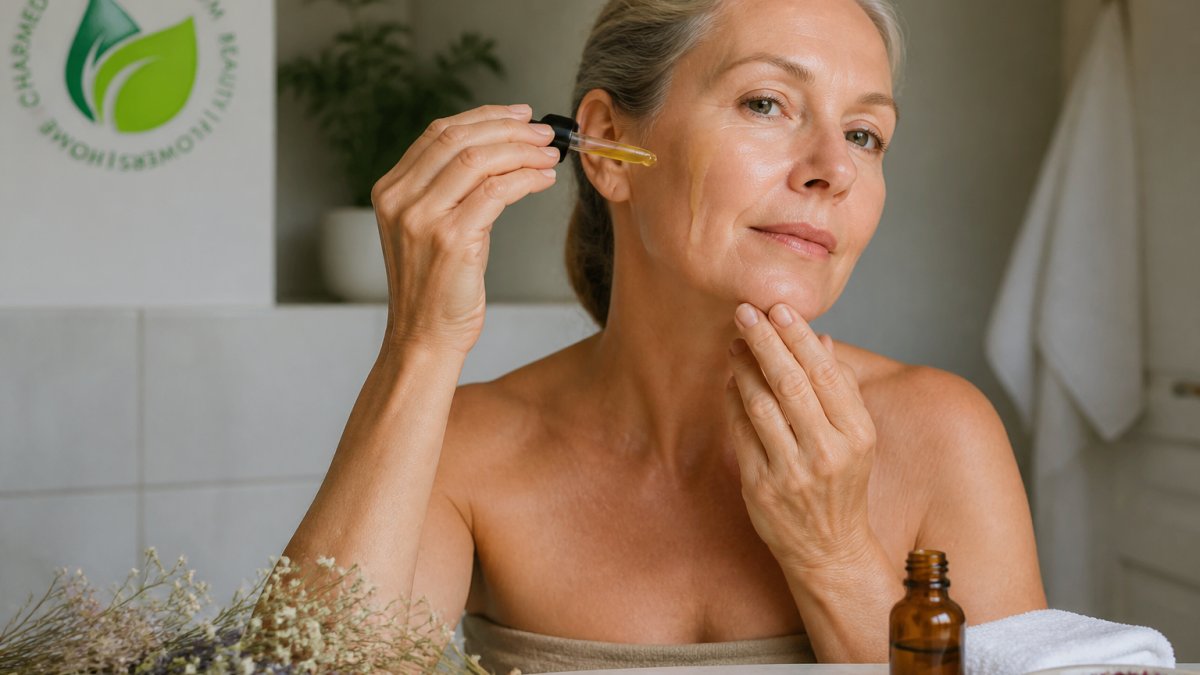
Our recommended routine is simple: cleanse, then add one full dropper of Flower Oil Face Serum to your palm and massage onto damp face, neck, and chest. Used nightly, a 1 oz bottle lasts about 30 days.
Layering with Other Products
Order matters. Thinnest to thickest is the rule, and oil goes near the end because it can block lighter products from absorbing.
A workable sequence for reactive skin:
- Cleanser
- Hydrating toner, applied to damp skin
- Serum or treatment
- Facial oil
- Moisturizer, if your skin still feels tight
If you're using our Flower Face Duo, spritz the Flower Water Face Toner first to clarify and prepare skin, then follow with the serum for hydration and elasticity. The toner is distilled in small batches with traces of lavender, clary sage, amaranth, yarrow, and honeysuckle.

Choosing Quality: Storage, Sourcing, and Oxidation
Freshness decides whether an oil helps or hurts. Botanical oils oxidize when exposed to light, heat, and air, and oxidized oil is more likely to irritate sensitive skin than fresh oil.
Store your facial oil in a cool, dark place away from direct sunlight. Our serum is preservative-free, so it's best used within 12 months of purchase. If an oil smells sharply different from when you opened it, or turns tacky, it's past its useful life.
Sourcing matters just as much. The USDA National Organic Program sets the standards behind certified organic claims, so a real certification is verifiable rather than a word on a label.
Conclusion
Finding an oil that calms reactive skin instead of provoking it takes patience, and the wrong pick costs you weeks of recovery. Start with a single, simple, cold-pressed botanical oil and patch test it properly before committing.
Our Flower Face Skincare line was built for exactly this: organic, chemical-free formulas in small batches, with the Flower Oil Face Serum and Flower Water Face Toner working together as a gentle one-two step. Learn more about the Flower Face collection and give your skin the farm-to-face approach it's been asking for.
Frequently Asked Questions
What is the difference between botanical oils and essential oils?
Botanical oils, also called carrier oils, are pressed from seeds, nuts, or fruit and make up most of a formula's volume. Essential oils are distilled from flowers, leaves, or bark and are far more concentrated. A single drop of essential oil can contain hundreds of aromatic compounds, which is why sensitive skin often reacts to them. Carrier oils like sunflower or rosehip supply fatty acids and antioxidants without that intensity. If your skin is reactive, choose a product built on carrier oils and treat any essential oil as a minor, clearly listed addition.
Can botanical oils irritate sensitive skin?
Yes. Natural does not automatically mean gentle, and plant extracts can trigger allergic contact dermatitis. Fragrant oils such as rose geranium or citrus peel are common culprits. Comedogenic oils, including coconut and wheat germ, can clog pores on acne-prone skin. The safest approach is to patch test on your inner forearm for 24 to 48 hours, then behind your ear, before applying anything to your face. Start with a single-ingredient carrier oil and add one product at a time so you can identify what caused a reaction.
How do you patch test a facial oil?
Wash a small area on your inner forearm and pat it dry. Apply one or two drops of the undiluted oil and leave it uncovered for 24 hours. Check for redness, itching, or small bumps. If your skin stays calm, repeat behind your ear for another 24 hours, since facial skin is thinner and more reactive. Only then introduce the oil to your full face, starting with a single drop at night. Keep the bottle for at least a week before deciding, because some reactions take several exposures to appear.
Are organic oils better for sensitive skin?
Organic certification tells you how a crop was grown, not how your skin will respond. It does reduce your exposure to pesticide residues and limits some synthetic additives, which matters if you are trying to avoid chemicals. But an organic essential oil can still cause an allergic reaction. Look for the USDA Organic seal, a short ingredient list, and cold-pressed carrier oils. Then patch test regardless of the label. The combination of clean sourcing and a careful introduction is what actually protects reactive skin.