
Table of Contents
- Why DIY Organic Face Masks for Inflammation Work
- What You'll Need Before You Start
- DIY Face Masks for Redness: 3 Soothing Recipes
- Homemade Face Masks for Sensitive Skin: What to Avoid
- Oatmeal Face Mask for Irritated Skin: Step-by-Step
- How to Patch Test Skincare Before Using a New Mask
- Application Tips and Common Mistakes
- Frequently Asked Questions
Last Updated: October 6, 2026
Why DIY Organic Face Masks for Inflammation Work
Your skin is inflamed, tight, and probably a little angry. Before you reach for another bottle of something you can't pronounce, know this: DIY organic face masks for inflammation work because they skip the harsh stuff. No synthetic fragrance. No drying alcohols. Just simple ingredients that calm and cool.
At Charmed Valley Farm, we built our whole #Farm2Face approach on this idea. Flowers and botanicals, grown clean, used fresh. When your skin barrier is stressed, gentle beats complicated every time.
Here's the honest part most guides skip: a mask won't cure a skin condition. But it can soothe redness, ease tightness, and give reactive skin a break from the products that caused the flare in the first place. That's real relief.
Below, we'll show you three recipes you can make tonight, plus the mistakes that make inflammation worse.
What You'll Need Before You Start
Good masks start with good prep. Gather your ingredients and tools first so you're not scrambling mid-mix.
A quick note on sourcing: fresh, food-grade ingredients matter here. What goes on your face should be clean enough to eat.
Base Ingredients and Their Roles
Each base does a specific job. Pick based on what your skin needs today.
- Plain yogurt: adds coolness and gentle lactic acid
- Raw honey: holds moisture and calms irritation
- Colloidal oatmeal: the gold standard for itchy, irritated skin
- Aloe vera gel: cools and hydrates without oil
- Green tea: packed with calming antioxidants
- Cucumber: mostly water, pure cooling relief
Tools and Storage
You don't need much. A small ceramic bowl, a silicone spatula, and a clean face cloth cover it.
- Mix in glass or ceramic, never metal
- Store leftovers in a sealed jar in the fridge
- Use within 2-3 days
- Make small batches, fresh is better
DIY Face Masks for Redness: 3 Soothing Recipes
These three recipes target redness specifically. Each takes under five minutes to make.
Cucumber and Aloe Cooling Mask
The fastest relief for hot, flushed skin. Blend half a cucumber with two tablespoons of aloe gel. Apply cold.
Best for: sunburn, heat flushing, post-workout redness.
Green Tea and Honey Calming Mask
Brew green tea, let it cool, then mix one tablespoon with one tablespoon of raw honey. The honey holds moisture while the tea calms.
Best for: dull, stressed skin that needs both comfort and a gentle glow.
Chamomile and Yogurt Soothing Mask
Steep chamomile tea, cool it, and blend with two tablespoons of plain yogurt. This one feels like a cool compress.
Best for: reactive skin that flushes easily.
Homemade Face Masks for Sensitive Skin: What to Avoid
Sensitive skin reacts to ingredients that seem harmless. Skip these, even in "natural" recipes.
- Essential oils: lavender and citrus can trigger reactions
- Lemon or lime juice: too acidic, causes burns
- Baking soda: strips the skin barrier
- Cinnamon: a common irritant, not a soother
- Fragrance of any kind: the top cause of contact reactions
If a recipe stings, wash it off right away. Stinging is not a sign it's working.
Oatmeal Face Mask for Irritated Skin: Step-by-Step
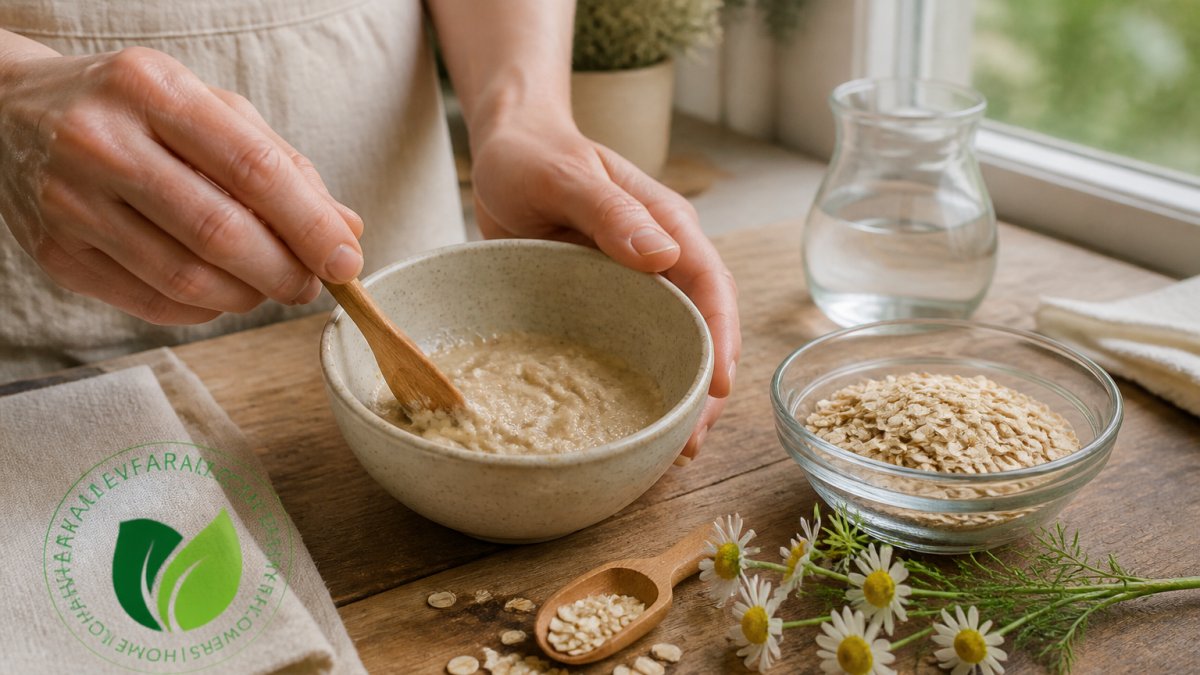
An oatmeal face mask for irritated skin is the single most reliable recipe for angry, itchy, reactive faces. Colloidal oatmeal is the key. It's finely ground so it mixes into a soothing paste instead of sitting on your skin like gravel.
Here's the full method.
Choosing the Right Oats
Not all oats work the same. Regular rolled oats are too coarse for a mask.
- Best: colloidal oatmeal, finely milled for skincare
- Good backup: grind plain rolled oats in a blender until powdery
- Skip: instant flavored packets with added sugar and salt
Mixing and Applying
- Add two tablespoons of colloidal oatmeal to a bowl
- Pour in warm water, a little at a time
- Stir until you get a smooth paste
- Add one teaspoon of honey for extra moisture
- Apply a thin layer, avoiding eyes and lips
- Leave on for 10-15 minutes
- Rinse with lukewarm water and pat dry
Expected result: skin feels calmer and less tight right after. Redness often looks softer within the hour.
How to Patch Test Skincare Before Using a New Mask
Learning how to patch test skincare takes two minutes and saves you a week of regret. Never skip it, even with ingredients you've eaten before.
- Wash a small patch on your inner forearm
- Apply a dime-sized amount of the mask
- Cover it with a bandage
- Wait 24 hours without washing the spot
- Check for redness, itching, or bumps
If nothing happens, the mask is likely safe for your face. If you see a reaction, don't use it. Your skin is telling you something.
Application Tips and Common Mistakes
How you apply a mask matters as much as what's in it. Small changes make a big difference.
- Start with a clean face. Dirt traps the mask against your skin.
- Don't scrub. Rub gently, let the ingredients do the work.
- Watch the clock. 10-15 minutes is enough. Longer dries out skin.
- Rinse with lukewarm water. Hot water undoes the calming effect.
- Moisturize right after. Seal in the calm while skin is damp.
- Don't mask daily. Two to three times a week is plenty for most skin.
For mature or reactive skin, our American Academy of Dermatology guidance on sensitive skin recommends keeping routines simple and avoiding known irritants. That's the same logic behind every recipe here.
If you'd rather skip the mixing, our Flower Face Skincare line follows the same chemical-free, botanical-first approach we use in these recipes.
Frequently Asked Questions
What homemade face mask ingredients may help soothe redness?
Ingredients with natural anti-inflammatory properties can help calm redness. Cucumber, aloe vera, green tea, chamomile, and colloidal oatmeal are common choices. Honey adds antibacterial benefits and helps retain moisture. Yogurt contains lactic acid, which gently exfoliates without stripping sensitive skin. When making DIY organic face masks for inflammation, combine two or three of these ingredients rather than using many at once. Always patch test first, and keep the mask on for 10 to 15 minutes. Rinse with cool water and follow with a gentle moisturizer.
How do you make a gentle DIY face mask for sensitive skin?
Start with a base of colloidal oatmeal or plain yogurt, then add one soothing ingredient like mashed cucumber or a teaspoon of honey. Avoid citrus, cinnamon, peppermint, and essential oils, which can trigger reactions on reactive skin. Mix with cool water or brewed green tea until you get a paste. Apply a thin layer, leave it on for 10 minutes, and rinse with lukewarm water. Homemade face masks for sensitive skin should be used no more than twice a week to avoid over-exfoliation.
Can oatmeal help calm irritated skin?
Yes. Colloidal oatmeal contains avenanthramides, compounds that may reduce inflammation and itching. For an oatmeal face mask for irritated skin, grind plain rolled oats into a fine powder, mix with water or milk, and apply as a paste. Let it sit for 10 to 15 minutes, then rinse gently. Oatmeal works best when combined with other calming ingredients like honey or chamomile. Avoid instant flavored oatmeal, which contains sugar and additives.
How often can you use a DIY face mask?
Most DIY organic face masks for inflammation can be used once or twice a week. If your skin is very reactive, start with once a week and see how it responds. Overuse can disrupt your skin barrier and cause more irritation. Between masks, stick to a simple routine with a gentle cleanser and moisturizer. If you notice increased redness, stinging, or flaking, stop using the mask and let your skin rest. Patch testing before each new recipe helps you identify problem ingredients early.
Inflammation is stubborn, and no single mask fixes it overnight. But a gentle, organic routine gives reactive skin the break it needs to settle down.
At Charmed Valley Farm, we grow and craft our botanical products with that same care. Our #Farm2Face line is chemical-free and rooted in real ingredients, not marketing claims. If you're ready to build a calmer routine, learn more about our approach here.