
Table of Contents
- What Makes Flower-Based Toners Different for Sensitive Skin
- Key Soothing and Calming Ingredients in Floral Toners
- Best Toner for Sensitive Skin: What to Look For
- Rose Water Toner for Sensitive Skin: A Closer Look
- How to Patch Test Facial Toner Before Full Use
- Can You Use Face Toner Every Day? Practical Guidelines
- Common Mistakes That Damage Sensitive Skin
- Frequently Asked Questions
Last Updated: October 14, 2026
What Makes Flower-Based Toners Different for Sensitive Skin
A flower based face toner sensitive skin works differently than standard formulas because it prioritizes plant extracts that calm rather than strip. When your skin is reactive, the goal isn't deep cleansing, it's restoring balance and protecting your barrier. That's where botanical ingredients shift the entire approach.
At Charmed Valley Farm, floral toners deliver hydration and soothing compounds without the harshness of alcohol or synthetic fragrances. Rosewater, chamomile, and aloe vera don't just smell pleasant, they contain compounds that reduce inflammation and support your skin's natural defenses.

Floral extracts versus fragrance and essential oils
This distinction matters more than most people realize. A true floral extract is the concentrated plant material itself, distilled water infused with petals, leaves, or roots. Fragrance, even "natural" fragrance, is a processed aromatic compound added for scent. Essential oils are concentrated plant oils that can irritate sensitive skin if not heavily diluted.
Your flower based face toner sensitive skin should list actual plant extracts in the ingredient deck, not fragrance or essential oil. When you see "rose extract" or "chamomile distillate," you're getting the calming compounds. When you see "fragrance" or "parfum," you're getting something designed to smell good, which may trigger sensitivity.
Why sensitive skin responds to botanical formulas
Sensitive skin has a compromised barrier. It reacts to irritants more quickly because your protective layer isn't functioning at full strength. Botanical extracts work because they contain naturally occurring compounds, flavonoids, polyphenols, and antioxidants, that your skin recognizes and tolerates better than synthetic actives.
A flower based face toner for sensitive skin also tends to be gentler on pH. Most botanical toners sit closer to your skin's natural pH (around 5.5) compared to traditional astringent toners that can shift your balance and trigger reactivity. This pH stability alone prevents the irritation cycle many sensitive-skin users experience.
Key Soothing and Calming Ingredients in Floral Toners
Understanding which botanical ingredients actually soothe reactive skin helps you read labels with confidence. Not every floral ingredient works equally, some are proven calming agents, others are more cosmetic.
Rosewater and chamomile for redness and irritation
Rosewater has been used for centuries in skincare, and modern research supports its anti-inflammatory properties. When you use a rose water toner for sensitive skin, you're applying a mist that cools, hydrates, and reduces visible redness.
Chamomile functions similarly. This flower extract contains compounds called azulenes that actively reduce inflammation and support healing.
The practical difference: rosewater feels lighter and more refreshing, while chamomile has a slightly deeper soothing effect. If your sensitivity involves heat or burning sensations, rosewater's cooling action may feel more immediate. If your concern is chronic inflammation, chamomile's anti-inflammatory compounds may serve you better.
Aloe vera, cica, and heartleaf for barrier support
Aloe vera isn't technically a flower, but it's often found in floral-botanical toners because it complements flower extracts beautifully. Aloe contains polysaccharides that hydrate and mucopolysaccharides that support barrier repair. For sensitive skin, this means faster recovery from irritation.
Cica (centella asiatica) is increasingly popular in toners for reactive skin. This plant extract contains compounds that stimulate collagen production and strengthen your skin barrier, critical when sensitivity stems from a weakened protective layer.
Heartleaf (houttuynia cordata) is less well-known but highly effective for sensitive, acne-prone skin. It has antimicrobial and anti-inflammatory properties without the drying effect of harsher actives.
Hydration heroes: glycerin and hyaluronic acid
Glycerin is a humectant, it draws water into your skin and holds it there. For sensitive skin, hydration is foundational. Without adequate moisture, your barrier weakens further and sensitivity escalates. A flower based face toner for sensitive skin should contain glycerin to prevent dehydration.
Hyaluronic acid works alongside glycerin to plump skin and maintain moisture levels. One molecule of hyaluronic acid can hold up to 1,000 times its weight in water, making it essential for sensitive skin that needs intensive hydration without heaviness.
Best Toner for Sensitive Skin: What to Look For
Choosing the right formula means knowing which features actually protect reactive skin and which are marketing claims.
Alcohol-free and fragrance-free formulas
This is non-negotiable for sensitive skin. Alcohol dehydrates and disrupts your barrier, the opposite of what reactive skin needs. Fragrance, even plant-derived, can trigger sensitivity in many people. A best toner for sensitive skin removes both these irritants entirely.
When you read a label, look for "alcohol-free" explicitly stated. Some brands use "denat alcohol" or "cetyl alcohol" (which isn't actually drying), but if the formula lists alcohol high in the ingredient list, skip it.
Fragrance-free means no added scent compounds. Your flower based face toner for sensitive skin will smell like the botanical extracts themselves, subtle, earthy, sometimes slightly floral, but not perfumed.
Ingredient-level irritation and allergy considerations
Even gentle ingredients can trigger sensitivity in specific people. Rose, chamomile, and aloe work for most sensitive-skin types, but some people react to specific botanicals. This is why patch testing before full use is essential.
Look for toners with shorter ingredient lists. Fewer components mean fewer potential irritants. A best toner for sensitive skin keeps the formula focused on hydration and calming, not packed with multiple actives.
Check for common allergens in your specific case. If you're sensitive to ragweed pollen, chamomile might trigger cross-reactivity. If you have salicylate sensitivity, some botanical extracts may cause issues.
Rose Water Toner for Sensitive Skin: A Closer Look
Rosewater deserves its own focus because it's the most commonly recommended botanical for reactive skin, and for good reason.
What rosewater actually does for reactive skin
A rose water toner for sensitive skin delivers three key benefits: cooling sensation, hydration, and anti-inflammatory action. When you apply rosewater to irritated skin, the evaporative cooling provides immediate relief. This isn't just comfort, it reduces blood flow to inflamed areas, visibly calming redness.
Rosewater also contains tannins that gently tighten and tone skin without the harshness of traditional astringents. For sensitive skin, this means mild pore refinement without irritation. The hydrating compounds in rose petals prevent the tightness that astringent toners often create.
Choosing pure rose water versus rose-infused blends
Pure rosewater is simply distilled rose petals and water, nothing else. It's the gentlest option for highly sensitive skin.
Rose-infused blends combine rosewater with other botanical extracts, glycerin, or hyaluronic acid. These formulas offer more comprehensive benefits, hydration support, additional calming ingredients, barrier protection. The trade-off is slightly higher risk of irritation from secondary ingredients, though well-formulated blends remain gentle.
Charmed Valley Farm's Flower Water Face Toner combines floral extracts with hydrating and soothing botanicals. At $45 for a 3.4 oz bottle, the formula lasts approximately 30 days with regular spritzing.
How to Patch Test Facial Toner Before Full Use
Patch testing is your insurance policy against unexpected reactions. Even gentle, natural toners can trigger sensitivity in specific people, and you need to know before applying to your entire face.
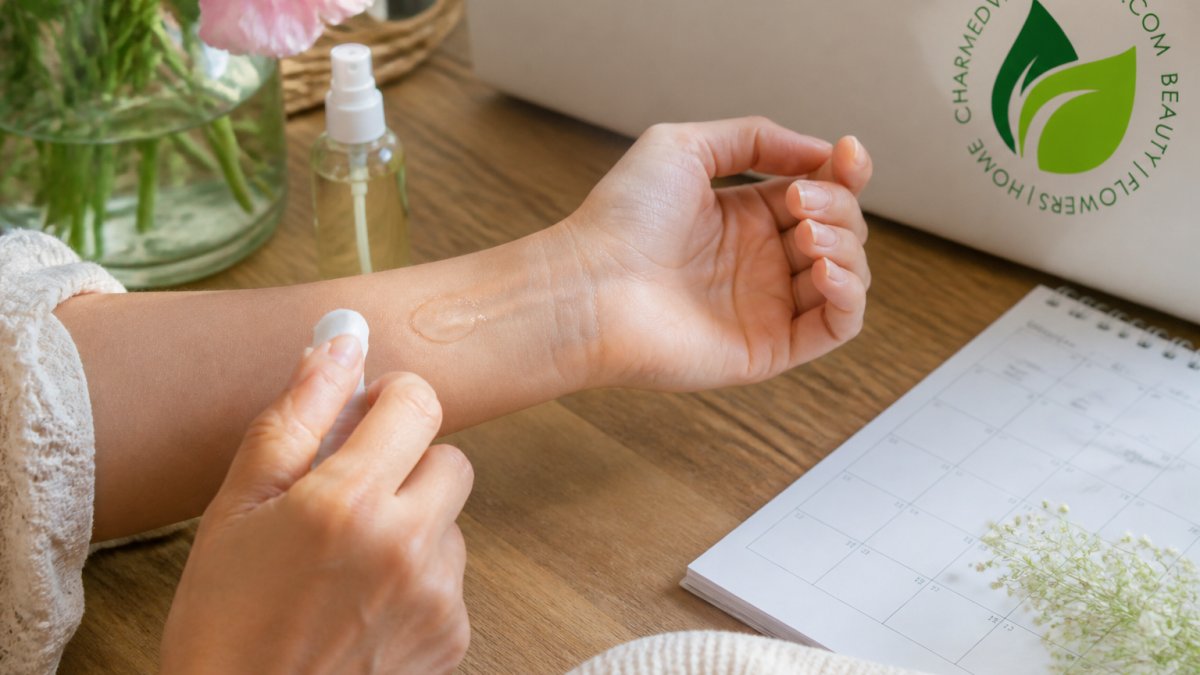
Step-by-step patch testing method
Start by selecting a small, inconspicuous area of skin.
Apply a small amount of the flower based face toner for sensitive skin to your test area. Use the same application method you'd use on your face, spritz or dab, depending on the bottle design.
Leave the product on your skin for the full test period. Most reactions appear within 24-48 hours, but some delayed sensitivity takes up to 72 hours.
Document what you observe. Take a photo of the test area on day one, then check it daily. Note any redness, itching, swelling, or irritation that develops.
What to watch for during the test period
Mild tingling or coolness immediately after application is normal, especially with rosewater toners. This should fade within minutes.
Redness that develops over hours or days, itching that persists, swelling, or a burning sensation all signal a reaction. Stop using the product immediately and rinse the area thoroughly with cool water.
Some people experience delayed sensitivity, the skin looks fine for 24 hours, then reacts on day two or three. This is why the full 72-hour window matters.
If your patch test passes without reaction, you can confidently introduce the toner to your full skincare routine. Start with two to three applications per week, then increase frequency as your skin acclimates.
Can You Use Face Toner Every Day? Practical Guidelines
For sensitive skin, daily toner use is possible, but it requires the right formula and introduction strategy.
Daily use for sensitive skin: benefits and cautions
A flower based face toner for sensitive skin can absolutely be used daily. In fact, consistent hydration and calming support often improves sensitivity over time. Regular use of a gentle toner strengthens your barrier, reducing reactivity.
The caution: not every toner is suitable for daily use on reactive skin. Astringent formulas, alcohol-based toners, and heavily fragranced options will damage your barrier with repeated use.
Charmed Valley Farm's Flower Water Face Toner is designed for daily use. The preservative-free formulation, and the 3.4 oz size reflects a 30-day usage window with regular spritzing. This tells you the formula is intended as part of your daily routine, not an occasional treatment.
How to introduce toner into a sensitive-skin routine
Begin with two to three applications per week, applied after cleansing and before serums or moisturizers. This allows your skin to acclimate to the new product without overwhelming your barrier.
After one week at this frequency, increase to four to five applications per week. If your skin remains calm, no new redness, irritation, or sensitivity, move to daily use.
Apply your flower based face toner for sensitive skin to clean, slightly damp skin. The moisture helps the hydrating ingredients penetrate more effectively.
Timing matters. Use your toner immediately after cleansing, while your skin is still slightly wet. This maximizes hydration and ensures the botanical extracts reach your skin while your barrier is most receptive.
Common Mistakes That Damage Sensitive Skin
Even with the best intentions, certain habits undermine your toner routine and worsen sensitivity.
Applying toner to completely dry skin reduces effectiveness and can actually increase irritation. Your skin needs moisture to absorb hydrating ingredients.
Using multiple actives simultaneously overwhelms sensitive skin.
Over-applying toner won't accelerate results, it wastes product and can create irritation from ingredient buildup.
Skipping the patch test because "it's natural" is a common error. Natural ingredients can still trigger reactions.
Switching products too frequently prevents your skin from stabilizing. Sensitivity often improves over weeks of consistent use as your barrier strengthens.
Sensitive skin doesn't have to mean endless irritation and limitation.
Frequently Asked Questions
Are flower-based toners safe for sensitive skin?
Flower-based toners can be safe for sensitive skin when they're formulated without alcohol, fragrance, and common irritants. Botanical extracts like rosewater, chamomile, and aloe vera are naturally soothing. However, sensitivity varies by person, some individuals react to specific plant compounds. Always patch test before applying a new toner to your full face. Our Flower Water Face Toner contains no preservatives.
What's the difference between floral extracts and fragrance in a toner?
Floral extracts are concentrated plant compounds that provide actual skincare benefits, rosewater hydrates, chamomile soothes inflammation, and aloe vera heals. Fragrance, whether synthetic or essential oil-based, is added purely for scent and offers no therapeutic benefit. For sensitive skin, fragrance-free formulas are safer because fragrance is a common irritant. When shopping, check the ingredient list: extracts appear as 'rosewater,' 'chamomile extract,' or 'aloe vera,' while fragrance appears as 'fragrance,' 'parfum,' or specific essential oil names.
How do I know if a toner is truly chemical-free, or is it just marketing?
All skincare products contain chemicals, water and plant extracts are chemicals. What matters is whether a product avoids synthetic preservatives, artificial fragrance, alcohol, and harsh actives. Look for short, recognizable ingredient lists. Transparency is key: reputable brands disclose their full ingredient list and sourcing. Request ingredient lists and shelf-life information, preservative-free products should specify their stability window.
Can I use face toner every day if I have sensitive skin?
Yes, you can use a gentle, alcohol-free toner daily on sensitive skin, but introduce it slowly. Start with 2-3 times per week to let your skin adjust, then increase frequency if no irritation occurs. Apply after cleansing and before moisturizer. If your skin feels tight, dry, or irritated after a few days of daily use, scale back to every other day. Listen to your skin, consistency matters more than frequency.