
Table of Contents
- Understanding Sensitive Skin Triggers and Skin Barrier Health
- Identifying Irritants in Natural Skincare Products
- Key Ingredients to Look for in Organic Beauty Products for Sensitive Skin
- How to Patch Test Skincare Products Safely
- Building a Simple Skincare Routine for Fresh, Sensitive Skin
- Tips for Introducing New Products to Your Sensitive Skin Routine
- Conclusion: Choosing Fresh Skincare That Works for You
- Frequently Asked Questions
Last Updated: September 18, 2026
Understanding Sensitive Skin Triggers and Skin Barrier Health
Your skin barrier is your first line of defense. When it's healthy, it keeps irritants out and moisture in. When it's compromised, everything stings.
Fresh skincare sensitive skin often develops from environmental stress, harsh products, or repeated irritation. Understanding your triggers helps you choose the right products and avoid irritants.
Common triggers include extreme temperatures, pollution, fragrance, certain plant oils, and high concentrations of active ingredients. Even natural ingredients can be potent irritants for sensitive skin.
Fresh skincare for sensitive skin starts with understanding your personal triggers. Not everyone reacts the same way to the same ingredients, which is why patch testing and gradual introduction matter.
Your skin barrier contains ceramides, natural oils, and protective compounds. When depleted, skin becomes reactive. Sensitive skin routines focus on barrier repair first, rebuilding the foundation before active treatments.
Identifying Irritants in Natural Skincare Products
Some of the most common irritants in natural skincare are plant-based ingredients that trigger reactions in sensitive skin.
Essential oils and fragrance are the biggest offenders, concentrated compounds that cause inflammation. Alcohol denat, found in toners and extracts, strips the skin barrier and causes dryness.
Common irritating ingredients to watch for include:
- Fragrance (natural or synthetic)
- High concentrations of essential oils
- Alcohol denat
- Menthol and peppermint
- Citrus oils
- Cinnamon and spices
- Sulfates (even plant-derived ones)
- Certain plant extracts in high doses
A plant extract soothing at low concentrations can irritate at high ones. Reading ingredient lists carefully matters.
Look for fragrance-free and alcohol-free products. If fragrance or essential oils appear in the first five ingredients, the concentration is likely too high for sensitive skin.
Key Ingredients to Look for in Organic Beauty Products for Sensitive Skin
Ceramides naturally lock in moisture and restore the skin barrier. Look for ceramide NP, ceramide AP, or ceramide EOP on ingredient lists.
Hyaluronic acid holds up to 1000 times its weight in water and hydrates without irritating sensitive skin.
Niacinamide strengthens the skin barrier, reduces inflammation, and improves skin tolerance over time.
Glycerin draws moisture into the skin and rarely causes reactions.
Squalane mimics skin's natural oils without heaviness, lightweight, hydrating, and non-comedogenic.
The Flower Oil Face Serum from Charmed Valley Farm combines organic cold-pressed sunflower oil with rosehips, raspberry leaves, and rose geranium, ingredients chosen specifically for their calming and hydrating properties without harsh additives. It's formulated to support barrier repair and reduce inflammation, making it a solid choice for sensitive skin that needs nourishment without irritation.
How to Patch Test Skincare Products Safely
Patch testing is non-negotiable for sensitive skin. It's the only way to know if a product will irritate you before full application.
Skipping patch testing causes full-face inflammation and weeks of recovery instead of days. A 48-hour test prevents setbacks and gives concrete evidence of what's safe.
How to Patch Test Properly
-
Choose a small, discreet area. The inside of your forearm or behind your ear works best, similar sensitivity to your face but less visible if a reaction occurs.
-
Apply a small amount. Use about the size of a pea. You're testing for reaction, not full application. If you use too much, you're not testing, you're applying.
-
Wait 24-48 hours without washing the area. Some reactions appear within hours, others take a full day or two. If testing multiple products, space them at least 2 inches apart so reactions don't overlap.
-
Watch for signs of irritation. Redness, itching, burning, swelling, or rash means the product isn't right for you. Slight dryness is normal, but persistent discomfort is not. Take photos before and after to spot subtle changes.
-
If the patch test passes, introduce slowly to your face. Start with half a pea-sized drop every other day for a week on a small cheek area. Increase to daily use if no reaction occurs, then expand to your whole face after one week.
-
Give new products 2-3 weeks before deciding. Some products feel slightly drying at first but improve as your barrier strengthens. Persistent redness or itching after one week means stop.
Making Patch Testing Bearable
- Test on a schedule. Patch test Friday afternoon so the 48-hour window covers the weekend.
- Test multiple products simultaneously on different spots. You can run three patch tests at once on your forearm, spaced apart.
- Document what you're testing. Write down the product name, ingredients, and date. Note any changes when introducing to your face.
- Reframe the wait as information gathering. You're gathering data to protect your skin.
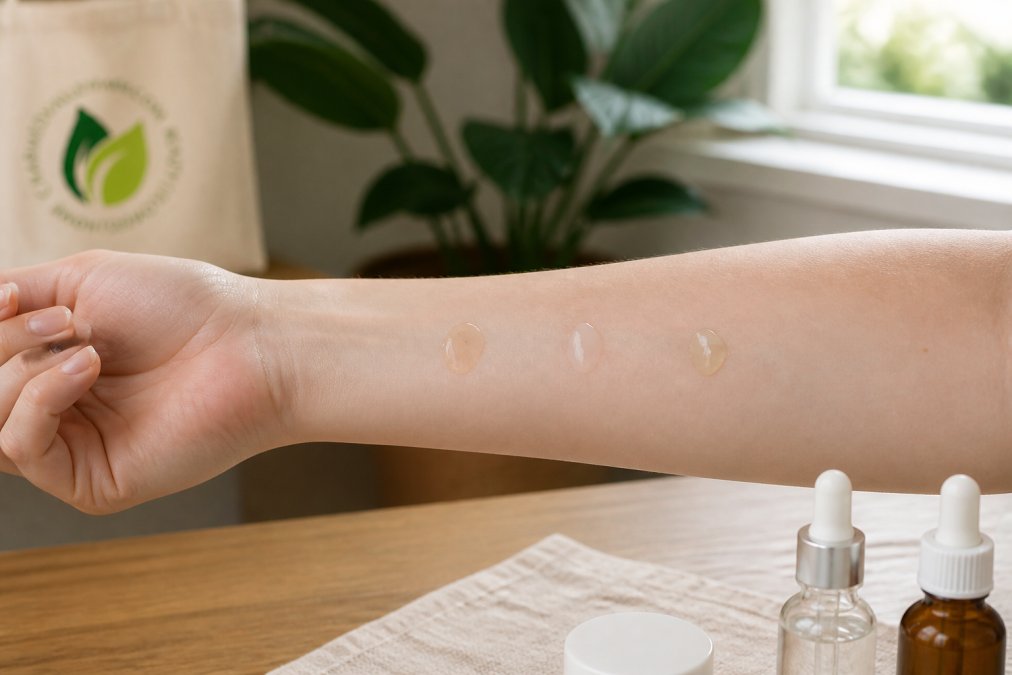
A negative patch test doesn't guarantee your face will tolerate the product, but a positive test is definitive: the product is not safe for you. A negative test gives permission to proceed cautiously.
Building a Simple Skincare Routine for Fresh, Sensitive Skin
Simplicity is your best friend when building fresh skincare sensitive skin routines. A minimal routine with the right products works better than a complicated one.
A solid routine for sensitive skin has three steps:
Step 1: Gentle Cleanse, Use a fragrance-free, sulfate-free cleanser with lukewarm water. Pat dry gently instead of rubbing.
Step 2: Hydrate and Soothe, Apply a hydrating toner or essence. The Flower Water Face Toner from Charmed Valley Farm clarifies and balances without irritation.

Step 3: Seal and Repair, Apply a serum or oil to lock in hydration and provide barrier support. The Flower Oil Face Serum delivers organic sunflower oil and botanical extracts.
Three steps: cleanse, hydrate, seal. Once your barrier feels stronger (usually 4-6 weeks), slowly add one active treatment.
Tips for Introducing New Products to Your Sensitive Skin Routine
Adding new products to sensitive skin requires deliberate timing and understanding which ingredients conflict, combinations that trigger reactions even when each ingredient alone is tolerable.
The One-at-a-Time Rule
Introduce one product at a time, waiting at least one week between additions. Start with what you need most, hydration and repair before soothing products.
When introducing a new product: patch test 24-48 hours, use every other day for one week, increase to daily if no reaction, wait one week before adding another.
Your skin needs 2-3 weeks to adjust. Slight dryness is normal; persistent redness or itching is not.
Ingredient Combinations to Avoid for Sensitive Skin
This is where most guides fall short. They tell you which ingredients are safe, but not which safe ingredients become unsafe when combined. For sensitive skin, certain pairings create irritation even when each ingredient alone is gentle.
Niacinamide + Vitamin C (L-Ascorbic Acid), Both are excellent individually but can cause irritation together.
Safe Combinations for Sensitive Skin
- Ceramides + Hyaluronic Acid: Both repair and hydrate.
- Niacinamide + Ceramides: Both strengthen the barrier.
- Glycerin + Squalane: Glycerin draws moisture in, squalane seals it.
- Chamomile + Glycerin: Soothing and hydrating.
- Jojoba Oil + Niacinamide: Work synergistically.
How to Introduce Multiple Products Safely
- Week 1-2: Cleanser + moisturizer
- Week 3-4: Hydrating toner or essence
- Week 5-6: Serum (hydrating or soothing, not active)
- Week 7-8: Sunscreen
- Week 9+: One active treatment only (retinol, vitamin C, or acid, not multiple)
Conclusion: Choosing Fresh Skincare That Works for You
Choosing fresh skincare for sensitive skin comes down to understanding your barriers, identifying your triggers, and testing carefully before committing.
Frequently Asked Questions
How do I know if a skincare product is truly fresh and not just marketed as natural?
Check the ingredient list for preservatives and shelf-life information. Fresh skincare for sensitive skin should use minimal additives. Products like the Flower Oil Face Serum list all ingredients transparently and specify they're preservative-free with a 12-month shelf life. Look for cold-pressed, organic ingredients and avoid synthetic fragrances. Reputable brands disclose their sourcing and production methods clearly on product labels and websites.
What ingredients should I avoid when choosing skincare for sensitive skin?
Avoid harsh sulfates, alcohol denat, synthetic fragrances, and chemical sunscreens, which can damage your skin barrier and trigger irritation. Skip products with heavy silicones, parabens, and artificial dyes. When reviewing organic beauty products for sensitive skin, read labels carefully for these common irritants. Instead, seek hypoallergenic, fragrance-free formulas with soothing agents like chamomile, niacinamide, and glycerin that support barrier repair.
How often should I introduce new products to my sensitive skin routine?
Introduce one new product every 1-2 weeks, waiting between additions to monitor for reactions. This prevents overwhelming your skin and makes it easier to identify which product caused irritation if a reaction occurs. Start with essentials: a gentle cleanser, hydrating toner, and nourishing serum. Once your routine is stable, you can gradually add treatments. The Flower Water Face Toner and Flower Oil Face Serum work together as a simple foundation that supports sensitive skin without overcomplicating your regimen.
What's the difference between hypoallergenic and truly safe for sensitive skin?
Hypoallergenic means a product is formulated to minimize allergic reactions, but it doesn't guarantee no irritation. Truly safe skincare for sensitive skin should be fragrance-free, preservative-free or minimally preserved, dermatologist-tested, and non-comedogenic. It should also support your skin barrier with ceramides, hyaluronic acid, and squalane. Patch test even hypoallergenic products before full use, as sensitivity varies individually. Botanical ingredients like rose geranium and raspberry leaves offer calming properties without synthetic additives.