
Table of Contents
- What Non-Toxic Skincare for Wrinkles Actually Means
- Common Chemicals to Avoid in Anti-Aging Products
- Best Natural Ingredients for Wrinkles That Have Real Evidence
- How to Read Skincare Ingredient Labels Like a Formulator
- Using EWG Skin Deep Anti-Aging Ratings to Verify Claims
- Matching Non-Toxic Skincare to Your Skin Type and Budget
- Building a Simple Non-Toxic Anti-Aging Routine
- Frequently Asked Questions
Last Updated: September 14, 2026
What Non-Toxic Skincare for Wrinkles Actually Means
Non-toxic skincare for wrinkles targets visible aging with plant-based oils, botanical extracts, and antioxidants while excluding ingredients linked to irritation or long-term health concerns. At Charmed Valley Farm, our #Farm2Face line is built on this idea: flower-based, chemical-free formulas made in small batches.
"Natural" on a label is a marketing term, not a regulated one, a product can contain 2% botanical extract and 98% synthetic filler and still call itself plant-based. Genuine formulations list recognizable ingredients first, disclose concentrations, and avoid synthetic fragrance entirely.
The clean beauty market rewards transparency over slogans. This guide shows how to choose non-toxic skincare for wrinkles by verifying what's inside the bottle, not what the front label promises.
Greenwashing vs. Genuine Formulations
Greenwashing uses natural-sounding language to imply safety without changing the formula. Watch for these tells:
- "Chemical-free" paired with a synthetic preservative in the ingredient list
- Vague sourcing claims like "botanical blend" with no named plants
- Fragrance listed as one word, which legally can hide dozens of compounds
- Certification logos that don't link to a verifiable registry
Genuine formulations name their ingredients, explain why each is there, and let you check the claims yourself. That's why we publish full ingredient lists rather than a highlight reel.
Common Chemicals to Avoid in Anti-Aging Products
The chemicals worth avoiding in anti-aging products fall into four groups: synthetic fragrance, parabens, phthalates, and certain petroleum-derived emollients. Each has a plant-based replacement that works as well or better for mature skin.
Synthetic fragrance is the most common trigger for reactive skin in women over 40. Parabens and phthalates are preservative and texture agents that many formulators now replace with naturally derived alternatives. For a deeper look at how these categories are classified, the Environmental Working Group's Skin Deep database sorts ingredients by hazard concern and is free to search.
This doesn't mean every synthetic ingredient is dangerous, just that these four categories are the ones to screen first in a non-toxic routine.
Best Natural Ingredients for Wrinkles That Have Real Evidence
The best natural ingredients for wrinkles have both a plausible mechanism and a track record in real use: cold-pressed plant oils rich in fatty acids, antioxidant-rich botanical extracts, and humectants that support moisture retention. Match the ingredient to the job, and know which botanicals have clinical literature behind them versus a good story.
Here's how the main categories compare:
| Ingredient Type | Primary Job | Best For | Watch Out For |
|---|---|---|---|
| Cold-pressed plant oils | Restore skin barrier, seal in hydration | Dry, crepey, mature skin | Heavy oils can clog pores |
| Antioxidant-rich extracts | Defend against environmental stressors | Early fine lines, dullness | Oxidation if poorly packaged |
| Humectants | Pull water into the skin | Dehydrated, tight-feeling skin | Needs an oil on top to seal |
| Botanical actives | Support cell turnover over time | Visible aging, texture | Slower results than retinol |
Oils don't just sit on the surface: cold-pressed oils high in linoleic acid rebuild the skin barrier, which is what allows moisture retention to improve at all. Skip that step and every serum on top works against a leaky wall.
Which Botanicals Have Clinical Backing, and Which Are Just Marketing
Only a handful of plant-derived actives have meaningful human-trial data for visible aging. The rest rest on in-vitro studies, traditional use, or nothing. Knowing the difference stops you paying premium prices for a story.
Botanicals with the strongest human evidence:
- Bakuchiol, from babchi plant seeds. Randomized, vehicle-controlled trials found retinol-comparable improvement in fine lines and hyperpigmentation over 12 weeks, with significantly less stinging and peeling (pubmed.ncbi.nlm.nih.gov). It's the closest thing to a true retinol alternative with head-to-head data.
- Niacinamide (vitamin B3), not a botanical, but a naturally occurring form of B3 found in some plant sources. Well-documented for barrier support, sebum regulation, and reducing fine lines. Often paired with zinc.
- Vitamin C (L-ascorbic acid) from botanical sources, one of the most studied topical antioxidants. Human trials show improved fine lines and skin tone at effective concentrations with proper pH and packaging. It's unstable, so the delivery system matters more than the source.
- Green tea catechins (EGCG), studied for antioxidant and anti-inflammatory effects. Evidence is strongest for calming and photoprotection support, weaker for direct wrinkle reduction.
- Soy isoflavones, some human data on improving the appearance of fine lines and skin firmness, particularly in postmenopausal skin.
Botanicals with mostly preliminary or in-vitro evidence:
- Most 'stem cell' plant extracts (apple, grape, edelweiss), the marketing outruns the human data.
- Many exotic oils marketed for 'regeneration', the fatty-acid profile is what's doing the work, not the exotic origin.
- 'Peptides from plants', peptides are usually synthesized; the plant framing is decorative.
If a brand can't tell you the concentration of its hero botanical and point to a human study, treat the claim as cosmetic, not clinical.
Retinol Alternatives and Botanical Actives
Retinol alternatives encourage cell turnover more gently than prescription retinoids, making them a better fit for sensitive or reactive skin. Botanical actives are slower than retinol but rarely cause the peeling and redness that sends women over 50 back to square one.
Bakuchiol is the standout, the one alternative with direct comparison data. Across trials, 0.5% twice daily for 12 weeks produced retinol-comparable reductions in fine lines and wrinkle severity, with far lower rates of the stinging, scaling, and photosensitivity that drive retinol discontinuation.
Other options and what they realistically do:
- Rosehip seed oil, high in linoleic acid and trans-retinoic acid precursors. Supports barrier and texture; not a retinol substitute.
- Sea buckthorn oil, rich in omega-7 and carotenoids. Good for barrier and antioxidant support.
- Pomegranate sterols, preliminary data on skin elasticity; treat as supportive, not corrective.
A common mistake is expecting overnight results. Botanical actives need consistent use over several weeks before fine lines look softer, the trade-off for tolerability.
How to Read Skincare Ingredient Labels Like a Formulator
Reading an ingredient label like a formulator means knowing the order reflects concentration, recognizing the first five ingredients as the bulk of the formula, and checking whether the "hero" botanical appears before or after the preservative. If it's after, it's decoration.

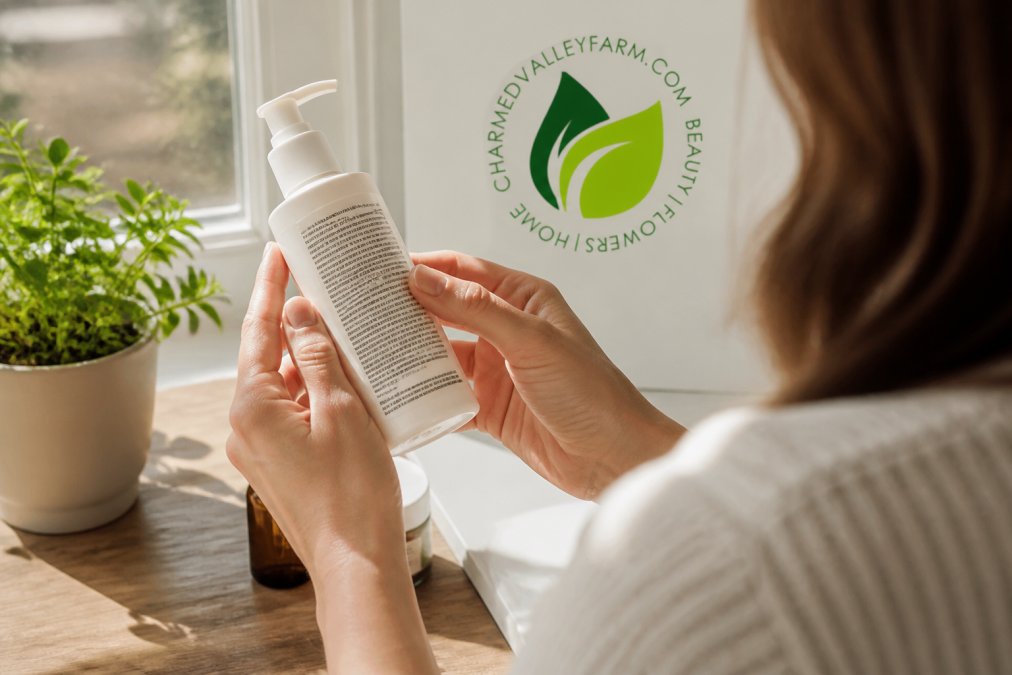
Follow this sequence every time you pick up a bottle:
- Read the first five ingredients. These make up the majority of what you're buying.
- Find the preservative. Everything listed after it is present in small amounts.
- Check for "fragrance" or "parfum" with no breakdown. That's a black box.
- Look for named botanicals, not "botanical blend."
- Confirm the packaging blocks light and air, since antioxidant-rich oils degrade when exposed.
Using EWG Skin Deep Anti-Aging Ratings to Verify Claims
When a product isn't in the database, ask the maker directly for the full ingredient list and the source of each botanical. A brand that answers clearly is a brand worth buying from.
Matching Non-Toxic Skincare to Your Skin Type and Budget
Matching non-toxic skincare to your skin type comes down to texture and oil content, not price. Dry and mature skin tolerates richer plant-based oils; oily and combination skin does better with lighter serums and a pH balanced toner; reactive skin needs the shortest ingredient list you can find. The useful part is the specific swap for each type.
Dry and mature skin: Reach for cold-pressed oils high in oleic acid (marula, avocado, olive-derived squalane) layered over a glycerin or hyaluronic acid humectant. The humectant pulls water in; the oil seals it. Skip foaming cleansers entirely, they strip the lipids you're trying to rebuild.
Oily and combination skin: You still need barrier support, but from lighter carriers. Look for squalane, jojoba (technically a wax ester, close to skin's own sebum), and grapeseed oil. Niacinamide at 4-5% helps regulate sebum without the drying effect of harsh astringents. Gel or milky textures over balms.
Sensitive and reactive skin: The shortest ingredient list wins. Aim for under 15 ingredients, no essential oils, no fragrance of any kind (including 'natural' fragrance), and single-ingredient oils you can patch test in isolation. Bakuchiol is usually better tolerated than retinol here, but introduce it slowly, every other night for two weeks before daily use.
Combination skin that changes with the season: Most people don't have one fixed type. Keep one lightweight serum and one richer oil, and adjust the ratio rather than buying a new routine every few months.
Finding Safe Products at Mass-Market Prices
The small-batch premium buys traceability and freshness.
Where to look:
- Fragrance-free, not 'unscented.' Unscented can mean masking fragrance was added. Look for the words 'fragrance-free' on the front and no 'fragrance' or 'parfum' in the list.
- Short ingredient lists at the drugstore. Single-ingredient oils (jojoba, squalane, rosehip) are sold at mass retailers for a fraction of boutique prices. You're buying the same molecule.
- Store-brand niacinamide and vitamin C serums. These are commodity actives; the formulation matters more than the label. Check that vitamin C is in an opaque, airless pump.
- Sunscreen is where to spend. This is the one category where formulation and testing genuinely differ by price, and it's the single most effective anti-aging step.
A realistic budget split: spend on sunscreen and one well-formulated active (bakuchiol or a stabilized vitamin C), save on cleanser, toner, and single-ingredient oils.
A practical middle path: start with one multi-purpose product rather than a five-step system. A single well-formulated facial oil covers hydration, barrier support, and antioxidant defense at once, a better use of a limited budget than three mediocre products.
Building a Simple Non-Toxic Anti-Aging Routine
A simple non-toxic anti-aging routine has four steps and takes under five minutes: cleanse, tone, treat with an oil or serum, and protect. Most routines fail from length, not missing products.
Here's the sequence we recommend:
- Cleanse with a gentle, non-comedogenic formula. No scrubbing.
- Tone with a pH balanced mist to calm and prepare the skin.
- Treat with a botanical serum or facial oil, massaged into damp skin.
- Protect every morning with sun protection, which does more for visible aging than any serum.
The toner-and-oil combination is where most of the visible difference shows up. Our fan-favorite Flower Face Duo pairs a Flower Water Face Toner with the Flower Oil Face Serum for exactly that reason, and costs less than buying both separately. For facial massage, a Goa Sha Stone used with the serum promotes glide and helps decrease puffiness. If you'd rather learn the technique in person, Charmed Valley Farm also hosts Events where you can see the Flower Face Skincare line firsthand.

For a routine built around mature skin, the American Academy of Dermatology's guidance on skin care is a solid, non-commercial reference for what actually belongs in a daily regimen.
The hard part of choosing non-toxic skincare for wrinkles isn't finding products, it's cutting through greenwashing to know what you're putting on your face. Charmed Valley Farm formulates our #Farm2Face line in small batches with chemical-free, organic ingredients, so every bottle comes with a list you can read and a source you can check. Start with the Flower Oil Face Serum or the Flower Face Duo, patch test for three nights, and give botanical actives the weeks they need. Get started with Charmed Valley Farm and build a routine your skin can actually tolerate.
Frequently Asked Questions
What is the best non-toxic anti-aging skin care?
The best options pair clinically studied botanicals with transparent labeling. Look for cold-pressed plant-based oils rich in antioxidants, paraben-free and phthalate-free formulas, and products with certified organic status. Charmed Valley Farm's Flower Oil Face Serum ($45) uses small-batch botanical ingredients reported to smooth fine lines and support collagen production. Always patch test and give any new non-toxic skincare for wrinkles 8 to 12 weeks before judging results.
What ingredients should I avoid in anti-aging skincare?
Skip synthetic fragrance, parabens, phthalates, and formaldehyde-releasing preservatives. These are linked to irritation and can undermine your skin barrier over time. Also watch for misleading 'clean beauty' labels that still contain essential oils your skin may react to. If you have mature or reactive skin, choose fragrance-free, hypoallergenic formulas.
Do botanical ingredients actually help reduce the appearance of wrinkles?
Some do. Cold-pressed plant-based oils and botanical extracts deliver antioxidant-rich compounds that support cell turnover and moisture retention. They will not erase deep creases the way prescription retinoids can, but daily use of a well-formulated facial oil or serum can visibly soften fine lines and improve skin elasticity. The key is choosing products with bioavailable ingredients rather than diluted botanical blends that list plant extracts last on the label.
How long does it take to see results from natural anti-aging products?
Most people notice improved hydration and plumpness within 2 to 4 weeks. Visible changes to fine lines and skin tone typically take 8 to 12 weeks of consistent use. Botanical actives work more gradually than synthetic retinol, so patience matters. Track your progress with photos taken in the same lighting every two weeks.