
Table of Contents
- What Greenwashing in Skincare Actually Looks Like
- How to Read Skincare Ingredient Labels Like a Pro
- Sustainable Beauty Certifications Worth Trusting
- FTC Green Guides Skincare Rules and Your Greenwashing Scorecard
Last Updated: August 16, 2026
What Greenwashing in Skincare Actually Looks Like
Greenwashing in skincare is the practice of using misleading marketing language, imagery, or sustainability claims to make a product appear more natural, eco-friendly, or chemical-free than it actually is. It shows up on product labels, in influencer posts, and across brand websites that lean on leafy green aesthetics without substance.
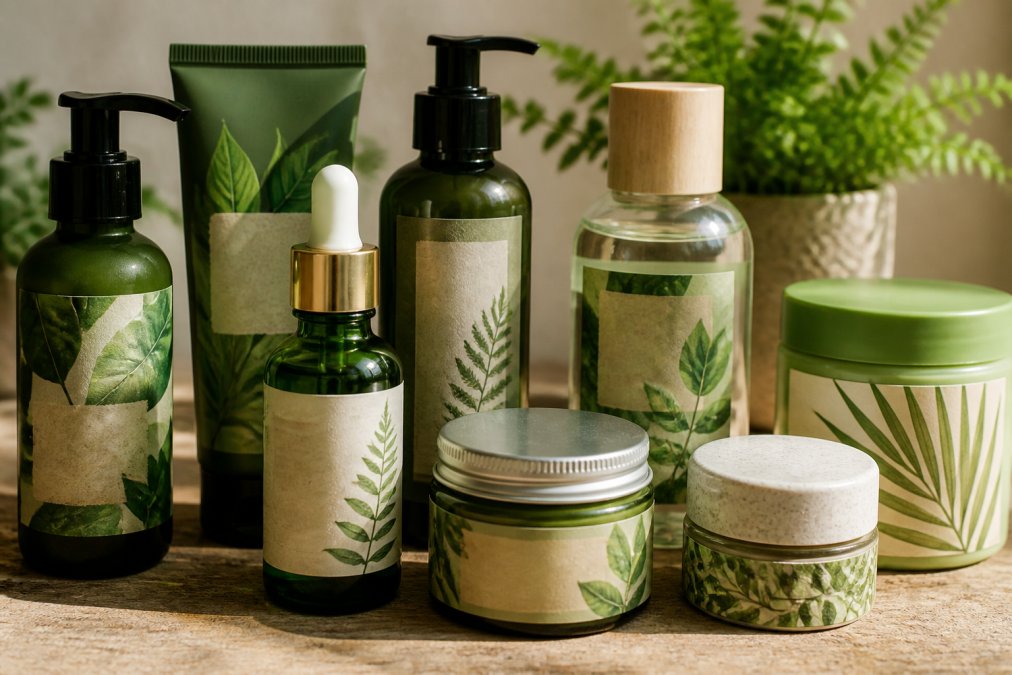
The most common tactic is vague environmental claims: words like "natural," "clean," "pure," or "green" stamped across packaging with zero supporting evidence. These terms are largely unregulated in the cosmetics industry, so any brand can use them freely. A product labeled "natural" can still contain synthetic ingredients, phthalates, or parabens.
Misleading imagery is another major tactic. Botanical illustrations, earthy color palettes, and farm scenes often represent products that have never seen a real plant. Social media influencer marketing has amplified this, when a creator promotes a "non-toxic" product without disclosing a paid partnership, that may violate FTC guidelines on endorsements and testimonials, which require clear disclosure of material connections between influencers and brands.
How to Read Skincare Ingredient Labels Like a Pro
Reading skincare ingredient labels is the most reliable way to spot greenwashing because it bypasses marketing language and reveals what's actually in the bottle.
Ingredients on a U.S. skincare label must be listed in descending order by concentration, following the International Nomenclature of Cosmetic Ingredients (INCI) standard. The first five ingredients make up the bulk of the formula. If water and a synthetic filler are numbers one and two, the "botanical extract" on the front label is likely present in trace amounts.
Key things to look for:
- Fragrance (parfum): A single ingredient that can legally hide dozens of undisclosed chemicals, including phthalates. Transparent brands list each scent component individually or use "fragrance-free."
- Parabens: Preservatives appearing as methylparaben, ethylparaben, and similar names. Many brands market themselves as paraben-free while using alternative preservatives that haven't been studied as thoroughly.
- "Bio-based" or "plant-derived" claims: These describe the source of an ingredient, not its safety or concentration. A plant-derived ingredient can still be highly synthetic.
- The "fragrance-free" vs. "unscented" distinction: Unscented products often contain masking fragrances. Fragrance-free means no fragrance compounds were added.
According to the U.S. Food and Drug Administration's cosmetic labeling guidance, cosmetic manufacturers are responsible for ensuring their products are safe and properly labeled, but the FDA does not approve cosmetic products before they go to market. That gap is exactly where greenwashing thrives.
| Label Claim | What It Actually Means | What to Check Instead |
|---|---|---|
| Natural | No legal definition in U.S. cosmetics | Full ingredient list, INCI names |
| Clean Beauty | No standardized definition | Third-party certification |
| Hypoallergenic | No regulated standard | Fragrance-free status, patch testing |
| Dermatologist-tested | No required test protocol | Published clinical data |
| Organic | May apply to only one ingredient | USDA Organic certification on full formula |
| Cruelty-free | No federal legal definition | Leaping Bunny or PETA certification |
Sustainable Beauty Certifications Worth Trusting
Third-party certification is the most reliable signal of genuine ingredient transparency and ethical sourcing because it requires independent verification, not brand self-reporting.
USDA Organic is the gold standard for organic certification in the U.S. A product displaying the USDA Organic seal must contain at least 95% organically produced ingredients, as defined by the USDA National Organic Program standards. Look for the seal on the full product, not just a component.
Leaping Bunny is the most credible cruelty-free certification available. It requires brands to commit to no animal testing at every stage of production, including ingredient suppliers. Note that cruelty-free and vegan are separate claims.
EWG Verified signals that a product meets the Environmental Working Group's standards for ingredient transparency and safety. It's a strong signal for consumer awareness around non-toxic formulations.
"Eco-friendly packaging" is unregulated. A green-tinted bottle is not automatically recyclable, and carbon footprint claims lack third-party supply chain accountability.
FTC Green Guides Skincare Rules and Your Greenwashing Scorecard
The FTC Green Guides (16 CFR Part 260) are the primary regulatory framework governing environmental marketing claims in the U.S. Brands making unqualified "eco-friendly," "sustainable," or "non-toxic" claims without substantiation risk enforcement action.
Key rules from the Green Guides that apply directly to skincare:
- General environmental benefit claims (like "green" or "eco-friendly") are almost always too vague to be defensible without specific, substantiated details.
- Carbon offset claims must be based on verifiable reductions.
- "Free-of" claims can be deceptive if the ingredient wasn't commonly used in that product category to begin with, or if the product contains a similar alternative.
Your Greenwashing Scorecard: How to Spot Greenwashing in Skincare Before You Buy
Use this checklist when evaluating any skincare product:
- Does the front label use unqualified terms like "natural," "clean," or "non-toxic" without a certification seal?
- Are the first five ingredients recognizable plant-based or genuinely organic inputs?
- Does the brand disclose its full supply chain or sourcing practices?
- Is there a verifiable third-party certification (USDA Organic, Leaping Bunny, EWG Verified)?
- If the brand claims "fragrance-free," does the ingredient list confirm no fragrance compounds?
- Are influencer promotions of this product clearly labeled as paid partnerships?
- Does "eco-friendly packaging" come with specifics about recyclability or bio-based materials?
- Can you find the full ingredient list easily, or is it buried or incomplete?
A product that clears most of these checks is genuinely more transparent than one that relies on green packaging and vague sustainability claims. Knowing how to spot greenwashing protects your skin and your wallet.
Frequently Asked Questions
What are the most common signs of greenwashing in beauty products?
The clearest signs include vague claims like 'natural,' 'clean,' or 'eco-friendly' with no supporting evidence, ingredient lists that still contain parabens or phthalates, and packaging covered in green imagery without any third-party certification. Brands that refuse to disclose full ingredient transparency or supply chain sourcing are also worth questioning. If a product claims to be organic but carries no USDA Organic seal or equivalent certification, treat that claim skeptically until you can verify it.
What is the difference between 'natural' and 'organic' in skincare labeling?
In the United States, 'natural' has no legal definition in skincare. Any brand can print it on a label without meeting a single standard. 'Organic' is different: the USDA regulates that term, and products using it must meet specific certification requirements. A product labeled '100% organic' must contain only certified organic ingredients. 'Made with organic ingredients' means at least 70% of the content qualifies. Always look for the USDA Organic seal rather than relying on the word alone when spotting greenwashing in skincare.
Are there government regulations for 'clean' beauty claims?
The term 'clean beauty' has no legal definition under federal law. The FTC does regulate environmental and sustainability claims through the Green Guides, which require that any green marketing claim be truthful, not misleading, and supported by competent evidence. The FDA regulates cosmetic safety and labeling but does not define 'clean.' This regulatory gap is exactly why third-party certifications from organizations like USDA, NSF, or EWG Verified matter so much for consumer awareness.
How can I verify if a skincare brand is truly sustainable?
Start by checking for recognized third-party certifications such as USDA Organic, NSF/ANSI 305, or EWG Verified. Then read the full ingredient list rather than relying on front-label claims. Look for supply chain accountability: does the brand disclose where ingredients are sourced? Brands genuinely committed to sustainability typically publish ingredient sourcing details, hold certifications that require audits, and avoid fragrance-free or hypoallergenic claims that are not backed by dermatologist-tested documentation or transparent formulation data.
When you're ready to move past the guesswork, look for brands that lead with ingredient transparency, not just beautiful packaging. Charmed Valley Farm's #Farm2Face line is built on chemical-free, botanically rooted formulations, the kind where the ingredient list is the selling point, not something to hide. Learn More Here.
This article was written using GrandRanker