
Table of Contents
- Why Authentic Organic Skincare Is Hard to Find
- USDA Organic Skincare Certification: What It Actually Means
- Greenwashing in the Beauty Industry: How to Spot It
- How to Read Skincare Ingredient Labels Correctly
- Clean Beauty vs. Organic: Understanding the Difference
- Supply Chain Traceability and What It Tells You
- Step-by-Step Checklist to Verify an Organic Skincare Product
- Conclusion
Last Updated: August 15, 2026
Why Authentic Organic Skincare Is Hard to Find
Authentic organic skincare is difficult to identify because the beauty industry operates with minimal federal oversight on terms like "natural," "clean," or "organic." The FDA does not require cosmetics to prove safety or accurate labeling before reaching store shelves, allowing brands to claim "organic" status while containing only trace botanical extracts surrounded by synthetic preservatives, fragrances, and chemical additives.
This regulatory gap enables greenwashing. Brands invest in eco-friendly packaging and aspirational language while burying actual formulation details in unreadable font. For women with sensitive or mature skin, this isn't just a financial issue, it's a health one, given dermal absorption and cumulative daily product exposure.
This guide shows you how to read labels, spot greenwashing, understand certifications, and verify authenticity before purchasing.
USDA Organic Skincare Certification: What It Actually Means
The USDA organic seal is the most reliable marker of authentic organic content. To earn it, a product must meet USDA National Organic Program standards, meaning at least 95% of ingredients must be certified organic, with the remaining 5% from an approved list. USDA certification involves third-party audits, batch tracking, and supply chain documentation, you can verify any certified product through the USDA's public database.
The Difference Between 'Organic' and '100% Organic'
100% Organic means every ingredient, including processing aids, must be certified organic.
Organic means at least 95% of ingredients are certified organic, with 5% from the USDA's approved list.
Made With Organic Ingredients means at least 70% is certified organic. These products cannot display the USDA seal prominently.
Anything below 70% cannot make organic claims on the front label. Many brands exploit this space, using "made with organic" language while barely clearing the 70% threshold.
Other Third-Party Certifications Worth Trusting
- COSMOS Organic (Ecocert or NSF): Verifies organic content and sustainable sourcing
- NSF/ANSI 305: North American standard for personal care, requiring at least 70% organic content
- Leaping Bunny: Verifies cruelty-free supply chains
- EWG Verified: Evaluated against the Environmental Working Group's ingredient safety database
Layering certifications gives you a fuller picture of a brand's priorities and practices.
Greenwashing in the Beauty Industry: How to Spot It
Greenwashing presents products as more environmentally friendly or natural than they actually are. The biggest mistake shoppers make is trusting the front of the package, marketing claims there are almost entirely unregulated. Real information lives in the ingredient list.
Packaging and Marketing Claims That Signal Greenwashing
- Vague claims without evidence: "Natural," "pure," "green," and "botanical" have no legal definition in cosmetics
- Single-ingredient callouts: A product marketed as "with argan oil" may contain only a fraction of a percent
- Nature-inspired design: Earthy tones and leaf imagery are design choices, not ingredient guarantees
- Buzzword stacking: "Farm-to-face," "clean," and "non-toxic" mean nothing without certification or full disclosure
- Misleading sustainability claims: Recyclable packaging indicates nothing about the formula inside
According to FTC Green Guides on environmental marketing claims, marketers must substantiate environmental claims. Despite this, enforcement in cosmetics remains limited, placing responsibility on you as a buyer.
How to Read Skincare Ingredient Labels Correctly
Skincare labels follow INCI (International Nomenclature of Cosmetic Ingredients) naming conventions, listing ingredients by Latin or chemical names in descending order of concentration. The first five ingredients typically comprise the bulk of the formula. If water, synthetic preservatives, or petroleum derivatives appear in the first five, the product is not primarily botanical.
Toxic Ingredients to Avoid: Parabens, Phthalates, and Sulfates
Parabens (methylparaben, propylparaben, butylparaben): Synthetic preservatives used to extend shelf life. Many consumers avoid them due to ongoing scientific discussion about hormonal activity. The National Institute of Environmental Health Sciences overview of parabens provides current research summaries.
Phthalates: Used to extend fragrance longevity and improve texture, often hidden within the term "fragrance" rather than disclosed directly.
Sulfates (sodium lauryl sulfate, sodium laureth sulfate): Surfactants that create lather but can strip the skin's natural barrier, particularly problematic for mature or reactive skin.
Authentic organic skincare avoids all three by design, relying on natural preservative systems, cold-pressed botanical oils, and essential oils.
What Authentic Botanical Ingredients Look Like on a Label
Genuine botanical extracts appear with their Latin names:
- Rosa canina fruit oil = Rosehip seed oil
- Lavandula angustifolia = Lavender essential oil
- Calendula officinalis flower extract = Calendula extract
- Helianthus annuus seed oil = Sunflower seed oil
- Simmondsia chinensis seed oil = Jojoba oil
If these appear in the first half of the ingredient list, the formula is genuinely plant-forward. If at the very end, they are likely present in negligible concentrations for marketing purposes.
Clean Beauty vs. Organic: Understanding the Difference
"Clean beauty" and "organic" are not the same thing.
Organic skincare refers to ingredient sourcing and certification, ingredients grown without synthetic pesticides, herbicides, or GMOs, verified by a certifying body.
Clean beauty is a formulation philosophy with no legal definition or regulatory standard. It means a brand has excluded certain ingredients it considers harmful, but excluded ingredient lists vary by brand with no independent verification.
A product can be clean but not organic, or organic but not considered "clean" by some standards. Both have value but address different concerns.
Supply Chain Traceability and What It Tells You
A truly transparent brand can tell you where each key ingredient was grown, how it was processed, and how it was preserved. Batch tracking, assigning a unique identifier to each production run, allows brands to trace quality or safety issues to their source.
When botanical extracts come directly from known growing sources rather than anonymous commodity suppliers, the chain of custody is shorter and more verifiable. Ask any brand: Where does this ingredient come from? A vague answer is a red flag.
Regional regulatory differences also matter. The EU bans significantly more cosmetic ingredients than the FDA. If a brand voluntarily holds itself to EU standards while selling domestically, that signals ingredient integrity beyond minimum compliance.
Step-by-Step Checklist to Verify an Organic Skincare Product
Use this checklist before purchasing any product marketed as organic:
Verification Checklist: Authentic Organic Skincare
| Step | What to Check | Green Flag | Red Flag |
|---|---|---|---|
| 1. Certification | Look for USDA seal or COSMOS logo | Visible, verifiable seal | "Natural" or "pure" with no seal |
| 2. Front label claims | Note all marketing language | Specific, certified claims | Vague buzzwords only |
| 3. Ingredient list position | Check first 5 ingredients | Botanical oils, plant extracts | Water + synthetic preservatives |
| 4. Preservative system | Identify how it's preserved | Vitamin E, rosemary extract | Parabens, phenoxyethanol |
| 5. Fragrance disclosure | Look for "fragrance" or "parfum" | Essential oils named individually | "Fragrance" listed without detail |
| 6. Certification verification | Search the certifying body's database | Product appears in database | Cannot be verified |
| 7. Brand transparency | Check website for sourcing info | Ingredient sourcing disclosed | No sourcing information available |
| 8. Batch tracking | Look for lot number on packaging | Lot number present | No lot number or traceability |
A product clearing all eight steps has a genuinely strong claim to authenticity. Most conventional products marketed as organic fail at step one or three.
Additional questions worth asking:
- Does the brand disclose dermatological safety testing?
- Are products shelf-stable without synthetic preservatives?
- Does the brand use microbial contamination testing?
- Is packaging designed to prevent oxidation of cold-pressed oils and essential oils?
These questions separate brands with genuine formulation philosophy from those using organic as positioning strategy.
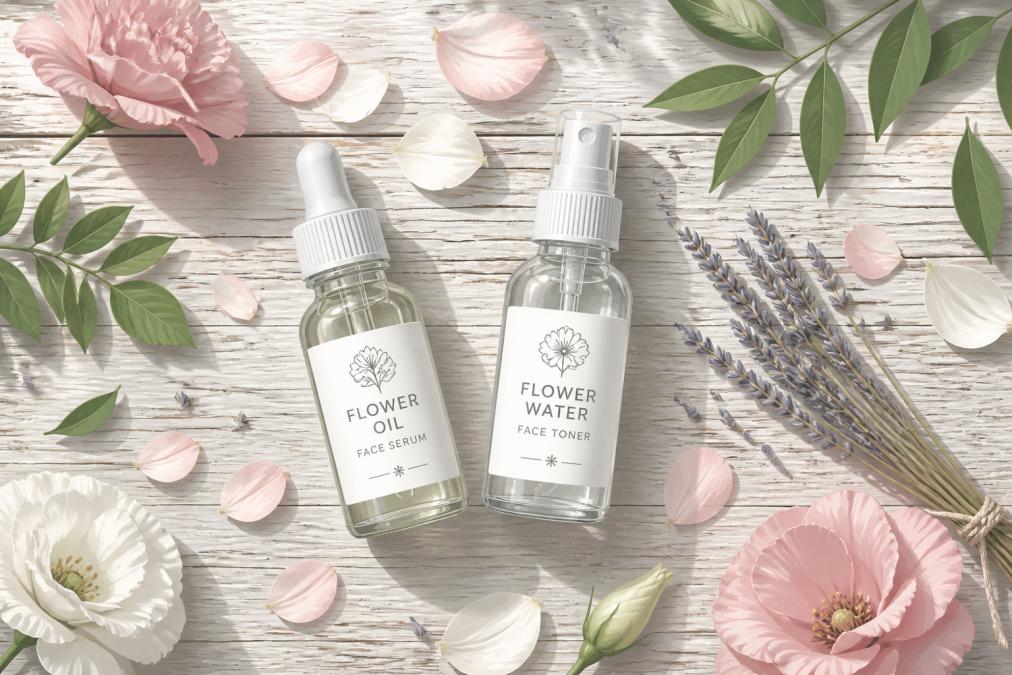
The Charmed Valley Farm Flower Face line, including the Flower Oil Face Serum and Flower Water Face Toner, is built on a farm-to-face philosophy prioritizing botanical ingredients and chemical-free formulation. The Flower Face Duo pairs both products for customers wanting a complete routine grounded in transparency.


For anyone serious about identifying authentic organic skincare, the checklist above is your starting point. Carry it into every purchasing decision, and the gap between marketing and reality becomes much harder for brands to hide.
Sorting through the organic skincare market takes real effort, and most shoppers shouldn't have to become ingredient experts just to buy a face serum they can trust. Charmed Valley Farm's Farm2Face line is built specifically for women who want that transparency without the research burden, using chemical-free, botanical-based formulas rooted in a farm-to-face philosophy. Explore the fan-favorite Flower Face line and find a routine your skin can rely on. Learn More Here
Frequently Asked Questions
What is the difference between natural and organic skincare?
'Natural' has no legal definition in the skincare industry, so any brand can use it freely. 'Organic' carries legal weight only when a product displays the USDA Organic seal, which requires that at least 95% of ingredients are certified organic. A product labeled natural may still contain synthetic fragrances, parabens, or chemical additives. When shopping for authentic organic skincare, look for the USDA seal rather than relying on the word 'natural' alone.
How can you tell if a skincare product is truly organic?
Check for a verified third-party certification seal, most reliably the USDA Organic seal. Then read the full ingredient list: certified organic ingredients are typically listed with an asterisk or the word 'organic' before the botanical name. Research whether the brand publishes batch tracking or supply chain information. Products with vague claims like 'made with organic ingredients' but no certification seal deserve closer scrutiny before you buy.
What does the USDA Organic seal mean for skincare?
The USDA Organic seal on a skincare product means at least 95% of the ingredients are certified organic under the National Organic Program (NOP), which is governed by the USDA. Products meeting this standard cannot contain synthetic preservatives, artificial fragrances, or prohibited chemical additives. It is one of the most reliable markers of ingredient integrity available to consumers, because the certification requires ongoing third-party audits of both formulation and supply chain sourcing.
Does 'cruelty-free' mean a product is organic?
No. Cruelty-free means a product was not tested on animals, but it says nothing about ingredient sourcing or formulation. A product can be cruelty-free and still contain parabens, phthalates, sulfates, or synthetic fragrances. Likewise, an organic product is not automatically cruelty-free. For fully non-toxic, ethical skincare, look for products that carry both a cruelty-free certification and a legitimate organic certification such as the USDA Organic seal.
This article was written using GrandRanker