
Table of Contents
- Why Organic Flowers Matter in Skincare
- How Botanical Extracts Work on Your Skin
- Anti-Inflammatory and Antioxidant Benefits
- Organic Beauty Products for Sensitive Skin
- Benefits of Calendula for Skin Health
- How to Choose Organic Botanical Skincare
- The Difference Extraction Methods Make
- Frequently Asked Questions
Last Updated: September 30, 2026
Why Organic Flowers Matter in Skincare
Organic flowers skincare delivers bioactive compounds that work with your skin's natural biology. When you choose products with organic flowers, you're selecting ingredients that retain their full spectrum of phytonutrients, the plant compounds that give flowers their healing power.
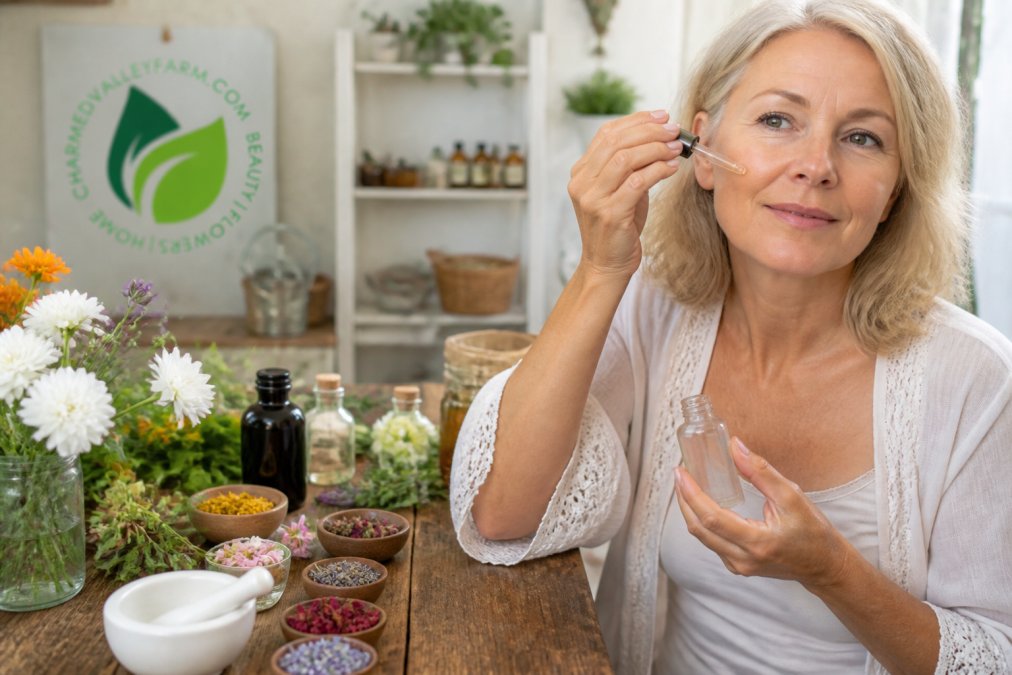
The difference between organic and conventionally grown flowers is the absence of synthetic pesticides and chemical residues that interfere with the flower's natural therapeutic properties. When a rose geranium grows without synthetic inputs, its essential oils remain intact. When a calendula bloom develops without chemical fertilizers, its soothing compounds reach full potency.
The skin barrier responds better to ingredients it recognizes as natural. Organic botanical extracts signal safety to your skin, reducing inflammatory responses that come with synthetic additives, especially important for sensitive or reactive mature skin.
How Botanical Extracts Work on Your Skin
Botanical extracts function through cellular recognition: your skin cells have receptors that identify and respond to specific plant compounds, flavonoids, polyphenols, and terpenes, that interact with your dermal health at a molecular level.
Extraction method determines which compounds reach your skin. Knowing how your skincare was made matters as much as knowing what flowers went into it.
Plant-based ingredients work synergistically. A single flower contains dozens of active compounds that work together in ways isolated, synthetic versions cannot replicate. Rosehips bring vitamin A and lycopene; raspberry leaves contribute tannins; rose geranium adds antimicrobial properties. Together in an organic formulation, they can be effective.
Your skin microbiome responds positively to botanical extracts. Unlike harsh synthetics that disrupt this balance, organic flower compounds support the microbiome's natural function, improving barrier function and resilience.
Anti-Inflammatory and Antioxidant Benefits
Inflammation causes most visible skin problems: redness, sensitivity, breakouts, and accelerated aging. Organic flowers contain natural anti-inflammatory compounds that address this at the source. Calendula has been used for centuries because its active compounds can reduce inflammatory markers in skin tissue (pubmed.ncbi.nlm.nih.gov).
Antioxidants prevent and repair damage from free radicals generated by UV exposure, pollution, and stress. Organic flowers are dense with antioxidants: roses contain anthocyanins, hibiscus provides vitamin C, and lavender delivers polyphenols that neutralize oxidative stress.
The combination of anti-inflammatory and antioxidant action creates a protective effect: you're treating existing damage while preventing new damage. This dual action supports your skin's natural repair mechanisms.
Organic Beauty Products for Sensitive Skin
Sensitive skin requires a different approach. Your barrier is more permeable, your immune response more reactive, and your tolerance for irritants much lower. Organic beauty products eliminate common irritants, synthetic preservatives, fragrance compounds, and chemical stabilizers, but "organic" alone doesn't guarantee safety. Understanding your botanical sensitivities and testing carefully is key.
Why Organic Matters for Sensitive Skin
Synthetic preservatives like methylisothiazolinone (MIT) and parabens are common irritants for sensitive skin. Chemical fragrance compounds can trigger inflammation and redness. Organic formulations eliminate these, reducing exposure to compounds that trigger inflammation without therapeutic benefit.
Organic products work through mechanisms sensitive skin can tolerate. An organic botanical extract can support natural collagen synthesis and hydration.
The Botanical Allergy Problem Competitors Ignore
Even organic, pure botanical extracts can trigger allergic reactions in sensitive individuals. Botanical allergies are real and deeply personal. Someone allergic to ragweed may react to chamomile; someone sensitive to birch pollen may react to rose; someone with a latex allergy may react to certain plant proteins. The botanical is fine; your immune system recognizes it as a threat.
"Natural" and "organic" are not synonyms for "safe for everyone." A product can be 100% organic and still trigger a reaction in someone with a specific botanical sensitivity. The solution is to understand your own sensitivities and test carefully.
Identifying Your Botanical Sensitivities
Note any reactions to plants, foods, or environmental exposures. Seasonal allergies suggest pollen sensitivity that can cross-react with botanical ingredients. Food reactions (celery, carrots, spices) may indicate oral allergy syndrome. Contact dermatitis from plants indicates you need to patch-test carefully.
Keep a log of new products, their botanical ingredients, and any reactions within 24-48 hours. Patterns emerge over time: you might tolerate rose but react to lavender, or find calendula fine but chamomile triggers inflammation. This personal knowledge is invaluable.
The Patch Test Protocol for Sensitive Skin
Patch testing identifies reactions before they affect your face:
-
Choose a test area. The inside of your forearm or behind your ear is ideal, thin skin that's representative of facial sensitivity but not visible if a reaction occurs.
-
Apply a small amount. Use a dime-sized amount of the product. If it's an oil, use even less. Don't dilute it; you want to test the product as you'll actually use it.
-
Wait 24-48 hours. This is the critical part. Some reactions appear within minutes, but others take 24-48 hours to develop. Don't assume a product is safe until you've waited the full period.
-
Observe carefully. Look for redness, swelling, itching, burning, hives, or any change in skin texture. Even mild itching is a sign to stop using the product.
-
If no reaction, expand gradually. If the patch test is clear, apply the product to a small area of your face (cheek or forehead) for 3-5 days before using it everywhere.
-
Introduce one product at a time. If you're building a new routine, add products one at a time, waiting 3-5 days between additions. This way, if a reaction occurs, you'll know exactly which product caused it.
Common Botanical Sensitivities and Cross-Reactions
If you have known plant allergies, be aware of potential cross-reactions in skincare:
- Ragweed allergy: May react to chamomile, echinacea, or daisy-family botanicals
- Birch pollen allergy: May react to rose, apple, or stone-fruit botanicals
- Latex allergy: May react to certain plant proteins; discuss with a dermatologist before using botanical products
- Celery or carrot sensitivity: May react to botanicals in the Apiaceae family
- Fragrance sensitivity: Even natural essential oils can trigger reactions; unscented or minimally scented products are safer
If you have a known plant allergy, check the product's full ingredient list and research whether the botanicals used are botanically related to your allergen. When in doubt, contact the brand directly and ask about botanical families and sourcing.
If you have a known plant allergy, check the product's full ingredient list and research whether the botanicals used are botanically related to your allergen. When in doubt, contact the brand directly and ask about botanical families and sourcing.
Building a Safe Routine for Sensitive Skin
Once you've identified tolerated botanicals, start minimal: a gentle cleanser, hydrating toner, and simple oil or serum. Add products slowly, testing each thoroughly.

Organic botanical skincare can be transformative for sensitive skin when you approach it thoughtfully. Understand your sensitivities, patch-test carefully, and choose transparent products. The goal is to find botanicals that work for your skin and build a routine around those trusted ingredients.
Benefits of Calendula for Skin Health
Calendula's healing properties are well-documented. It contains flavonoids and polyphenols that can support skin repair and reduce inflammatory markers, supporting your skin's natural healing response.
How to Choose Organic Botanical Skincare
True organic certification requires third-party verification that ingredients were grown without synthetic pesticides, fertilizers, or GMO seeds. This differs from "natural," which has no legal definition. Organic certification proves standards, not just marketing language.
The Difference Extraction Methods Make
Extraction method directly determines whether botanical compounds reach your skin in bioavailable form. Not all methods preserve compounds equally, and some introduce trade-offs affecting efficacy and safety.
Cold-Pressing: Maximum Potency, Shortest Shelf Life
Steam Distillation: Aromatic Compounds, Partial Spectrum
CO2 Extraction: Broadest Spectrum, Highest Cost
Solvent Extraction: Efficient, Requires Careful Evaluation
Infusion and Maceration: Traditional, Variable Potency
How to Evaluate Extraction Method on a Label
| Extraction Method | Heat Used | Preserves | Shelf Life | Best For | Cost |
|---|---|---|---|---|---|
| Cold-pressing | None | Vitamins, delicate compounds, full spectrum | 6-12 months | Maximum potency, sensitive skin | Premium |
| Steam distillation | High | Aromatic compounds, some antioxidants | 12-18 months | Hydration, calming, layering | Moderate |
| CO2 extraction | None | Broad spectrum, full potency | 18-24 months | Complete benefits, anti-aging | Premium |
| Infusion/maceration | None | Most compounds, variable | 12-18 months | Traditional, accessible | Moderate |
| Solvent extraction | None (post-removal) | Broad spectrum | 18-24 months | Cost-effective, efficient | Budget-friendly |
Frequently Asked Questions
Which flower is most beneficial for skin care?
Rose, calendula, and lavender are among the most effective flowers for skincare. Rose provides hydration and collagen support, calendula soothes irritation and promotes cell regeneration, and lavender calms inflammation. The best choice depends on your skin type and specific concerns. For mature or sensitive skin, calendula and rose are particularly effective at addressing fine lines and reactive skin.
How do organic beauty products for sensitive skin differ from conventional options?
Organic beauty products for sensitive skin eliminate synthetic additives, preservatives, and chemical fillers that often trigger irritation. They often rely on botanical extracts and bioactive compounds from flowers. This can mean fewer potential irritants and a gentler formula that works with your skin barrier. Products like our Flower Oil Face Serum use cold-pressed sunflower oil infused with rosehips and raspberry leaves, no added chemicals.
What should I look for on a label to ensure my skincare is truly organic?
Check for organic certification from recognized bodies, a transparent ingredient list, and absence of synthetic preservatives. Avoid vague terms like 'natural' without certification backing. Look for specific botanical ingredients listed by their plant names. Genuine botanical skincare products often list plant-based oils, extracts, and distilled waters. Simpler formulations can indicate a botanical focus.
Can organic flower-based products help with skin inflammation?
Yes. Many organic flowers contain anti-inflammatory compounds that reduce redness and calm irritated skin. Calendula, rose, and lavender are particularly effective at soothing inflammation and supporting the skin barrier. The botanical extracts in these flowers can work to decrease reactivity. For mature or sensitive skin prone to inflammation, organic flower-based products offer a gentle alternative.