
Table of Contents
- What Makes Organic Night Creams Different for Sensitive Skin
- Best Night Cream for Sensitive Skin: What to Look For
- Night Cream for Skin Barrier Repair: Ingredient Guidance
- Night Cream Ingredients to Avoid with Sensitive Skin
- How to Patch Test Skincare Before Full Application
- Charmed Valley Farm's Organic Night Cream Solutions
- Realistic Timelines and Expectations for Skin Repair
- Frequently Asked Questions
Last Updated: October 10, 2026
What Makes Organic Night Creams Different for Sensitive Skin
Organic night creams for sensitive skin repair skip synthetic preservatives, fragrance compounds, and harsh chemical stabilizers that trigger inflammation. They focus on plant-based actives that support your skin barrier while you sleep, rather than stripping it with sulfates or irritants.
Organic night creams derive power from botanical extracts, cold-pressed oils, and natural compounds your skin tolerates better, avoiding synthetic fillers and chemical preservatives that accumulate and cause cumulative irritation.
Sensitive skin requires a gentler approach at night because your skin barrier is compromised. During sleep, your skin enters repair mode, when an organic night cream can support that healing process. Night creams deliver higher concentrations of nourishing ingredients when your skin absorbs them most effectively.
Best Night Cream for Sensitive Skin: What to Look For
Finding the best night cream for sensitive skin means prioritizing barrier support over trendy actives and ingredient transparency over marketing claims.
Hydration and Overnight Moisturization
A good night cream for sensitive skin repair should contain humectants (hyaluronic acid, glycerin) that draw moisture in and occlusive plant-based oils that seal it.
Layering hydration, toner on damp skin, then serum, then cream, prevents the tight, uncomfortable feeling from single-step moisturizing and avoids the suffocating feel of heavy formulas.
Charmed Valley Farm's Flower Water Face Toner and Flower Oil Face Serum create this layered system: the toner clarifies skin while the serum delivers organic cold-pressed sunflower oil with rosehips and raspberry leaves.

Soothing and Calming Botanicals
Sensitive skin needs soothing botanicals like chamomile, lavender, yarrow, and honeysuckle, which ease irritation when carefully distilled to preserve active compounds.
A night cream for sensitive skin repair should list recognizable botanical names (lavender, clary sage, yarrow) rather than vague terms, since sensitive skin often reacts to mystery ingredients.
Night Cream for Skin Barrier Repair: Ingredient Guidance
A night cream for skin barrier repair must strengthen the barrier, keeping irritants out and moisture in, rather than just coat it.
Ceramides, fatty acids, and cold-pressed oils (sunflower, jojoba, rosehip) contain natural lipids your skin recognizes and integrates into the barrier. This differs from silicone-based moisturizers that sit on top without repairing underlying structure.
Organic formulations skip synthetic emulsifiers and silicones that interfere with barrier function, relying instead on plant-based emulsifiers and natural oils your skin can metabolize for repair.
| Barrier-Support Ingredient | What It Does | Why Organic Matters |
|---|---|---|
| Cold-pressed oils (sunflower, rosehip) | Restore lipid layer, reduce moisture loss | No synthetic processing damages delicate compounds |
| Plant ceramides | Strengthen barrier structure | Natural source better tolerated by sensitive skin |
| Botanical extracts (yarrow, chamomile) | Reduce inflammation, support healing | Preservative-free formulas maintain potency |
| Hyaluronic acid | Draw moisture into deeper layers | Works best in clean formulations without competing chemicals |
Night Cream Ingredients to Avoid with Sensitive Skin
Sensitive skin reacts to both synthetic and natural ingredients based on concentration, processing method, and individual tolerance, not the ingredient itself. Understanding this helps you read labels confidently.
Common Irritants and Why They Trigger Reactions
Fragrance compounds (listed as "fragrance," "parfum," or "natural fragrance") are the leading cause of contact dermatitis in sensitive skin. Even plant-derived fragrance oils irritate at high concentrations.
Alcohol denat strips the skin barrier and increases transepidermal water loss. Avoid products listing it in the first five ingredients; sensitive skin benefits from alcohol-free formulations.
Synthetic preservatives like methylisothiazolinone (MI), methylchloroisothiazolinone (MCI), and parabens are common allergens. Certified organic formulations exclude synthetic preservatives by definition, though "naturally preserved" products may still contain plant-based preservatives that irritate individual skin.
Essential oils at high concentrations are natural but not gentle, a single drop contains compounds of dozens of flowers. Quality organic formulations use botanical hydrosols or diluted extracts instead, delivering soothing benefits without irritation risk.
Sulfates (sodium lauryl sulfate and sodium laureth sulfate) are surfactants that strip natural oils and disrupt the skin barrier.
Natural Ingredients That Still Cause Reactions
This is where many sensitive-skin guides fall short: natural doesn't mean safe for your skin. Botanicals that soothe most people can trigger reactions in individuals with specific sensitivities.
Plant allergens are common culprits. Chamomile triggers reactions in people allergic to ragweed or chrysanthemums due to shared pollen proteins. Lavender can sensitize with repeated high-concentration use. Citrus oils are phototoxic, increasing sun sensitivity and hyperpigmentation risk.
Botanical extracts with high tannin content (like green tea or witch hazel) can be astringent and drying for some sensitive skin types, especially if your barrier is already compromised.
Nut and seed oils (argan, almond, walnut) are nutrient-dense but can trigger reactions in people with tree-nut sensitivities. Cross-reactivity between nut allergies and topical nut oils is rare but documented.
How to Read Labels for Hidden Irritants
Ingredient lists are ordered by concentration, but "natural fragrance" and "essential oil blend" hide multiple irritants under single terms. Vague labels like "natural flavoring" or "botanical complex" don't specify contents.
Red flags on the ingredient list:
- "Fragrance" or "parfum" anywhere in the first ten ingredients
- "Natural fragrance blend" without specific botanical names listed separately
- "Essential oil complex" or "aromatic blend" without breakdown
- Multiple citrus oils or extracts (phototoxicity risk)
- Alcohol denat in the first five ingredients
- Synthetic preservatives like MI, MCI, or parabens (unless you've confirmed tolerance)
Green flags for sensitive skin:
- Specific botanical names (lavender, chamomile, yarrow) rather than vague terms
- Cold-pressed oils listed by name (sunflower, jojoba, rosehip)
- Plant ceramides or phytoceramides
- Hyaluronic acid or glycerin as humectants
- Absence of fragrance or essential oils
- Certified organic seal (USDA Organic or equivalent) ensuring no synthetic preservatives
When to Seek Professional Guidance
If you react to multiple organic night creams, your sensitivity may be tied to a specific condition like eczema, rosacea, or contact dermatitis. A dermatologist can perform patch testing and recommend tailored treatments. Organic ingredients alone won't resolve these conditions; professional assessment is essential.
How to Patch Test Skincare Before Full Application
Patch testing is non-negotiable for sensitive skin. A proper patch test takes 24 hours and reveals whether your skin will react before you apply the product to your entire face.
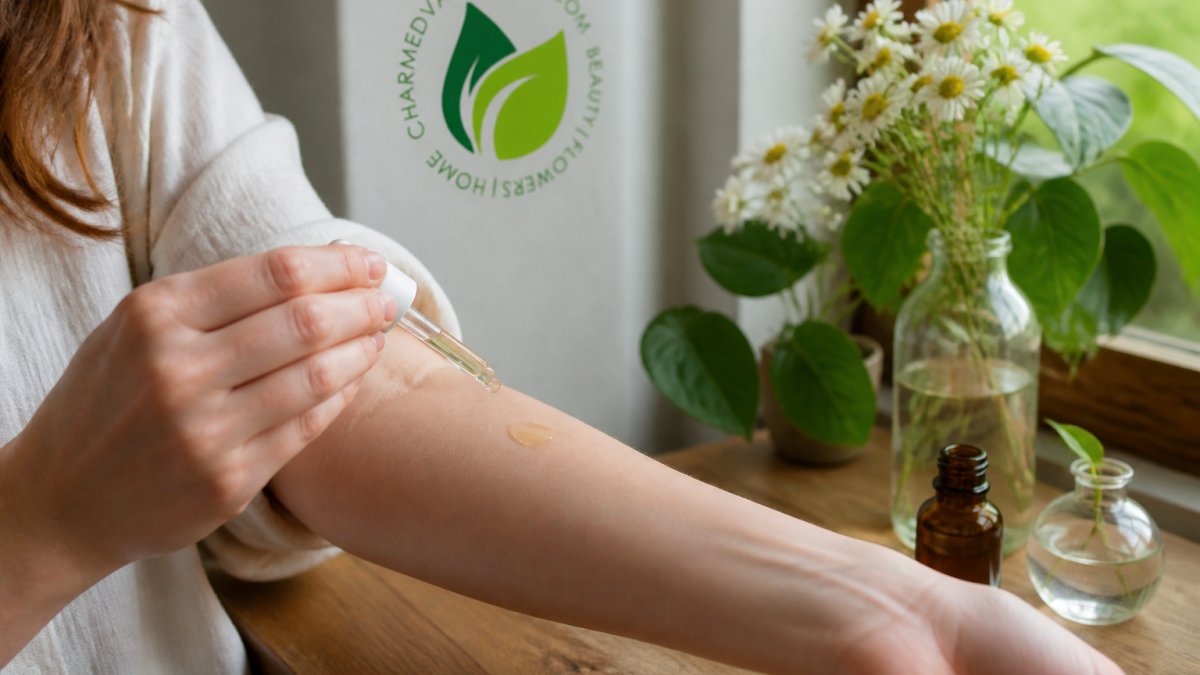
Apply a small amount to clean, dry skin on your inner arm or behind your ear for 24 hours. If you see redness, itching, or swelling, the product isn't right for your skin. If the patch test passes, apply to a small face area for 3-5 nights before full use to catch delayed reactions.
Charmed Valley Farm's Organic Night Cream Solutions
Charmed Valley Farm's Flower Face line offers organic ingredients formulated for sensitive skin repair. The Flower Oil Face Serum ($45) contains cold-pressed sunflower oil with rosehips and raspberry leaves (1 oz, ~30 days). The Flower Water Face Toner ($45) is distilled with lavender, clary sage, yarrow, and honeysuckle. The Flower Face Duo ($85) bundles both for a complete night routine. Both are preservative-free and best used within 12 months. These formulas provide hydration without irritation, botanical soothing, and barrier support through cold-pressed oils.

Realistic Timelines and Expectations for Skin Repair
Sensitive skin repair, anti-aging, and hydration improvement are distinct processes with different timelines. Understanding the difference helps you recognize whether a product is actually repairing your barrier or just providing temporary comfort.
What Barrier Repair Actually Means
Your skin barrier is a lipid and protein structure. When compromised, gaps allow irritants in and moisture out, causing tight, reactive skin. Barrier repair rebuilds this structure to decrease water loss, stop irritant penetration, reduce reactivity, and stabilize the microbiome. This differs from anti-aging or simple hydration and requires consistent lipid replenishment over weeks, not one application.
Timeline for Measurable Barrier Repair
Weeks 1-2: Comfort and Hydration Improvement, Your skin feels softer and less tight within 3-7 days. This is hydration and occlusion, not yet barrier repair, but your skin feels less reactive to other products.
Weeks 2-4: Reduced Redness and Calming, Visible redness decreases by week 2-3 with soothing botanicals. Skin tone becomes more even and reactive flare-ups less intense.
Weeks 4-8: Barrier Function Restoration, By week 4-6, your barrier actively rebuilds with ceramides and cold-pressed oils. You'll notice reduced temperature sensitivity, fewer product reactions, more resilient skin, and less need for daytime moisturizers. By week 8, your barrier is substantially stronger.
Weeks 8-12: Long-Term Resilience, At 8-12 weeks, your barrier tolerates a wider range of products and stressors. You can introduce other actives without triggering inflammation.
Why Consistency Matters More Than Product Choice
Barrier repair requires nightly application. Inconsistent use produces only temporary hydration, not lasting repair. Simplifying your routine also accelerates results, using multiple conflicting products keeps sensitive skin inflamed. A minimal routine (gentle cleanser, hydrating toner, organic night cream) often shows improvement within 2-3 weeks.
Distinguishing Repair from Anti-Aging
This is critical: barrier repair and anti-aging are not the same thing, and conflating them leads to disappointment.
Barrier repair addresses function, reducing reactivity and restoring moisture retention, while anti-aging addresses appearance through collagen stimulation. An organic night cream repairs your barrier but won't reduce wrinkles like retinol would. If sensitivity is your concern, barrier repair should come first; anti-aging can follow once your barrier is strong.
How to Track Progress
Since barrier repair is functional rather than purely visual, tracking progress requires attention to how your skin feels and behaves, not just how it looks.
Week-by-week checklist:
- Does your skin feel less tight after cleansing?
- Are reactive flare-ups less frequent or intense?
- Can you tolerate other products without redness?
- Does your skin feel resilient to temperature changes?
- Is your skin less itchy or uncomfortable?
- Do you need less additional moisturizer during the day?
These are the markers of true barrier repair. If you're only seeing visual changes (skin looks brighter, feels hydrated) but still experiencing reactivity and sensitivity, the product is hydrating your skin but not repairing your barrier.
Frequently Asked Questions
What ingredients should sensitive skin avoid in a night cream?
Sensitive skin typically reacts poorly to synthetic fragrances, alcohol denat, sulfates, and harsh preservatives. Look for night creams that skip these irritants and instead feature gentle botanicals like lavender, chamomile, and rosehips. Organic night creams formulated without added chemicals reduce the risk of triggering inflammation or redness. Always check the full ingredient list and patch test before committing to a new product, especially if your skin has a history of reactivity.
Can organic night cream help support the skin barrier?
Yes. Organic night creams with barrier-supporting ingredients like cold-pressed oils, hyaluronic acid, and botanical extracts strengthen your skin's protective layer while you sleep. Products featuring sunflower oil, rosehips, and raspberry leaves deliver nourishment and repair without synthetic additives. A healthy barrier reduces sensitivity, locks in moisture, and improves your skin's resilience. Consistent use of a clean, organic formulation designed for barrier repair can noticeably calm reactive skin over time.
How should you patch test a new night cream?
Apply a small amount of the product to a discreet area like your inner forearm or behind your ear. Leave it on for 24-48 hours without washing. Watch for redness, itching, swelling, or any sign of irritation. If no reaction occurs, apply a small amount to your face and use it for 3-5 nights before full application. This gradual introduction gives your sensitive skin time to adjust and reveals any delayed reactions. Never skip patch testing, even with organic products, as individual sensitivities vary.
What is the best night cream for dull, sensitive skin?
The best night cream for dull, sensitive skin combines hydration with gentle brightening botanicals. Look for organic formulations with hyaluronic acid for moisture, along with flower-based ingredients like rose geranium and lavender that support skin texture and radiance. Avoid products with vitamin C or retinol if your skin is currently reactive; introduce those actives only after your barrier is fully repaired. A preservative-free, chemical-free serum applied over a hydrating toner creates a powerful overnight treatment for dull, sensitive skin.