
Table of Contents
- What's Inside a Wholesale Cut Flower Bucket
- Seasonal Flower Availability and Bloom Cycles
- How to Extend Vase Life of Flowers After Pickup
- DIY Wedding Flowers: Planning and Logistics
Last Updated: August 17, 2026
What's Inside a Wholesale Cut Flower Bucket
A wholesale cut flower bucket is a pre-assembled collection of fresh, seasonal blooms delivered directly from a farm to florists, event planners, and DIY hosts. These buckets arrive filled with a curated mix of stems, typically ranging from 50 to 150 stems depending on the program, along with foliage and conditioning supplies to extend vase life.
What makes these buckets different from retail purchases is the farm-to-vase philosophy. You're buying directly from growers who harvest at peak bloom and get flowers to you within hours of cutting. At Charmed Valley Farm, we design our wholesale cut flower bucket programs to give florists and event planners access to fresh-picked stems.
Each bucket includes a "grower's choice" selection of seasonal flowers, what's thriving in the fields that week. A typical 100-stem bucket can create 8-12 centerpieces, depending on design density and flower varieties.
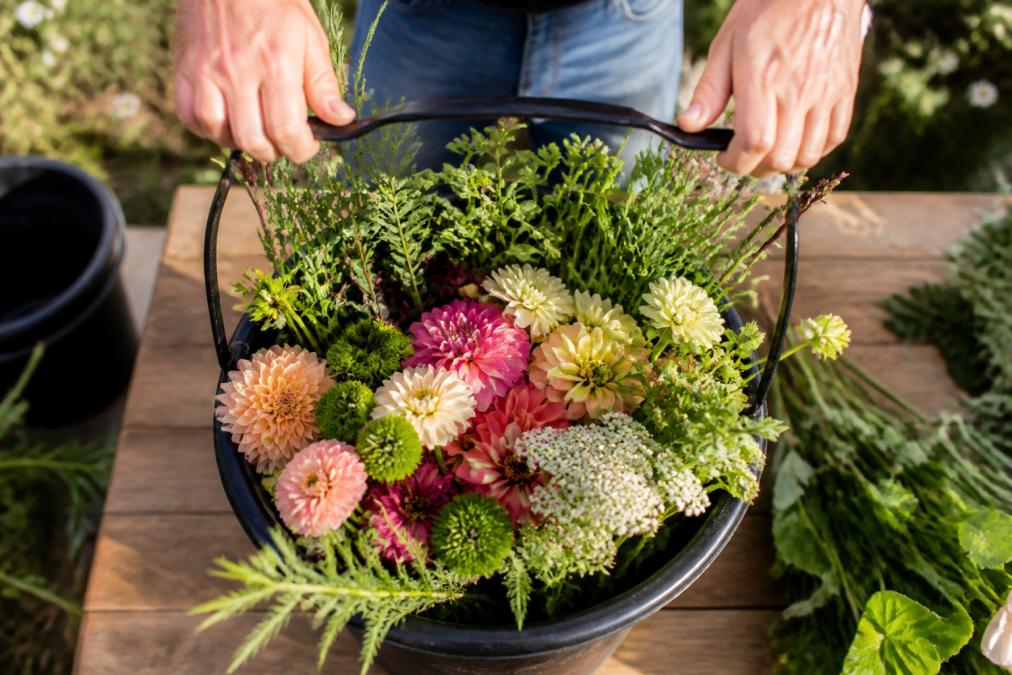
The bucket itself is a sturdy, food-grade container filled with water and floral preservatives. Most programs include conditioning instructions and stem count estimates for different event sizes. Ordering minimums vary by farm, but most require one to three buckets per pickup or delivery. Lead times typically range from three days to two weeks.
Seasonal Flower Availability and Bloom Cycles
Seasonal availability is the heartbeat of any wholesale cut flower bucket program. Spring brings tulips, ranunculus, and garden roses. Summer features dahlias, sunflowers, and zinnias. Fall shifts to chrysanthemums, solidago, and celosia. Winter offers amaryllis, hypericum berries, and evergreen foliage.
Understanding bloom cycles helps you plan events and manage inventory expectations. A flower thriving in June might be unavailable in January. Farms prioritizing quality over year-round availability produce more vibrant, longer-lasting stems because they're growing in optimal conditions.
Working WITH seasonal availability rather than fighting it creates more authentic, cost-effective designs. A summer wedding featuring dahlias and zinnias costs less and looks fresher than forcing imported peonies in July. Spring and summer typically have shorter lead times because farms are in full production mode.
How to Extend Vase Life of Flowers After Pickup
The moment you pick up your wholesale cut flower bucket, vase life begins its countdown. Most field-grown stems last 7-14 days in a vase, but poor conditioning can cut that in half.
Condition immediately upon arrival. Get flowers into a cool space within an hour of pickup. Remove the bucket's initial water and replace it with fresh, room-temperature water mixed with floral preservative. If your bucket didn't come with preservative packets, use a homemade mix: one tablespoon sugar, one-half teaspoon bleach, and one teaspoon lemon juice per quart of water.
Re-cut every stem at a 45-degree angle. Use sharp floral scissors or a clean knife; dull blades crush stem cells and trap air bubbles. Cut about one inch off the bottom of each stem, removing any foliage that would sit below the waterline. Submerged foliage rots and accelerates bacterial growth, which clogs the stem's vascular system.
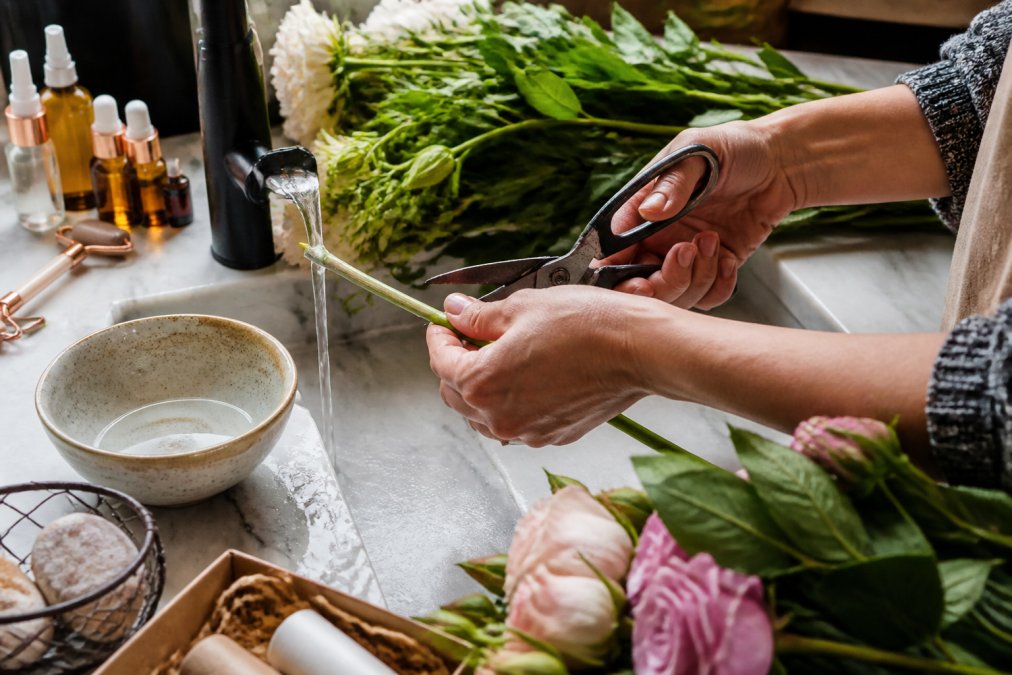
Change water every two to three days. Bacteria multiply exponentially in standing water, and cloudy water signals heavy bacterial load. Each time you change water, re-cut the stems by about half an inch and remove any leaves that have dropped into the vase or begun to decay.
Keep flowers cool and away from ethylene. Ethylene is a ripening gas produced by fruit, vegetables, and dying flowers. Remove any flowers showing petal damage or browning immediately. Store your arrangement in a cool room, ideally 65-70 degrees, away from direct sunlight, heating vents, and fruit bowls.
Mist foliage daily but avoid wetting blooms. Foliage benefits from humidity, but wet petals invite fungal issues. Common mistakes that tank vase life include using floral foam without proper water management, overcrowding arrangements, and neglecting to remove lower foliage.
DIY Wedding Flowers: Planning and Logistics
DIY wedding flowers require realistic planning. A typical bridal bouquet uses 30-40 stems, a bridesmaid bouquet uses 20-25 stems, and a table centerpiece uses 15-25 stems depending on design density. For 100 guests with 10 tables, a bridal party of six, and ceremony arrangements, you're looking at roughly 400-600 stems total. Most farms suggest ordering one extra bucket to account for stems that don't make the cut or break during conditioning.
Timing is critical. Order your wholesale cut flower bucket for pickup or delivery the day before your event, or the morning of if the farm offers same-day service. Flowers picked that morning will have maximum vase life.
Coordinate with your farm on variety selection. Tell them your color palette, event size, and preferred flower types. Practice your arrangements before the event by spending an hour the day before arranging a test bouquet using your intended flowers, vases, and mechanics.
Recruit help. Assign roles: one person conditions and preps stems, another arranges, a third handles foliage and filler. Have backup supplies on hand: extra floral scissors, preservative packets, chicken wire or floral foam, pruning shears, and a bucket of water.
Wholesale cut flower bucket programs let you skip the retail markup and work directly with growers who care about quality. Whether you're a florist stocking inventory, a DIY bride designing your own flowers, or an event host looking to add farm-fresh touches to your celebration, understanding what's inside a bucket, how seasons affect availability, and what conditioning practices extend vase life transforms you from a flower buyer into someone who actually understands the product you're working with. Charmed Valley Farm's wholesale bucket programs bring that farm-to-vase philosophy to life, delivering seasonal blooms picked at peak freshness so your arrangements look their best from setup through the final toast.
Frequently Asked Questions
What is included in a typical wholesale cut flower bucket?
A wholesale cut flower bucket typically contains 50 to 100+ stems of seasonal blooms mixed with complementary foliage and greenery. The exact stem count, variety, and flower types depend on the season, farm inventory, and your specific order. Most growers offer a grower's choice option, where the farm selects the freshest available varieties that week, or custom selections if you request specific flowers. Buckets are designed for bulk event floral design, DIY wedding arrangements, and professional florist use.
How far in advance should I book wholesale flower buckets for an event?
Most farms recommend booking wholesale cut flower buckets 2 to 4 weeks ahead for standard orders, though lead times vary by season and availability. Peak seasons like spring and early summer may require longer notice, sometimes 6 to 8 weeks. For special event flowers or custom color palettes, confirm your lead time directly with the farm. Booking early ensures the grower can reserve the specific varieties and quantities you need and gives you time to arrange pickup or delivery logistics.
How do I know your flowers will stay fresh and consistent if I commit to a bucket program?
Farm-to-vase quality depends on harvest timing, post-harvest conditioning, and transport methods. Reputable growers harvest flowers at peak bloom stage, condition them immediately, and maintain cold chain storage until pickup. Ask about the farm's conditioning practices, vase life guarantees, and how they handle seasonal transitions. Consistent quality comes from farms with established growing practices, regular communication about availability, and transparent policies if a bad season affects supply. Start with a trial order to assess freshness before committing to ongoing deliveries.
Do I need a professional florist license to purchase wholesale flower buckets?
Licensing requirements vary by state and depend on how you use the flowers. If you're a florist running a retail business, check your state's regulations, some require a florist license, while others don't. DIY event hosts and individuals arranging flowers for personal events typically don't need a license. However, some farms have minimum order quantities or require business verification for wholesale pricing. Contact the farm directly about their eligibility requirements and whether they serve DIY customers or florists only.
This article was written using GrandRanker