
Table of Contents
- Environmental Impact and Carbon Footprint of Local Organic Flower Buckets
- How to Extend Vase Life of Flowers from Local Sources
- DIY Wedding Flower Bucket Guide for Event Hosts
- Seasonal Flower Availability and Sourcing Strategy
Last Updated: August 26, 2026
Environmental Impact and Carbon Footprint of Local Organic Flower Buckets
Local organic flower buckets reduce transportation emissions by eliminating long-distance supply chains. A typical imported rose travels 6,000 miles by air freight, accumulating roughly 0.5 pounds of CO₂ per stem (peer-reviewed research). Local sourcing cuts that distance to under 500 miles, reducing per-stem emissions by up to 90%.
Organic flower certification means the farm prohibits synthetic pesticides, herbicides, and fungicides throughout the growing cycle. Certified organic farms (meeting U.S. Department of Agriculture standards) maintain detailed records and undergo annual third-party audits (usda.gov). For cut flowers, this means no neonicotinoid insecticides, synthetic growth regulators, or prohibited fumigants.
Environmental benefits extend beyond carbon. Organic farms employ crop rotation, cover cropping, and compost application instead of synthetic fertilizers, reducing chemical runoff into groundwater and supporting pollinator populations. Local organic farms typically use drip irrigation or rainwater harvesting, reducing water consumption by 30-50% compared to industrial operations, critical in water-stressed regions (the EPA).
The farm-to-vase model eliminates multiple cold-chain facilities and long-term refrigerated storage. Each facility requires energy to maintain 33-35°F temperatures for days or weeks. By shortening the supply chain, local sourcing reduces cumulative refrigeration demand and packaging waste. Locally sourced organic flowers arrive fresher, require fewer chemical inputs, and support agricultural practices that protect soil, water, and pollinator ecosystems.
How to Extend Vase Life of Flowers from Local Sources
Local organic flowers typically achieve a vase life of 10-16 days, compared to 5-10 days for imported conventional blooms. This longevity stems from minimal time in cold storage and the absence of synthetic growth regulators used on imported flowers.
Why Organic Flowers Last Longer
Organic flowers are harvested at peak ripeness rather than early to withstand shipping. Conventional growers often harvest blooms 1-2 days before full maturity, then apply synthetic ethylene inhibitors to slow senescence during weeks of cold storage. While these treatments keep flowers looking fresh in retail coolers, they compromise natural vase life once water and warmth are restored. Organic flowers skip this intervention, arriving with intact cellular structure and their natural ripening timeline.
Immediate Post-Harvest Conditioning
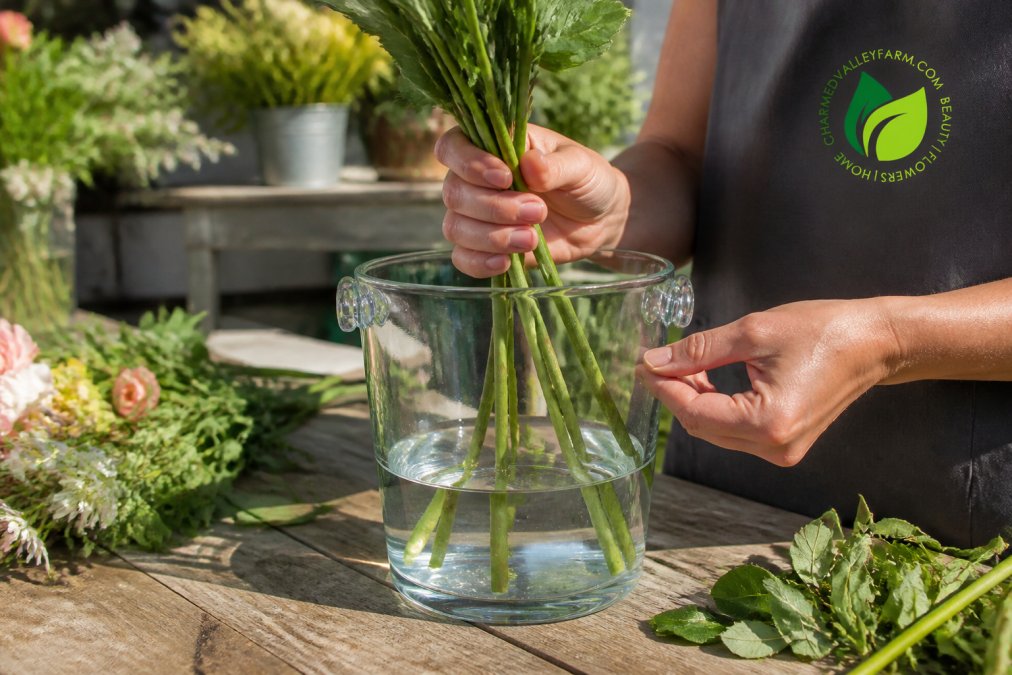
Trim stems at a 45-degree angle under cool running water to increase water absorption by up to 25%. Remove all foliage below the waterline; submerged leaves decompose and introduce bacteria that clog vascular tissue and shorten vase life by 3-5 days.
Fill your bucket with cool water (40-45°F) and add commercial flower preservative, which contains carbohydrates, biocides, and pH buffers. If unavailable, one tablespoon sugar and a few drops of bleach per quart provides modest benefit.
Let conditioned flowers hydrate in a cool, dark space for at least 2-4 hours before arranging.
Ongoing Care for Maximum Longevity
Change water every 2-3 days and recut stems by ½ inch each time. Keep arrangements away from direct sunlight, ripening fruit, heating vents, and air conditioning drafts. Maintain room temperature between 65-72°F; cooler environments extend vase life by slowing respiration.
For events, pre-condition flowers the day before and arrange them the morning of the event. Keep arrangements in a cool location until guests arrive.
DIY Wedding Flower Bucket Guide for Event Hosts
Contact local farms 4-6 weeks before your event to confirm availability. Pick up flowers the day before and condition them overnight in a cool space. Trim stems, add water and conditioning solution, and let them hydrate fully. The morning of the event, arrange flowers into buckets, keeping them cool until guests arrive.
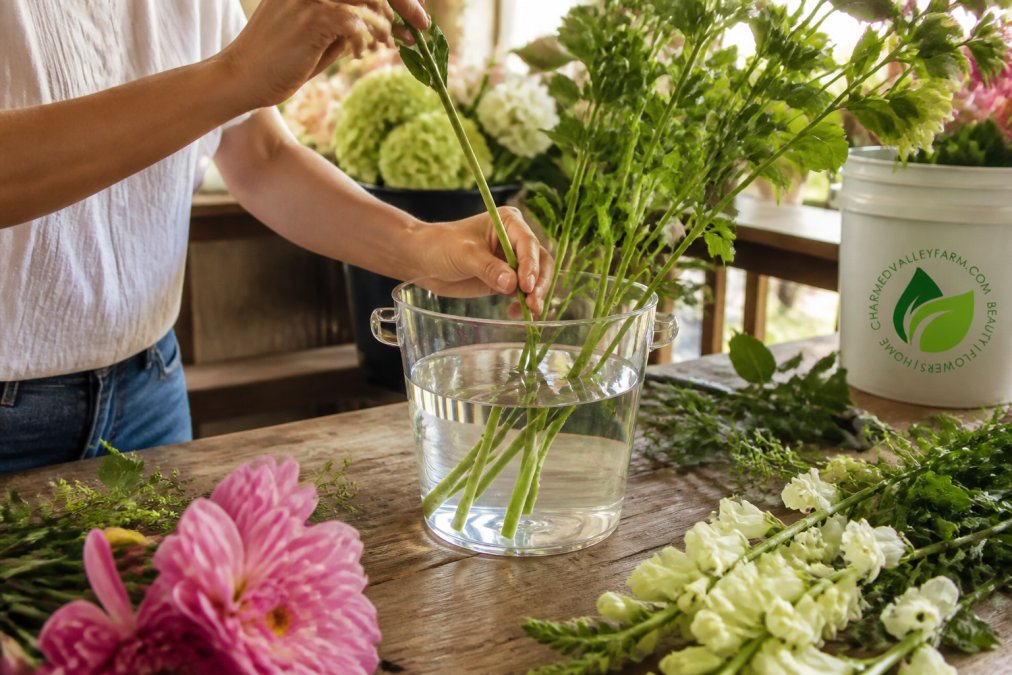
The bucket system is simple: food-grade buckets hold water and stems securely, keeping arrangements stable throughout your event. This approach costs less than hiring a florist while delivering fresh results.
Seasonal Flower Availability and Sourcing Strategy
Seasonal blooms offer superior freshness compared to out-of-season imports. Spring brings tulips, peonies, and ranunculus. Summer features garden roses, sunflowers, and dahlias. Fall offers chrysanthemums, zinnias, and celosia. Winter features amaryllis, hellebores, and preserved evergreens.
Flowers in season require less climate control and transportation, arriving at peak condition. Ask your local farm about their seasonal calendar and subscription programs that rotate with the season. This strategy supports local biodiversity, reduces environmental impact, and guarantees fresher flowers for every occasion.
Frequently Asked Questions
What are the environmental benefits of choosing local organic flower buckets?
Local organic flower buckets significantly reduce transportation emissions compared to imported blooms, which often travel thousands of miles. Organic cultivation eliminates chemical residues and pesticide use, supporting soil health and local biodiversity. Farm-to-vase sourcing also minimizes post-harvest handling, reducing waste and environmental impact while supporting sustainable agriculture practices that benefit ecosystems and pollinator-friendly habitats in your region.
How do local organic flowers differ in vase life compared to imported blooms?
Local organic flowers typically have superior vase life because they're harvested at peak freshness and reach you within days rather than weeks. Imported flowers endure lengthy transportation, storage, and chemical treatments that can compromise stem integrity and petal vibrancy. Organic blooms from local farms avoid harsh chemical conditioning, maintaining natural cellular structure and allowing for longer-lasting arrangements when properly conditioned with clean water and flower food.
Are there cost advantages to buying bulk flower buckets from local farms?
Bulk purchases from local organic farms can eliminate middleman markups and reduce transportation costs. For florists and DIY event hosts, direct relationships with local farms often provide flexibility on volume, seasonal pricing, and customized bucket programs tailored to your specific event needs and timeline.
Choosing local organic flower buckets transforms how you source and experience cut flowers. The environmental benefits are real, the flowers last longer, and the connection to your community deepens. Start by reaching out to farms near you and asking about their wholesale or bucket programs. Fresh, pesticide-free blooms are closer than you think. Learn More Here to explore seasonal availability and sourcing options tailored to your needs.
This article was written using GrandRanker