
Table of Contents
- Why a Flower-Based Skincare Routine Works for Mature Skin
- Understanding Organic Beauty Products for Sensitive Skin
- Step 1: Start with Gentle Cleansing Using Botanical Ingredients
- Step 2: Apply a Flower Water Toner to Balance and Hydrate
- Step 3: Layer Serums and Targeted Treatments for Nourishment
- How to Patch Test Natural Skincare Before Full Use
- Benefits of Botanical Skincare and What to Realistically Expect
- Customizing Your Routine by Skin Type and Time of Day
- Frequently Asked Questions
Last Updated: October 20, 2026
Why a Flower-Based Skincare Routine Works for Mature Skin
A flower-based skincare routine harnesses the natural power of botanical ingredients to address the specific needs of aging skin.
At Charmed Valley Farm, we've built our #Farm2Face philosophy around this simple truth: your skin responds better to what nature offers than to synthetic compounds.
The best part? You don't need a complicated 10-step routine. A thoughtful flower-based approach works with fewer products while delivering real results.
Understanding Organic Beauty Products for Sensitive Skin
Organic beauty products for sensitive skin are formulated without synthetic chemicals, artificial fragrances, or harsh preservatives that trigger inflammation and irritation. For women over 40, this distinction matters enormously.

Flower-based formulations are inherently gentler. They contain no sulfates, parabens, or silicones. Instead, they use distilled flower waters, cold-pressed oils, and dried botanicals that calm rather than stress your skin.
The challenge is knowing what "organic" actually means. When you see a product like the Flower Oil Face Serum, you should be able to trace every ingredient back to its source.

Step 1: Start with Gentle Cleansing Using Botanical Ingredients
Your routine begins with cleansing, but not the harsh kind that strips your skin. Gentle cleansing removes oil, dirt, and makeup without damaging your skin barrier.
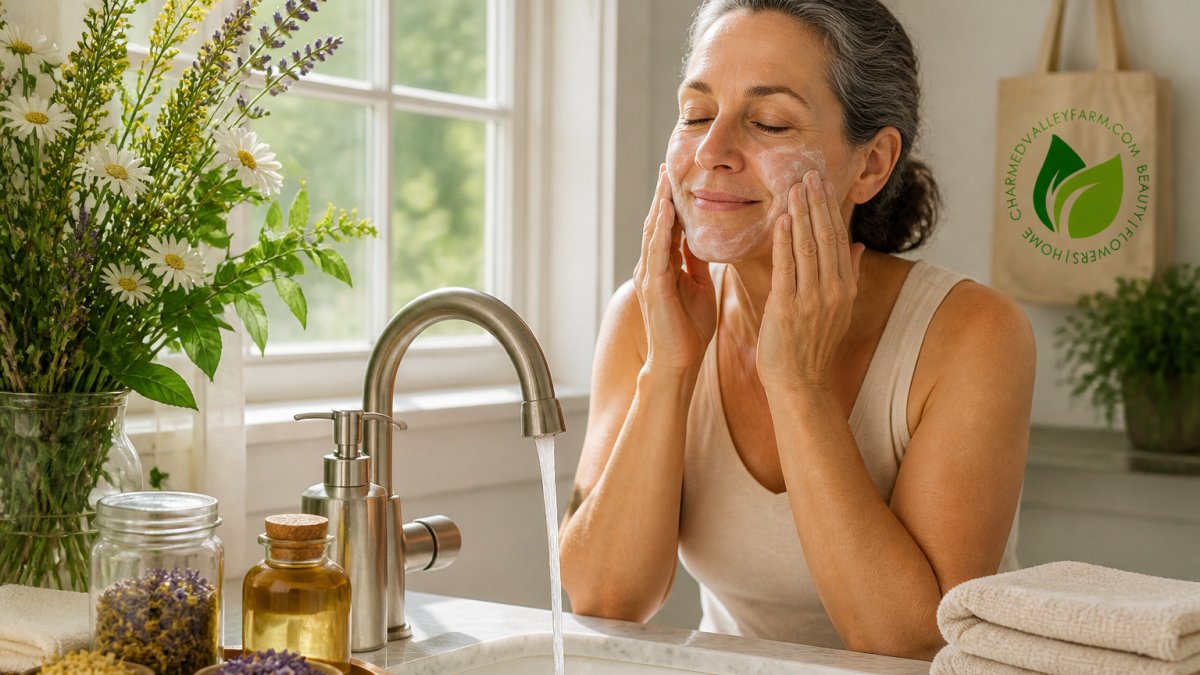
Look for cleansers that use botanical ingredients like chamomile, calendula, or rose. These flowers naturally cleanse while soothing inflammation.
How to cleanse properly:
- Use lukewarm water, not hot water (heat irritates mature skin)
- Apply a small amount of botanical cleanser to damp skin
- Massage gently in circular motions for 30-45 seconds
- Rinse thoroughly and pat dry (don't rub)
- Apply your next product while skin is still slightly damp
This final step matters. Damp skin absorbs serums and toners more effectively than completely dry skin. You'll see better results and use less product overall.
Step 2: Apply a Flower Water Toner to Balance and Hydrate
After cleansing, a flower water toner restores balance and prepares your skin for deeper treatments. Flower waters (also called hydrosols) are the aromatic water left over from distilling essential oils from flowers.
Why toner matters for mature skin:
- Balances pH after cleansing
- Delivers hydration before heavier products
- Reduces the appearance of pores
- Preps skin to absorb serums more effectively
How to apply toner:
- Spritz directly onto clean, damp face (3-4 sprays)
- Let it absorb for 10-15 seconds
- Gently press into skin with fingertips
- Apply serum while skin is still slightly moist
The misting format makes it easy to use anytime. Many women keep a bottle on their nightstand or desk for a midday refresh. This cooling "beauty boost" takes seconds.
Step 3: Layer Serums and Targeted Treatments for Nourishment
A serum is where the real work happens. Serums penetrate deeper than moisturizers because they contain smaller molecules and higher concentrations of active ingredients.
The Flower Oil Face Serum combines cold-pressed sunflower oil with rosehips, raspberry leaves, and rose geranium (or lemon balm in the unisex version).
How to use a flower oil serum:
- Add one full dropper to your palm
- Warm the oil between your hands
- Press gently onto freshly cleaned, damp face and neck
- Massage upward in gentle, lifting motions
- Wait 1-2 minutes before applying moisturizer
One bottle lasts about 30 days with daily use. As our serum is preservative-free, it’s best used within 12 months of purchase.
How to Patch Test Natural Skincare Before Full Use
Even natural products can trigger reactions. Before using any new botanical product, patch test to make sure your skin tolerates it well.
Patch testing prevents costly mistakes. You avoid irritating your entire face, and you identify sensitivities early, before you have committed to a full bottle.
How to patch test in 3 steps:
-
Choose a hidden spot. Test on your inner arm or behind your ear where skin is thin and sensitive, just like your face.
-
Apply a small amount. Use about the size of a pea. Let it sit for 24 hours without washing that area.
-
Watch for reactions. Look for redness, itching, burning, or swelling. If you see any of these, rinse immediately and skip that product.
Most reactions appear within the first 24 hours. If no reaction occurs, the product is likely safe for your face.
Irritation vs. allergy: how to tell them apart
These two reactions look similar but call for different responses.
- Irritation usually appears as stinging, tightness, or mild redness soon after application and fades within hours once you stop using the product. It is a dose and barrier problem, not an immune response. A diluted product or a shorter contact time may solve it.
- Allergic contact dermatitis is delayed, often appearing 12 to 72 hours after contact. It shows up as an itchy, raised, or blistering rash that can spread beyond where you applied the product. Once sensitized, you may react to that ingredient for years, so you need to stop using it entirely.
If a reaction spreads, blisters, or persists beyond a few days, stop all new products and see a dermatologist.
Flower ingredients that deserve extra caution
A plant is not automatically safe just because it is natural. Some botanicals carry well-documented risks:
- Essential oils in general are concentrated and can irritate or sensitize skin, especially undiluted. Hydrosols (flower waters) are far gentler because the oil concentration is low.
- Citrus and other photosensitizing botanicals such as bergamot, lime, and cold-pressed citrus peel oils can make skin more reactive to sunlight. Use them at night or pair them with daily sunscreen.
- Fragrant flowers including lavender, rose, geranium, and chamomile are common allergens for sensitive skin even though they are marketed as calming. Yarrow and arnica can also provoke reactions in some people.
- Compositae-family plants such as chamomile, calendula, and yarrow share allergens, so a reaction to one raises the odds of a reaction to the others.
Benefits of Botanical Skincare and What to Realistically Expect
Flower-based skincare delivers real benefits, but it's important to have realistic expectations. Natural products work, but they work differently than prescription treatments.
What botanical skincare actually does:
- Hydrates and plumps fine lines (within 2-4 weeks)
- Reduces redness and inflammation (within 1-2 weeks)
- Improves skin texture and radiance (within 4-6 weeks)
- Supports skin barrier repair (ongoing)
- Provides antioxidant protection against environmental damage
What it doesn't do:
- Eliminate deep wrinkles (that requires professional treatments)
- Fade age spots dramatically (sunscreen prevents new ones; fading takes months)
- Replace prescription acne treatments
- Provide instant results (consistency over time is key)
The Flower Oil Face Serum, for example, smooths fine lines and boosts collagen. But "boosts collagen" doesn't mean your skin suddenly looks 20 again.
Many women see their first improvements in skin texture and hydration within 2-3 weeks. Fading of fine lines typically takes 6-8 weeks of consistent use.
Customizing Your Routine by Skin Type and Time of Day
One routine doesn't fit everyone. Your flower-based routine should match your specific skin type and adapt to morning versus evening needs. The table below maps flower ingredients to each step.
| Skin Type | Morning Focus | Evening Focus | Flower Ingredients by Step |
|---|---|---|---|
| Dry | Light hydration, SPF | Deep nourishment, oils | Cleanser: chamomile or calendula; Toner: rose hydrosol; Serum: rosehip or sunflower oil; Moisturizer: calendula cream |
| Sensitive | Calming, barrier support | Soothing, repair | Cleanser: chamomile; Toner: lavender or yarrow hydrosol (patch test first); Serum: diluted rosehip; Moisturizer: fragrance-free oat and calendula |
| Mature | Brightening, antioxidants | Collagen support, renewal | Cleanser: rose; Toner: geranium or honeysuckle hydrosol; Serum: rosehip and rose geranium; Moisturizer: richer arnica or dandelion formula |
| Combination | Balance, light layers | Targeted treatment | Cleanser: sage or lemon balm; Toner: honeysuckle hydrosol; Serum: light sunflower oil on dry zones only; Moisturizer: gel-cream with lemon balm |
Morning routine (5 minutes):
- Cleanse with a gentle botanical cleanser matched to your skin type.
- Spritz flower water toner while skin is still damp.
- Apply serum with a lighter hand in the morning; one or two drops is enough under makeup.
- Moisturize to seal in hydration.
- Apply broad-spectrum sunscreen with SPF 30 or higher. This step is non-negotiable for mature skin and for anyone using photosensitizing botanicals.
Evening routine (5-10 minutes):
- Cleanse thoroughly to remove daily buildup, sunscreen, and makeup. An oil-based botanical cleanser can help lift sunscreen without stripping.
- Spritz flower water toner.
- Apply serum more generously; evening is when repair-focused botanicals earn their keep.
- Apply a richer moisturizer, or a flower-based face mask once or twice a week.
- Skip sunscreen; let skin repair overnight.
How to introduce botanicals without disrupting your routine
If you already have a routine you like, do not swap everything at once. A gradual plan protects your skin barrier and makes it easy to identify what works.
- Week 1-2: Add one flower product, usually a hydrosol toner, to your existing cleanse-and-moisturize steps. Patch test first.
- Week 3-4: If your skin is calm, add a flower oil serum at night only.
- Week 5-6: Expand to morning use and adjust amounts based on how your skin feels.
Always finish your morning routine with sunscreen, and remember that citrus-based flower ingredients belong in the evening routine.
The beauty of a flower-based routine is flexibility. You can adjust based on how your skin feels. On dry days, use more serum.
Frequently Asked Questions
How do I know if a flower-based skincare product is actually chemical-free and not just marketing?
Look for products with transparent ingredient lists that name specific flowers, oils, and botanicals without synthetic preservatives or fillers. Charmed Valley Farm's Flower Face line, for example, lists every ingredient: organic cold-pressed sunflower oil, rosehips, rose geranium, and raspberry leaves with no added chemicals. Ask whether the brand cold-presses or infuses its own botanicals and check for third-party verification or certifications. Legitimate flower-based skincare will have a shelf life of 12 months or less without preservatives, since natural products degrade over time.

Will flower-based skincare actually work for mature, reactive skin, or will it cause irritation?
Flower-based skincare can work well for mature skin because botanicals like rose, calendula, and arnica are naturally soothing and contain compounds that support skin barrier health. However, reactive skin requires caution. Always patch test new products on a small area of your inner arm or behind your ear for 24-48 hours before applying to your face. Start with one product at a time and introduce it slowly into your routine. Products like the Flower Oil Face Serum are formulated as universal options for all skin types, but individual reactions vary. If irritation occurs, discontinue use and consult a dermatologist.
What are the realistic benefits of using botanical skincare ingredients?
Botanical skincare can hydrate, soothe inflammation, support skin barrier function, and reduce the appearance of fine lines with consistent use. Flowers like rose contain antioxidants, calendula offers gentle healing, and sunflower oil provides deep hydration. However, botanicals are not miracle cures for serious skin conditions. Results typically appear after 4-8 weeks of daily use. Realistic expectations include improved texture, reduced redness, and a more radiant appearance, not dramatic transformation. Combining multiple products, like a toner and serum together, tends to show better results than using a single product alone.
How do I incorporate flower-based products into my existing skincare routine without disrupting it?
Introduce flower-based products one at a time, spacing them 1-2 weeks apart so you can identify which products your skin loves. Start with a toner or hydrating mist after cleansing, then add a serum or oil once your skin has adjusted. The Flower Face Duo combines a toner and serum in the correct order: spritz the Flower Water Face Toner on freshly cleaned skin, then apply the Flower Oil Face Serum while skin is still slightly damp for best absorption. If you're already using other serums or moisturizers, apply flower-based products before heavier creams to allow proper absorption.