
Table of Contents
- What to Know Before You Buy Wholesale Flowers for Florists
- How to Extend Vase Life of Flowers and Reduce Waste
- Wholesale Flower Supplier Requirements and What to Expect
- Building Your Wholesale Flower Sourcing Strategy
Last Updated: August 20, 2026
What to Know Before You Buy Wholesale Flowers for Florists
When you buy wholesale flowers for florists, you're entering a supply chain built on precision, timing, and quality standards that differ significantly from retail. The wholesale flower market operates on fundamentals that matter immediately: cold-chain logistics, stem count accuracy, variety consistency, and vase life expectations. A supplier who guarantees 14-day vase life but delivers 10-day stems costs you credibility with clients. A farm that promises year-round availability but goes silent during winter weather creates supply gaps you can't absorb.
Reputable wholesale flower suppliers maintain climate-controlled storage, harvest at optimal maturity, and ship with proper hydration protocols. They publish clear minimum order quantities, specify delivery schedules, and stand behind their product quality with straightforward communication about seasonal limitations.
The decision to buy wholesale flowers for florists also means evaluating whether you need a bucket program, where you receive regular standing orders, or transaction-based purchasing. Bucket programs lock in consistency and often offer better pricing, but they require forecasting skill and storage space. Transaction-based ordering gives flexibility but typically costs more per stem.
How to Extend Vase Life of Flowers and Reduce Waste
The vase life of wholesale flowers is your operating margin. A stem that lasts 12 days instead of 8 is four extra days of saleable product. Extending vase life isn't about secret tricks; it's about understanding what kills flowers and preventing it systematically.
Fresh cut flowers die from three causes: dehydration, microbial blockage in the stem vascular system, and ethylene gas exposure. You control all three.
Start with proper hydration immediately upon arrival. Flowers should be unboxed and placed in clean, cool water within two hours of delivery. Use room-temperature water and add flower food if your supplier includes it; if not, a simple mixture of sugar and a small amount of bleach works. Change the water every 2-3 days and clean the vase thoroughly each time to prevent bacterial growth.
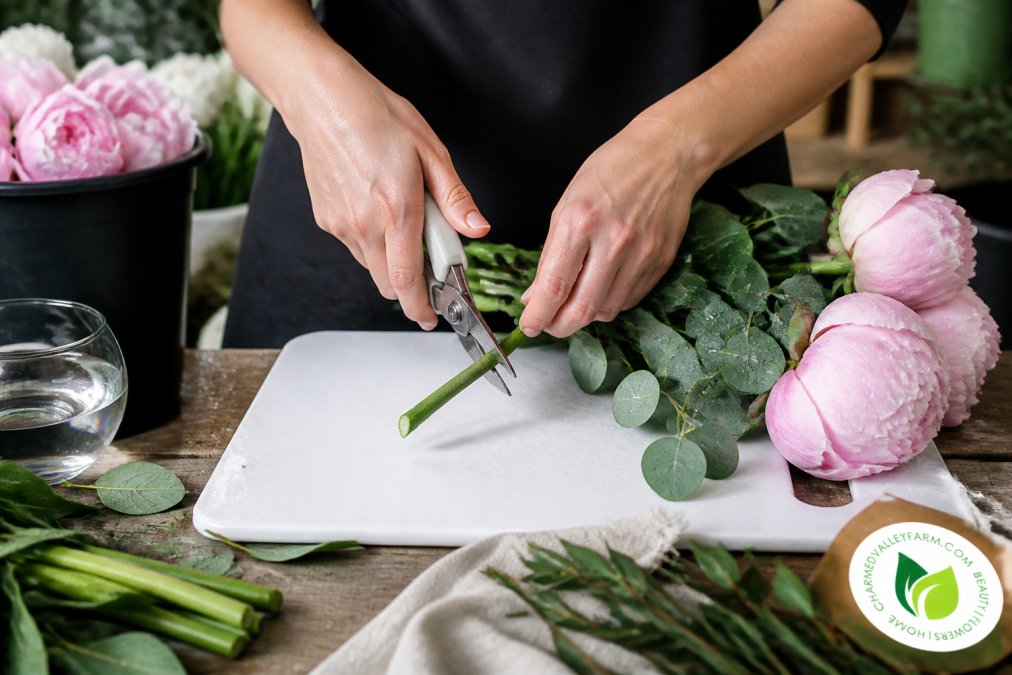
Stem preparation matters significantly. Remove all foliage that would sit below the waterline; submerged leaves become bacteria factories. Cut stems at a 45-degree angle with a sharp knife, not scissors, which crush the vascular tissue. Recut stems every 3-4 days if flowers are sitting in storage. That simple action can add 2-3 days to vase life by reopening the water-absorbing surface.
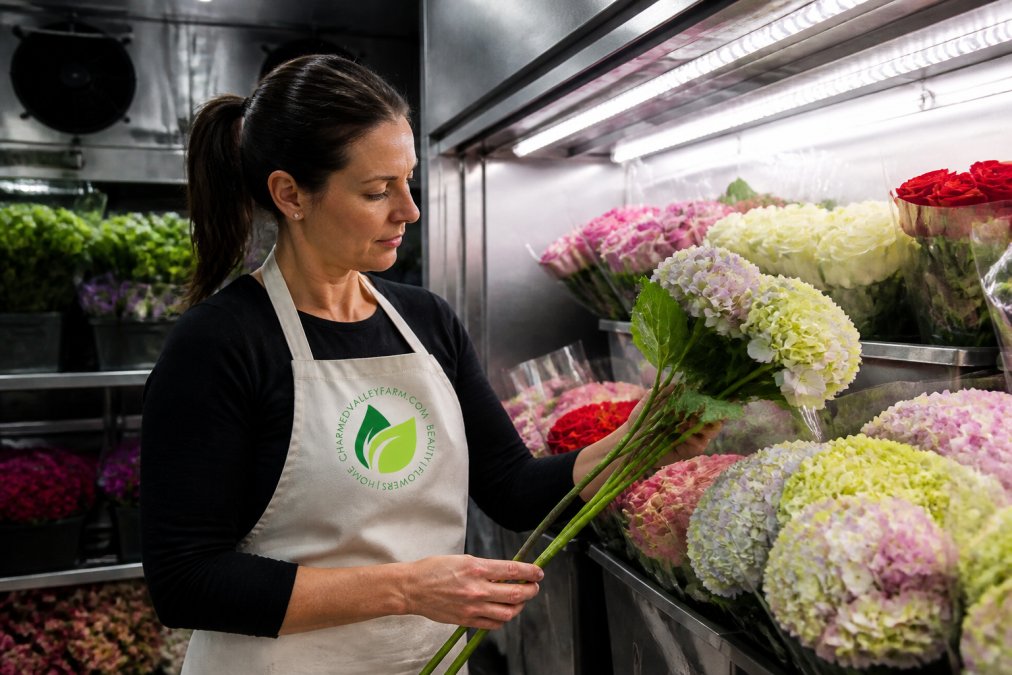
Temperature control is non-negotiable. Wholesale flowers last longest in 34-40°F storage. Keep cut flowers in a cooler between uses. Room-temperature displays shorten vase life by 30-50% compared to cool storage. Never share cooler space with ethylene-producing fruits and vegetables.
Wholesale Flower Supplier Requirements and What to Expect
When you buy wholesale flowers for florists, you're evaluating suppliers against specific operational requirements that directly impact your business viability.
Minimum order quantities are the first practical constraint. Most wholesale suppliers require orders of 25-50 stems per variety minimum. Some farms allow mixed-variety orders to reach minimums; others require each variety to hit the threshold separately.
Delivery schedules determine your operational rhythm. Some suppliers offer twice-weekly delivery; others only once weekly. Ask explicitly about delivery windows and whether they're consistent or subject to seasonal variation.
Quality standards should be documented. Reputable wholesale sources specify vase life guarantees (typically 10-14 days for most varieties), bloom stage at delivery, and stem count accuracy (±10% tolerance is standard). They should also publish what you're responsible for once flowers arrive.
Seasonal availability is where many florist-supplier relationships fail. Certain varieties are genuinely unavailable for 4-6 months per year. The best wholesale sources publish seasonal calendars and offer substitution suggestions when your preferred variety isn't available.
Pricing structure matters operationally. Some suppliers charge per stem; others charge per bunch. Ask whether pricing changes seasonally or stays consistent. A supplier that charges 40% more for peonies in January than June is being honest about supply realities.
Building Your Wholesale Flower Sourcing Strategy
Your sourcing strategy determines whether you're reactive or strategic, with predictable costs and consistent product.
Start by auditing your actual flower usage. Track what varieties you use weekly and what percentage of arrangements use each type. Most florists discover they use 60% of their arrangements from 8-10 core varieties. These are your anchor products where wholesale relationships pay off immediately.
Secondary varieties, specialty blooms you use 1-2 times monthly, are candidates for transaction-based ordering rather than bucket programs. Evaluate whether a bucket program makes sense for your operation. For florists doing 15+ arrangements weekly, bucket programs usually reduce per-stem cost by 15-25% compared to ad-hoc ordering. For florists doing fewer than 10 arrangements weekly, the commitment often exceeds actual usage, creating waste.
If you choose a bucket program, negotiate flexibility. Can you reduce volume during slow seasons? Can you swap varieties without penalty? The best wholesale relationships include these adjustments.
Diversify suppliers strategically. Working with a single wholesale source creates risk. Most successful florists work with 2-3 primary suppliers for core varieties and maintain relationships with 1-2 specialty sources for premium or seasonal blooms. This approach eliminates single-point-of-failure risk.
Document everything. Keep records of vase life performance, delivery consistency, quality issues, and pricing. This data becomes invaluable when evaluating whether a supplier relationship is actually saving you money.
Sourcing wholesale flowers is fundamentally about building reliable partnerships that support your growth without creating operational burden. The farms and distributors that understand florist workflows, seasonal reality, quality variability, and storage constraints become trusted partners. Charmed Valley Farm specializes in providing florists with consistent, high-quality wholesale cut flowers through both bucket programs and transaction-based ordering, backed by transparent communication about seasonal availability and vase life expectations. Explore wholesale sourcing options that match your actual business volume and operational capacity; that alignment is where real cost savings and customer satisfaction begin.
Frequently Asked Questions
What makes buying wholesale flowers for florists different from retail flower shopping?
Wholesale flower suppliers offer bulk quantities at lower per-stem costs, farm-direct access to fresh cut flowers, and seasonal variety that retail channels cannot match. When you buy wholesale flowers for your florist business, you gain control over inventory, extended vase life through cold-chain delivery, and the ability to customize arrangements for events. Pricing depends on quantity, dates, and delivery options, contact Charmed Valley Farm for current wholesale pricing and your specific volume needs.
How do I know if a wholesale flower supplier meets quality standards?
Reputable wholesale flower suppliers maintain cold-chain logistics, provide detailed stem count and variety specifications, and offer quality assurance guarantees. When evaluating wholesale flower supplier requirements, inspect blooms for firmness, check for hydration (heavy stems indicate proper water uptake), and verify that flowers arrive in professional packaging. Ask about their sourcing practices, post-harvest handling, and whether they offer seasonal blooms or year-round availability. A trustworthy supplier will be transparent about their farm-direct practices and willing to discuss their commitment to flower quality.
What's the best way to extend vase life of flowers after delivery?
To extend vase life of flowers, cut stems at a 45-degree angle immediately upon arrival, remove lower leaves that would sit in water, and place blooms in clean water with flower food. Change the water every 2-3 days and re-cut stems to maintain hydration. Keep arrangements away from ripening fruit, direct sunlight, and heat sources. Different varieties have different vase lives, roses typically last 7-10 days, while some seasonal blooms may last 2-3 weeks. Proper post-harvest care directly impacts your profitability and customer satisfaction.
Should I order from a local wholesaler or buy wholesale flowers online?
Local wholesalers offer same-day or next-morning pickup, which minimizes shipping time and maximizes freshness. Online wholesale flower suppliers provide broader seasonal variety, farm-direct access, and often competitive pricing, but require planning for cold-chain delivery. Consider your event volume, storage capacity, and whether you need consistent weekly orders or seasonal bulk purchases. Many florists use both options, local for emergency orders and online for planned events with premium varieties. Evaluate each supplier's reliability, minimum order requirements, and whether they align with your quality standards.
This article was written using GrandRanker