
Table of Contents
- Why Organic Beauty Products Can Still Cause Skin Reactions
- How to Read Skincare Ingredient Labels Like a Detective
- Fragrance Allergens in Beauty Products: What the Word 'Fragrance' Hides
- Essential Oils and Skin Irritation: Natural Doesn't Mean Gentle
- Preservatives, Dyes, and Other Hidden Cosmetic Ingredients
- The Skincare Patch Test: A Step-by-Step Safety Check
- Tracking Reactions and When to Seek Professional Help
- Frequently Asked Questions
Last Updated: October 8, 2026
Why Organic Beauty Products Can Still Cause Skin Reactions
Organic beauty products can trigger redness, itching, or a rash even when every ingredient on the label sounds gentle. That surprises people. It shouldn't.
"Organic" and "natural" describe how an ingredient was grown or sourced, not whether your skin will tolerate it. Poison ivy is natural.
There are two very different problems hiding under the word "reaction," and telling them apart changes what you do next.
Irritation vs. Delayed Allergic Contact Dermatitis
Irritation is direct damage to the skin barrier. It shows up within minutes to hours and burns or stings more than it itches.
Allergic contact dermatitis is an immune response. It appears 24 to 72 hours after contact and itches intensely.
That delay is the trap. You blame the moisturizer you used this morning when the real culprit was the shampoo from two days ago.
Here's the practical difference:
| Feature | Irritant Reaction | Allergic Contact Dermatitis |
|---|---|---|
| Timing | Minutes to hours | 24-72 hours later |
| Main symptom | Burning, stinging, dryness | Intense itching, rash |
| Who reacts | Most people, at high enough dose | Only sensitized people |
| Goes away when | You stop using it | You stop using it, often slower |
| Repeat exposure | Worse with more product | Worse with even tiny amounts |
One more thing nobody tells you: a product can irritate you for years and then, one day, turn into a full allergy.
How to Read Skincare Ingredient Labels Like a Detective
Most people scan the front of the bottle, but the real information is on the back, ordered by weight from largest amount to smallest. That ordering is your first filter: if a flagged ingredient sits in the first five, you're getting a meaningful dose of it.
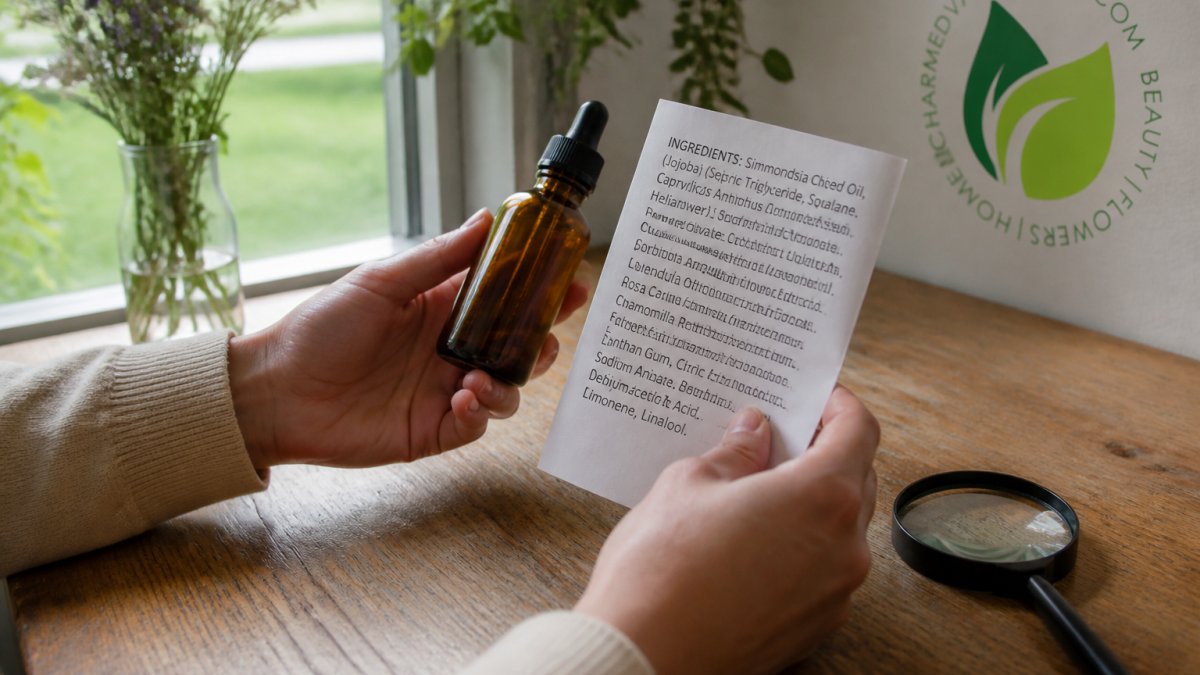
Try this screening method:
- Read the full ingredient list out loud before you buy. If it's longer than about 20 items, slow down.
- Circle anything you've reacted to before. Keep a running list on your phone.
- Flag the big four: fragrance, preservatives, dyes, and essential oils.
- Check the first five ingredients. That's most of what you're putting on your skin.
- Look up any term you don't recognize before it touches your face.
The U.S. Food and Drug Administration's cosmetics labeling guidance explains what must appear on a cosmetic label. It also explains what doesn't have to appear, which is where things get interesting.
A Synonym-Checking Workflow for Ingredient Lists
The same irritant rarely appears under one name. A fragrance component can show up as linalool, as "parfum," or folded into "natural fragrance," and a preservative can hide behind an acronym. The screening step that works is matching what you see against a synonym list.
Build a reference list on your phone with three columns: the ingredient family, the names it hides under, and whether you've reacted to it. Run every new label through it before you buy. Common aliases:
- Fragrance: parfum, fragrance, aroma, "natural fragrance," "essential oil blend"
- Formaldehyde releasers: DMDM hydantoin, diazolidinyl urea, imidazolidinyl urea, quaternium-15, bronopol
- Parabens: methylparaben, propylparaben, butylparaben, ethylparaben
- Dyes: anything beginning with "CI" followed by a number, such as CI 77891 or CI 19140
- Botanical fragrance sources: lavender oil, citrus peel oil, bergamot oil, ylang-ylang oil
One caution that matters more than any list: an ingredient name alone cannot diagnose an allergy. Linalool is present in countless products people use without issue, and a positive reaction to a product doesn't prove which ingredient caused it.
Decoding Organic and Natural Product Labeling
"Organic" on a skincare label is not the same as "organic" on a food label. For food, the U.S. Department of Agriculture sets strict rules. For cosmetics, there is no federal standard for the word "organic" at all.
A product can say "organic" if it contains one organic ingredient, and "natural" if the maker decides it's natural. Neither word tells you anything about allergy risk: an organic-certified botanical can sensitize skin just as readily as a synthetic one.
What you can trust:
- USDA Organic seal on a cosmetic means the product met the food-grade standard for organic content.
- "Made with organic ingredients" means at least 70% organic content under that same program.
- "Natural," "botanical," "clean," and "green" mean whatever the brand wants them to mean.
Fragrance Allergens in Beauty Products: What the Word 'Fragrance' Hides
The single word "fragrance" can legally stand in for a blend of dozens of undeclared compounds. It is the leading cause of allergic contact dermatitis from cosmetics, according to the American Academy of Dermatology's guidance on cosmetic reactions.
That's the loophole. Under U.S. labeling rules, fragrance ingredients count as trade secrets, so a brand can list "fragrance" and stop there.
If you're reacting and can't find the cause, fragrance is the first place to look. It hides in moisturizer, foundation, dry shampoo, and even "unscented" products, which often contain a masking fragrance.
Fragrance and Botanical Ingredient Aliases to Know
These names are fragrance, even when they sound like skincare:
- Parfum, fragrance, aroma
- Linalool, limonene, citronellol, geraniol, eugenol
- Lavender oil, citrus peel oil, bergamot oil
- "Natural fragrance" or "essential oil blend"
That last one catches people. "Natural fragrance" is still fragrance. It still has to be patch tested.
Essential Oils and Skin Irritation: Natural Doesn't Mean Gentle
Essential oils are concentrated plant chemistry, and that concentration is what makes them risky: it takes a huge amount of plant material to fill one small bottle.
Some of the most common offenders:
- Citrus oils (bergamot, lemon, grapefruit) can cause a reaction that shows up only after sun exposure.
- Lavender and tea tree are gentle for most people but are well-documented sensitizers with repeated use.
- Peppermint, cinnamon, clove, and eucalyptus burn on contact for many people.
- Ylang-ylang and geranium are frequent fragrance allergens.
The dose matters too. A leave-on product holds the oil against your skin for hours. A rinse-off cleanser gives you far less exposure.
Preservatives, Dyes, and Other Hidden Cosmetic Ingredients
Preservatives and dyes cause a large share of cosmetic reactions, and both are easy to miss because they sit at the bottom of the ingredient list.

Preservatives: Parabens and Formaldehyde-Releasing Agents
Parabens (methylparaben, propylparaben, butylparaben) are the preservatives most people know to watch, and common sensitizers in leave-on products.
Less well known are formaldehyde-releasing agents. These preservatives slowly release small amounts of formaldehyde to keep bacteria out. Watch for:
- DMDM hydantoin
- Diazolidinyl urea
- Imidazolidinyl urea
- Quaternium-15
- Bronopol
The U.S. Food and Drug Administration's page on formaldehyde in cosmetics covers where these appear and what the current rules allow. If you've patch tested positive for formaldehyde, this whole family is off the table.
Dyes, Colorants, and Metals
Dyes show up as "CI" followed by a number, like CI 77891 or CI 19140. They're more common in color cosmetics, but they hide in tinted moisturizers and colored balms too.
Metals are the surprise entry: nickel, cobalt, and chromium appear as trace contaminants in pigments and even some plant-based ingredients, because plants take up metals from soil.
Natural rubber and lanolin round out the list. Both are common in cosmetics and both cause reactions in people who are sensitized to them.
The Skincare Patch Test: A Step-by-Step Safety Check
Total time: 3 to 5 days Difficulty: Beginner
What you'll need:
- The new product, in its original packaging
- A bandage or small patch of gauze
- A pen and a notebook, or a notes app
- Your phone camera
Step 1: Pick your test spot. Use the inner forearm or behind the ear.
Step 2: Apply a small amount. A pea-sized dot is plenty.
Step 3: Cover it and wait 24 hours. Leave the patch alone. Don't wash the area.
Step 4: Check and reapply. No reaction after 24 hours? Apply again and wait another 24 to 48 hours.
Step 5: Photograph the spot. Take a photo each day.
Tracking Reactions and When to Seek Professional Help
A reaction log turns guesswork into a pattern. Note the product name, the date you started it, the date symptoms appeared, and a photo of the affected area. Add the ingredient list, copied or photographed, so you're not reconstructing it after the bottle is gone.
A simple log has five columns: date started, product, ingredients of concern, date symptoms appeared, and a symptom note. That short list is worth more than any "sensitive skin" label, and it's the document a dermatologist will want to see.
Irritation, Allergy, or Something Else?
Timing is the most useful clue you can record. Irritant reactions show up within minutes to hours and feel like burning, stinging, or dryness; allergic contact dermatitis appears 24 to 72 hours later and itches intensely.
Some reactions aren't either one. A product can trigger rosacea, eczema, or a flare of an existing condition, and those need a different approach than avoiding an ingredient. That's why the log matters: it separates a clear cause-and-effect pattern from a skin condition that happens to overlap with your product use.
When to See a Dermatologist
See a dermatologist if any of these apply:
- The rash spreads beyond where you applied the product
- Symptoms don't improve within a week of stopping
- You have swelling, blisters, or open skin
- You can't pin down the cause after tracking for a month
- The reaction keeps coming back despite avoiding your suspected triggers
How Clinical Patch Testing Differs From At-Home Testing
A dermatologist can run patch testing, a controlled version of what you've been doing at home.
Bring your reaction log and product list to the appointment. The more detail you provide about what you used and when symptoms appeared, the more useful the testing will be.
If you're dealing with mature or reactive skin, our Flower Face Skincare line is formulated without added fragrance or preservatives, and every product still deserves a patch test first.
Frequently Asked Questions
What are the top ingredients to avoid in skincare products if I have sensitive skin?
Watch for fragrance, essential oils, preservatives like parabens and formaldehyde-releasing agents, dyes, and sulfates such as sodium lauryl sulfate. Even organic beauty products can contain these. Check labels for terms like 'parfum,' 'limonene,' and 'methylisothiazolinone.' If you have known allergies, avoid p-phenylenediamine (PPD) in hair dye and lanolin in creams. A skincare patch test can help you identify which specific ingredients trigger your skin before you apply them broadly.
Can you be allergic to organic products?
Yes. Organic and natural ingredients like essential oils, botanical extracts, and preservatives can cause allergic contact dermatitis. Organic labeling does not guarantee hypoallergenic. If you react to a product, stop using it and track which ingredients were present. A dermatologist can perform patch testing to confirm the allergen.
How do I read an organic skincare ingredient label?
Start by looking for the word 'organic' on the front, but flip to the back. Ingredients are listed by concentration, so the first five matter most. Look for fragrance and essential oil aliases like 'parfum,' 'linalool,' and 'citronellol.' Check for preservatives ending in '-paraben' or 'DMDM hydantoin.' Note that 'natural' and 'organic' are not regulated the same way as USDA Organic. If a label claims 'chemical-free,' be skeptical, water is a chemical. Use a skincare patch test on new products.
What should I do if a beauty product causes a reaction?
Stop using the product immediately. Wash the area with cool water and a gentle, fragrance-free cleanser. Apply a cool compress to reduce redness and itching. Do not scratch. If the reaction is severe, spreads, or includes swelling or burning, seek medical care. For mild reactions, note the product name, ingredients, and when symptoms appeared. Keep a reaction log. A skincare patch test on future products can help you avoid repeat reactions. If reactions continue, ask a dermatologist about patch testing.