Table of Contents
- What Sustainable Flower Farming Practices Actually Mean
- Regenerative Flower Farming Techniques for Healthy Soil
- Integrated Pest Management for Flower Farms
- How to Source Sustainable Flowers for Events
- Frequently Asked Questions
Last Updated: September 5, 2026
What Sustainable Flower Farming Practices Actually Mean
Sustainable flower farming practices are cultivation methods that protect soil health, conserve water, support biodiversity, and reduce chemical inputs while still producing beautiful, marketable blooms. This goes far beyond skipping synthetic pesticides. It is a full-system approach where the farm operates like a living ecosystem rather than a production line.
The most important shift is moving from extraction to regeneration, treating soil as the farm's most valuable asset. These practices respond to a real problem: conventional flower production relies heavily on chemicals and long-distance transport with a significant carbon footprint. For florists and event hosts, understanding these methods is the first step toward honest local sourcing.
Regenerative Flower Farming Techniques for Healthy Soil
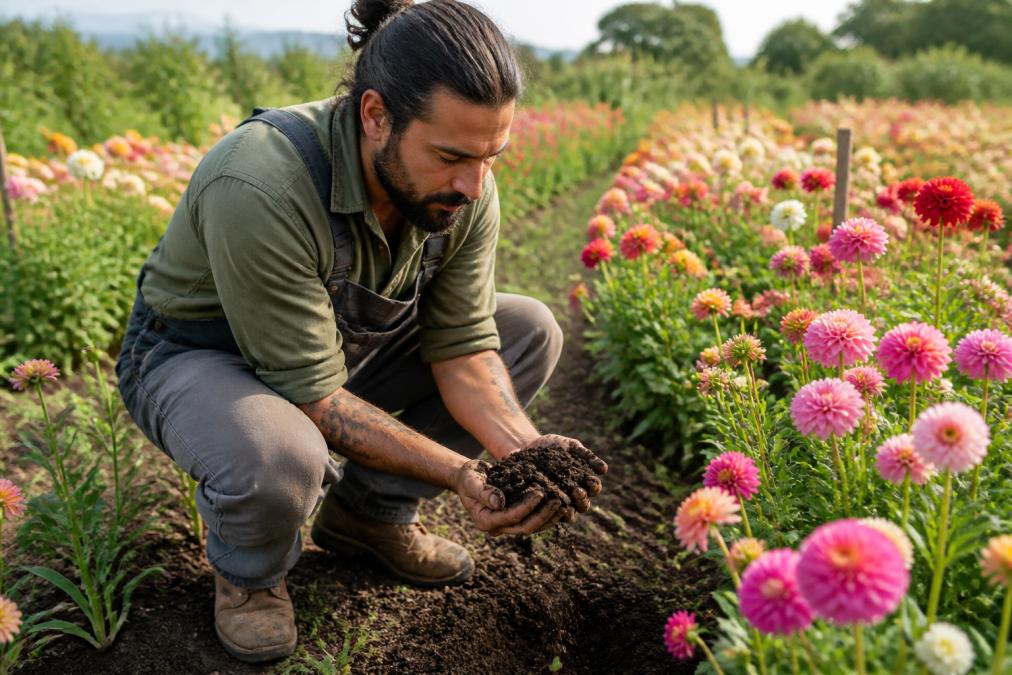
Regenerative flower farming techniques start with one non-negotiable principle: disturb the soil as little as possible. No-till farming keeps soil structure intact, protects soil organic matter, and preserves the network of fungi and microbes that feed your plants. Instead of tilling, farmers manage weeds with mulch, compost, and biodegradable paper or heavy layers of organic matter.
Cover cropping with clover, buckwheat, or winter rye between flower cycles builds soil fertility, suppresses weeds, and prevents erosion. Crop rotation prevents pest and disease buildup, while composting returns nutrients to the field. These methods boost soil biological activity, meaning stronger roots, longer stems, and better vase life, plus climate resilience against drought and heavy rain.
Integrated Pest Management for Flower Farms
Integrated pest management is a decision-making framework, not a spray schedule. The goal is to prevent pests from becoming a problem, then use the least harmful intervention only when monitoring shows you need it. This dramatically reduces reliance on synthetic pesticides.
The process follows a clear order of operations:
- Prevent: Choose disease-resistant varieties, space plants for airflow, and rotate crops to break pest cycles.
- Monitor: Walk your fields weekly and identify insects before you react. Many "pests" are harmless or even beneficial.
- Intervene: Start with cultural controls like hand-picking or removing infected plants. Next, introduce beneficial insects like ladybugs and parasitic wasps.
- Last resort: Use targeted organic sprays only when thresholds are crossed and populations threaten the crop.
A healthy farm with diverse plantings and abundant pollinator habitat naturally supports beneficial insects that keep pest populations in check. This is environmental harm reduction in action, and it produces cleaner, safer stems for florists and their clients. The USDA Agricultural Research Service resources on integrated pest management outline how these biological controls can be scaled from small farms to large operations.
How to Source Sustainable Flowers for Events
When sourcing sustainable flowers for events, the single most effective choice is to buy local and seasonal. Stems grown near the venue have a fraction of the carbon footprint of imported blooms. Seasonal blooms work with nature, and they are often fresher and longer-lasting.
Ask your florist or supplier direct questions. Do they practice integrated pest management? Do they use no-till methods or cover cropping? Are they certified organic or verified chemical-free? Many smaller farms lack formal certification due to cost, but they can walk you through their practices with transparency. Look for a genuine sustainable ethos, not just green marketing.
Post-harvest sustainability matters too. Ask whether floral foam is avoided, since it is non-biodegradable, and whether stems are wrapped in compostable paper instead of plastic. A florist committed to sustainability will also compost event waste and suggest designs that use fewer, higher-quality stems rather than massed imports. This field-to-vase approach creates arrangements with a story and a lighter footprint. Choosing a farm that offers a wholesale and bucket program for florists and DIY hosts simplifies sourcing while keeping your event both beautiful and aligned with your values. For a deeper look at what sustainable floral design entails, the Association of Specialty Cut Flower Growers resources on local flower sourcing is an excellent industry starting point.
Frequently Asked Questions
What are the 7 practices of sustainable agriculture?
The seven core practices are crop rotation, cover cropping, reduced tillage or no-till farming, integrated pest management (IPM), composting, water conservation, and maintaining biodiversity through pollinator habitat. Together they build soil organic matter, cut synthetic pesticide use, and improve climate resilience. For flower farms specifically, these practices can contribute to healthier stems, longer vase life, and a lower carbon footprint in the floral supply chain.
Why is chemical-free flower farming better for the local ecosystem?
Chemical-free flower farming protects beneficial insects, soil biological activity, and nearby water sources. Synthetic pesticides do not discriminate between pests and pollinators, so eliminating them lets natural predators keep pest populations in check. Healthier soil holds more water, which reduces irrigation needs. Supporting farms that skip chemicals also encourages environmental stewardship across the floral supply chain, giving florists a genuine sustainability story for their customers.
How can florists verify flowers are grown sustainably?
Ask growers directly about their practices: whether they use cover cropping, composting, or no-till farming, and how they manage pests without synthetic chemicals. Look for farms that practice integrated pest management and can name the beneficial insects they release. Ask about post-harvest handling and whether they use floral foam or plastic wraps. A farm focused on sustainable cultivation will gladly explain its methods, since transparency is part of its sustainable ethos.
This article was written using GrandRanker