
Last Updated: October 29, 2026
Quick Summary
The best wellness retreat activities for mental clarity are mindfulness meditation and guided breathing, restorative yoga, and guided nature walks, ranked by how directly they train attention and how easily beginners can adapt them. Each can be modified for your body, schedule, and experience level, so the best activity is the one you will actually repeat at home.
- Start mindfulness meditation with ten-minute guided sits, eyes open if sitting still feels impossible.
- Restorative yoga holds supported poses for several minutes, and chair variations work when floor poses are hard.
- A half-day schedule can combine one meditation, one nature walk, and one restorative session.
- Before checkout, note the activity that helped most and one habit to repeat within 48 hours.
- Be wary of any program that promises to cure anxiety, depression, or trauma.
Table of Contents
- Why Wellness Retreat Activities Sharpen Mental Clarity
- 7 Wellness Retreat Activities for Mental Clarity, Ranked
- Mental Clarity Exercises You Can Practice Between Sessions
- How to Choose Mindfulness Retreat Activities by Experience Level
- Building a Realistic Wellness Retreat Schedule
- What to Bring to a Wellness Workshop
- Evaluating Facilitators, Safety, and Therapeutic Boundaries
- Plan Your Next Retreat with Charmed Valley Farm
- Frequently Asked Questions
Why Wellness Retreat Activities Sharpen Mental Clarity
Mental clarity is the state of quiet, focused attention where your mind stops rehearsing yesterday and stops bracing for tomorrow. The best wellness retreat activities for mental clarity work because they interrupt the loop of notifications, deadlines, and worry long enough for your nervous system to settle.
That interruption matters more as we age. Women in their forties, fifties, and sixties often carry decades of caregiving, career pressure, and grief in their bodies. A retreat gives that load somewhere to go.
7 Wellness Retreat Activities for Mental Clarity, Ranked
This ranking is different: each activity is scored on three practical criteria, how directly it targets focus and attention, how quickly a beginner can feel a shift, and how easily it adapts to different bodies, schedules, and experience levels.
| Rank | Activity | Time Needed | Best For | Beginner Adaptation |
|---|---|---|---|---|
| 1 | Mindfulness meditation and breathing | 10-20 min daily | Racing thoughts | Guided audio, eyes open, 5-minute sits |
| 2 | Restorative yoga | 45-60 min | Physical tension | Chair-supported poses, bolsters, 20-minute versions |
| 3 | Guided nature walks | 30-90 min | Overstimulation | Paved paths, seated nature observation, shorter loops |
| 4 | Art therapy | 60-90 min | Stuck emotion | Collage instead of painting, no-critique prompts |
| 5 | Group work | 60-90 min | Isolation | Small circles, opt-out passes, licensed facilitator |
| 6 | Nutrition workshops | 60 min | Energy crashes | Demo-only classes, take-home recipe cards |
| 7 | Digital detox | All day | Constant distraction | Phone-free meals first, then longer windows |
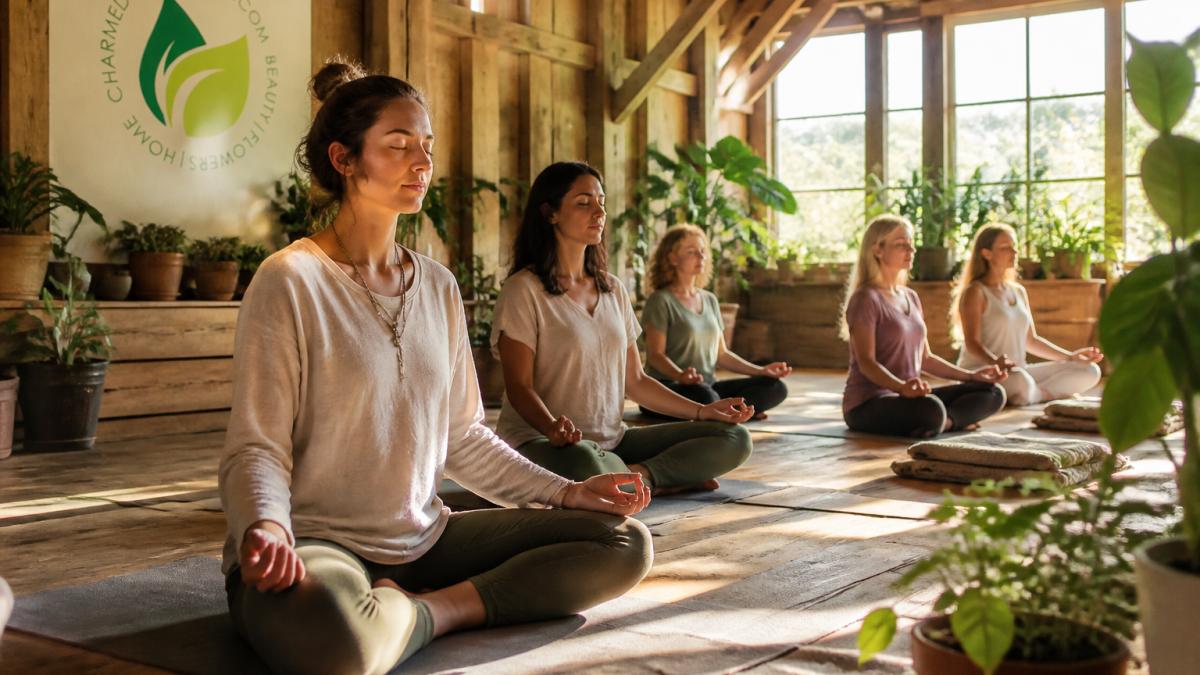
1. Mindfulness Meditation and Guided Breathing
Mindfulness meditation is the practice of paying attention to the present moment without judgment (Meditation and Mindfulness: Effectiveness and Safety). Guided breathing adds structure, which helps beginners settle faster.
A common mistake is trying to empty your mind. That backfires. Instead, follow a teacher's voice and return to your breath each time attention wanders. Start with ten minutes. Guided recordings help when you're alone.
2. Restorative Yoga and Gentle Body Practices
Restorative yoga holds supported poses for several minutes, letting muscles release. Unlike vigorous flow classes, it asks almost nothing of you.
Tight hips and shoulders often carry stress you didn't notice. Props matter: bolsters, blankets, and blocks let your body fully rest. If mobility is limited, chair-supported variations and wall-assisted poses deliver most of the benefit without getting down to the floor.
3. Guided Nature Walks and Forest Bathing
Guided nature walks slow your pace and direct attention to sound, texture, and smell. Forest bathing, a Japanese practice called shinrin-yoku, is simply being present among trees.
The research is promising but early. A study on wellness tourists and retreat experiences published in the International Journal of Environmental Research and Public Health examined retreat programs that included time in nature, healthy meals, yoga, and meditation.
4. Art Therapy and Creative Expression
Art therapy uses making, not talking, to process emotion. You don't need talent; you need permission to be messy. Watercolor, clay, and collage are common. The goal is expression, not a finished piece.
If fine motor control or sensory sensitivity is a concern, collage, stamping, and large-format drawing are low-mess, low-pressure options. A good facilitator offers choice and never critiques the output.
5. Group Work and Social Connection
Group work, whether guided discussion or group therapy led by a licensed counselor, breaks isolation. Speaking your experience aloud in a safe room changes how it sits in your body.
Look for circles capped at a size where everyone speaks, and ask whether an opt-out pass is available, being able to listen without sharing is a legitimate way to participate.
6. Nutrition Workshops and Cooking Classes
Nutrition workshops teach how food affects mood and energy. Cooking classes turn that knowledge into something you'll actually repeat at home. Look instead for practical skills: balanced plates, steady blood sugar, and meals you can cook in twenty minutes.
If standing for a full class is difficult, demo-only sessions and take-home recipe cards preserve the learning. The clarity benefit here is indirect but real, stable energy makes sustained attention easier.
7. Digital Detox and Technology Boundaries
A digital detox means setting aside phones and screens for a defined period. Many retreats collect devices at check-in and return them at checkout.
If a full detox feels extreme, try boundaries: no phone at meals, no screens before breakfast. Start with one meal a day and extend from there.
Mental Clarity Exercises You Can Practice Between Sessions
These mental clarity exercises keep the benefits going after you go home. None take more than ten minutes.
- Box breathing: inhale four counts, hold four, exhale four, hold four
- Five senses scan: name five things you see, four you hear, three you feel
- Walking meditation: ten slow steps, attention on your feet
Pick two.
How to Choose Mindfulness Retreat Activities by Experience Level
Match the activity to where you actually are, not where you think you should be.
If you're new to all of this: start with guided meditation, restorative yoga, and guided nature walks.
If you've practiced before: add breathwork, longer meditation, and group work.
If you're in an active life transition: prioritize art therapy and counseling-supported group sessions. If you're considering going alone, our guide on whether a solo wellness retreat is safe for beginners walks through what to expect. To find reputable options nearby, read finding genuine wellness workshops near you.
One caution: a wellness retreat does not replace clinical care. If you're in crisis, talk to a licensed professional first.
Building a Realistic Wellness Retreat Schedule
A good wellness retreat schedule has empty space in it. That surprises people. The schedule below is built around transitions, rest, and realistic energy levels. Notice that no two demanding sessions sit back-to-back, and every block includes buffer time.
Here is a sample day:
| Time | Activity | Why It Sits Here |
|---|---|---|
| 7:00 | Gentle stretch or tea in silence | Eases the body awake without screens |
| 8:00 | Breakfast | Protein and fiber first to steady energy |
| 9:30 | Guided meditation | Attention is freshest mid-morning |
| 10:15 | Transition: journal or walk to session | Buffer prevents rushing between blocks |
| 11:00 | Nature walk | Movement after sitting; daylight supports mood |
| 12:30 | Lunch | Shared meal, phones away |
| 1:30 | Quiet rest or nap | Downtime is programmed, not earned |
| 2:00 | Art therapy or free rest | Creative work after rest, not before |
| 4:30 | Restorative yoga | Releases physical tension before evening |
| 6:00 | Dinner | Early enough to digest before sleep |
| 7:30 | Group circle or quiet evening | Low-stimulation close to the day |
Notice the gaps. Busy women often need permission to do less; our post on wellness retreats for busy women covers how to plan around a tight calendar.
How to Adapt the Schedule
- Short on time? A half-day version can include one meditation, one nature walk, and one restorative session, the three highest-ranked activities in our list.
- Low energy or chronic pain? Swap the afternoon art block for free rest and keep the evening circle optional.
- Sensory sensitivity? Ask for a quiet room during transitions and a seat near the exit in group circles.
What the Evidence Suggests About Scheduling
The schedule above emphasizes repeatable practices and built-in rest rather than intensity. A retreat is a reset, not a cure, the goal is to leave with habits you can sustain.
Measuring Clarity After You Leave
Before checkout, write down three things: the activity that helped most, the time of day you felt clearest, and one habit you will repeat within 48 hours. Two weeks later, reread the note and check whether the habit stuck. Simple reflection prompts like these turn a good week into a lasting practice.
What to Bring to a Wellness Workshop
Pack for comfort and quiet. Bring layers, a refillable water bottle, a journal, and comfortable shoes for walking. Add a yoga mat if the venue doesn't supply one, plus any medication you take.
Leave the laptop at home. If you can't, set an away message before you go.
For a full checklist, see our guide on what to bring to a wellness workshop.
Evaluating Facilitators, Safety, and Therapeutic Boundaries
Ask who is leading each session and what their training is. Meditation teachers, licensed counselors, and yoga instructors hold different credentials, and a good retreat states them plainly.
Ask about group size, confidentiality, and what happens if a session brings up something heavy. A responsible facilitator has an answer and a referral plan.
Watch out: be wary of any program that promises to cure anxiety, depression, or trauma. Retreats support emotional well-being; they don't treat diagnoses.
Plan Your Next Retreat with Charmed Valley Farm
If you're ready to trade the noise for something quieter, we'd love to host you. Our workshops and retreats blend creativity, nature, and rest, and they're rooted in the same chemical-free philosophy behind our #Farm2Face skincare line. The Clary Sage and Lavender in our Smudging Set ($26.00) bring a little of that calm home with you.

You can explore our workshops, retreats, and personal appearances to see what's coming up and reserve your spot.
Frequently Asked Questions
What activities help improve mental clarity?
Mindfulness meditation, guided breathing, restorative yoga, and time in nature are common wellness retreat activities. A 2017 observational study in the International Journal of Environmental Research and Public Health examined wellness tourists and retreat experiences that include healthy meals, connection with nature, yoga, meditation, and tai chi. The study did not report specific outcomes, so treat these as supportive practices rather than guaranteed fixes. Pair them with journaling and a structured schedule to reduce mental fatigue.
Can meditation help with mental clarity?
Guided meditation and mindfulness meditation train attention and self-awareness, which many people experience as greater focus and less mental noise. The research base is mixed and the 2017 wellness tourist study did not measure clarity outcomes directly. Start with 10 minutes of guided breathing daily, then build to 20. If you are managing a clinical mental health condition, use meditation alongside professional care, not as a replacement for counseling or group therapy.
How do you plan a wellness retreat schedule?
Build a wellness retreat schedule around three anchors: one active session (yoga or a guided nature walk), one reflective session (meditation or art therapy), and one social meal. Leave 30 to 60 minutes of unstructured downtime between blocks. A realistic day runs from 8 a.m. to 8 p.m. with no more than four structured hours. Include a digital detox window and end with a short grounding technique so the day closes calmly.
What should I bring to a wellness workshop?
For what to bring to a wellness workshop, pack a refillable water bottle, a journal and pen, comfortable layers, and slip-on shoes for indoor spaces. Bring a yoga mat if the facilitator does not supply one, plus sunscreen and a hat for guided nature walks. Leave scented products at home in case of sensitivities. A small grounding object, such as a smooth stone or a smudging set with Clary Sage and Lavender, can help you settle into the space.
The hardest part isn't finding a retreat. It's giving yourself permission to go. Charmed Valley Farm builds gatherings around nature, creativity, and genuine connection, with small groups, hands-on workshops, and products like our Flower Face line made without harsh chemicals. Get started with Charmed Valley Farm and give yourself a few days that actually restore you.
