
Table of Contents
- Fresh Botanical Skincare vs. Conventional Formulas: What Actually Changes
- Botanical vs. Synthetic Skincare: Where Each One Wins
- Vitamins, Antioxidants, and Essential Fatty Acids in Plant Oils
- Skin Barrier Support and Skin Balance: What Fresh Oils Do Best
- Botanical Skincare for Sensitive Skin: Gentleness and Irritation Risk
- Fresh Skincare Shelf Life: Stability, Preservation, and Microbial Safety
- Patch Testing Natural Skincare: A Simple 3-Day Routine
- How to Read Freshness Claims Like a Shopper, Not a Marketer
- Frequently Asked Questions
Last Updated: October 13, 2026
Fresh Botanical Skincare vs. Conventional Formulas: What Actually Changes
Fresh botanical skincare is built around plant-derived ingredients, cold-pressed oils, and water-based extracts processed to keep their natural compounds intact rather than stripped to a single isolated molecule. At Charmed Valley Farm, we make our #Farm2Face line in small batches for exactly this reason: the closer an ingredient stays to the plant it came from, the more of its original character it keeps.
Cold-pressed oils and water-based extracts
Cold pressing crushes seeds, nuts, or fruit without heat, so the oil keeps more of its natural vitamins and fatty acids than a refined, heat-treated oil would. Water-based extracts pull water-soluble compounds from flowers and leaves, often through distillation, which is how a hydrosol like our Flower Water Face Toner gets its trace aromatics.

Neither method is automatically "better." They preserve different things, and a formula using both covers more ground than one relying on a single extraction type.
What "fresh" actually means in a formula
"Fresh" is not a regulated term, so it can mean almost anything on a label. In practice, freshness in botanical skincare refers to how recently the plant material was harvested and processed, how much of the original compound profile survived, and how quickly the product reaches you. Three variables drive it:
- Time from harvest to extraction. Many botanical compounds, especially polyunsaturated fatty acids and certain antioxidants, begin oxidizing the moment a plant is cut. Cold pressing within hours preserves more of that profile than pressing days later.
- Heat exposure during processing. Cold pressing and low-temperature distillation keep volatile compounds and heat-sensitive vitamins intact. High-heat refining strips them out along with color and aroma, which is why refined oils are more shelf-stable but less chemically complex.
- Oxygen and light exposure after bottling. Every time a bottle is opened, oxygen enters. Antioxidant-rich oils resist this for a while, but the clock is always running.
There is no universal freshness test a shopper can run at home. The closest proxies are a stated batch or production date, a stated shelf life, and packaging that limits light and air exposure, amber or opaque glass, airless pumps, and small sizes used up before they degrade.
How preservatives and fillers change the formula
Preservatives exist for a real reason: any formula containing water can support bacteria, yeast, and mold without them.
The trade-off is not that preservatives "dilute" botanical content, it is that they occupy part of the formula, and some people's skin reacts to specific preservatives rather than the category.
Filler ingredients are a separate issue.
That is the honest case for fresh, preservative-free formulas, and the reason they come with a shorter shelf life and stricter storage rules.
Botanical vs. Synthetic Skincare: Where Each One Wins
Botanical and synthetic skincare are not opposites so much as different tools. Synthetic ingredients win on consistency, stability, and shelf life. Botanical ingredients win on gentleness, sensory experience, and the range of compounds a single plant offers.
What lab-produced ingredients do well
Lab-produced ingredients are predictable. A synthetic humectant or stabilized vitamin C derivative behaves the same way in every batch, making formulation easier and shelf life longer. If you want a product that sits on a shelf for two years unchanged, synthetic or heavily preserved formulas have the edge.
Where plant-derived ingredients pull ahead
Plant-derived ingredients bring a complexity isolated compounds cannot replicate. A cold-pressed oil carries fatty acids, vitamins, and antioxidants together, in proportions nature assembled rather than a lab. For skin that reacts badly to synthetic fragrance or harsh preservatives, that gentler profile is often the whole point.
| Factor | Botanical / Fresh | Synthetic / Conventional |
|---|---|---|
| Consistency | Varies slightly batch to batch | Highly uniform |
| Shelf life | Shorter, needs cool dark storage | Longer, often 2+ years |
| Skin feel | Rich, variable, aromatic | Lightweight, predictable |
| Best for | Gentle, sensory-focused routines | Set-and-forget convenience |
Vitamins, Antioxidants, and Essential Fatty Acids in Plant Oils
Plant oils earn their reputation through three things: vitamins, antioxidants, and essential fatty acids.
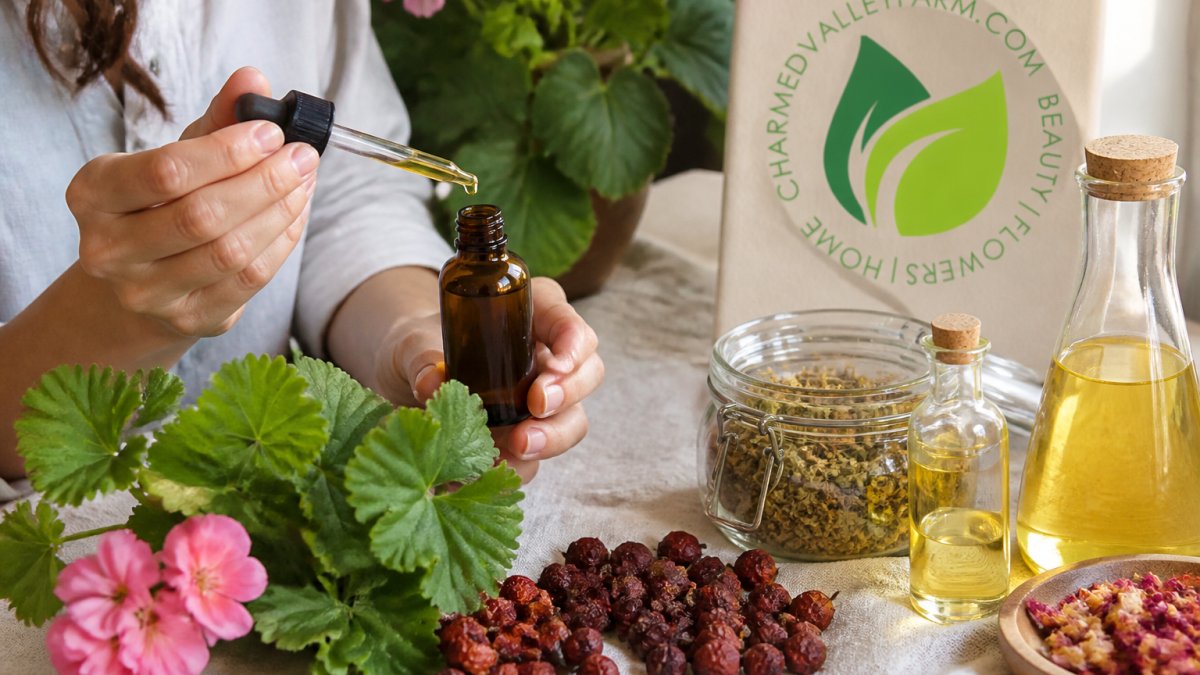
Our Flower Oil Face Serum is built on organic, chemical-free cold-pressed sunflower oil infused with rosehips, raspberry leaves, and rose geranium.

Skin Barrier Support and Skin Balance: What Fresh Oils Do Best
The skin barrier is the outermost layer of skin, made of lipids that hold moisture in and keep irritants out. When it is compromised, skin feels tight, dry, or reactive.
Our Flower Water Face Toner is distilled in small batches to create a hydrosol with traces of essential oils of lavender, clary sage, amaranth, yarrow, and honeysuckle. Spritzed on damp skin before serum, it prepares skin to absorb what comes next.
Botanical Skincare for Sensitive Skin: Gentleness and Irritation Risk
Botanical skincare for sensitive skin is gentler in many cases, but "natural" does not automatically mean "hypoallergenic." Plants contain compounds that can trigger reactions, and essential oils are among the most common culprits.
Essential oil precautions and allergic reactions
Essential oils are concentrated, a few drops carry the aromatic punch of an entire plant, and that concentration is what makes some skin react. If you are sensitive to fragrance, patch test anything with essential oils before it touches your face, no matter how clean the ingredient list looks.
Fresh Skincare Shelf Life: Stability, Preservation, and Microbial Safety
Fresh skincare shelf life is shorter than conventional products, not a flaw, but the trade-off for skipping heavy preservative systems. Our serum and toner are both preservative-free and best used within 12 months of purchase.
How botanical actives degrade
Plant-derived compounds do not fail all at once. They degrade along predictable pathways, and knowing which applies to a given ingredient tells you how long a product will actually perform:
- Oxidation. Polyunsaturated fatty acids, the linoleic and alpha-linolenic acids in sunflower, rosehip, and raspberry seed oils, react with oxygen and break down into smaller compounds that smell rancid and lose their skin-supporting properties. Vitamin E naturally present in cold-pressed oils slows this, one reason unrefined oils outlast stripped ones.
- Hydrolysis. Water plus oil plus time can split triglycerides into free fatty acids, shifting texture and pH. This is one reason anhydrous (water-free) oil blends tend to be more stable than emulsions.
- Photodegradation. Ultraviolet light breaks down many antioxidants and aromatic compounds. A clear glass bottle on a sunny shelf loses potency faster than the same formula in amber glass in a cabinet.
What preservation actually does
Microbial safety is why preservatives exist in water-based products. Any formula containing water can support bacterial growth without proper preservation, and the risk is not theoretical, contaminated water-based cosmetics have caused documented skin infections.
A well-designed preservative system kills or inhibits microbes introduced during manufacturing and use, and keeps doing so across the product's intended life.
Anhydrous products, pure oil blends, balms, and butters, are a different case. Without water, most microbes cannot multiply, so they typically need no preservatives.
Storage rules that actually extend shelf life
- Keep products in a cool, dark place, away from direct sunlight and heat sources like radiators or bathroom windowsills.
- Close lids fully and avoid dipping fingers into jars; use a spatula or a pump where possible.
- Store water-based products in the refrigerator if the label allows it, cold slows both oxidation and microbial growth.
How to evaluate a freshness claim as a shopper
A freshness claim is only as good as the details behind it. Use this checklist:
- Batch or production date printed on the label or packaging, not just a best-by date.
- Stated shelf life in months, with a clear starting point (manufacture date vs. opening date).
- Storage instructions specific enough to follow, temperature range, light exposure, refrigeration if needed.
We list batch dates, shelf life, and storage instructions on every product page, because a preservative-free formula only works if you know how to care for it once it arrives.
Patch Testing Natural Skincare: A Simple 3-Day Routine
Patch testing natural skincare takes three days and costs you nothing but patience. Here is the routine we recommend:
- Day 1: Apply a small amount behind your ear or on your inner forearm. Leave it for 24 hours.
- Day 2: If no reaction, apply a slightly larger amount to the same spot. Wait another 24 hours.
- Day 3: If skin is still calm, apply to a small patch of your jawline and monitor for 24 hours.
How to Read Freshness Claims Like a Shopper, Not a Marketer
Freshness claims are only as good as the details behind them. Look for a stated shelf life, storage instructions, and a full ingredient list, not just the word "fresh" on the label. If you would rather see the whole lineup in person, our Flower Face Skincare collection lays out every formula alongside its batch and storage details, and our Events page lists farm gatherings where you can sample them firsthand.
Frequently Asked Questions
What makes fresh botanical skincare different from conventional skincare?
Fresh botanical skincare skips synthetic fillers and heavy preservatives, so the plant oils and extracts stay closer to their natural state. Cold-pressed oils like sunflower and rosehip keep more of their vitamins and essential fatty acids intact. Conventional formulas often use lab-produced actives dissolved in a stable base that lasts years on a shelf. The trade-off is simple: fresh botanical skincare can support the skin barrier and hydration well, but it needs to be used within its shelf life and stored properly.
Is botanical skincare suitable for sensitive skin?
Many people with sensitive skin do well with botanical skincare because plant oils and water-based extracts tend to be gentler than strong acids or synthetic fragrances. That said, essential oils and some plant extracts can still trigger irritation or allergic reactions. Start with a short ingredient list, avoid products with heavy fragrance loads, and patch test before applying anything to your full face. If your skin is reactive, a simple oil-and-toner routine is often easier to tolerate than a multi-step regimen.
How long does fresh botanical skincare last after opening?
Preservative-free botanical products typically last about 12 months from purchase if stored correctly. Keep bottles in a cool, dark place away from direct sunlight, since heat and light break down delicate oils and distilled waters. Once opened, use the product consistently rather than saving it for special occasions. A 1 oz serum used nightly lasts roughly 30 days, which keeps you within the freshest window. If the smell or texture changes, stop using it.
How should you patch test a new botanical skincare product?
Apply a small amount to the inside of your forearm or behind your ear, then wait 24 to 48 hours. Check for redness, itching, or swelling. If your skin stays calm, test a tiny amount on your jawline for another day before using it on your whole face. Patch testing natural skincare matters because plant extracts and essential oils can cause allergic reactions even when a product is chemical-free. Keep notes on which ingredients you react to so you can spot patterns.
Your skin changes over time, and so should what you put on it. At Charmed Valley Farm, our #Farm2Face line is made in small batches with organic, chemical-free ingredients, preservative-free formulas with a stated 12-month shelf life, and a simple toner-and-serum routine designed for mature, sensitive skin. Explore the Flower Face collection and find out what farm-to-face care feels like on your own skin.