
Table of Contents
- What You'll Need: Supplies and Tools for Floral Arrangement
- Best Flowers for Rustic Wedding Centerpieces
- How to Keep Garden Flowers Fresh for Weddings
- Step-by-Step Guide: How to Arrange Garden Flowers for Rustic Wedding Centerpieces
- Color Palettes and Design Principles for Rustic Arrangements
- Common Mistakes to Avoid
- Transporting and Setting Up Your Centerpieces
- Conclusion
- Frequently Asked Questions
Last Updated: October 2, 2026
What You'll Need: Supplies and Tools for Floral Arrangement
Creating beautiful rustic wedding centerpieces requires basic tools and materials, no expensive equipment or professional training needed.
Essential Tools for Beginners
Start with these core items:
- Floral foam (also called oasis), the foundation that holds stems in place
- Sharp floral scissors or pruners, dull tools crush stems and reduce water absorption
- Floral tape, secures foam and helps stabilize arrangements
- Chicken wire or grid tape, provides extra support for heavy flowers
- A clean bucket, for hydrating flowers before arranging
At Charmed Valley Farm, we recommend investing in quality scissors first, they last for years and make every arrangement easier.
Choosing Your Containers
Rustic centerpieces work best in natural materials that echo the garden aesthetic.
Best container options:
- Wooden crates or boxes (classic rustic look)
- Mason jars or vintage glass bottles
- Terracotta pots
- Metal buckets or galvanized containers
- Linen-wrapped vessels
Line wooden containers with plastic to protect them from water damage. Terracotta needs sealing to prevent water staining.
A container should be about one-third the height of your finished arrangement to keep proportions balanced and prevent top-heavy designs.
Best Flowers for Rustic Wedding Centerpieces
Rustic arrangements favor garden-style flowers over formal florist varieties because they hold up better under stress and last longer.
Garden Roses, Hydrangeas, and Dahlias
Hydrangeas provide volume and substance, one stem fills space that would take five smaller flowers, and tolerate handling and temperature changes.
Dahlias add drama and texture. These flowers come in sizes from dinner-plate dahlias (8 inches across) down to pompom varieties.
These three flowers ship well, recover quickly from handling, and stay fresh for 5-7 days with proper care.
Wildflowers and Foliage
Wildflowers and greenery soften the arrangement and add authentic garden character.
Wildflower options:
- Queen Anne's lace (delicate white filler)
- Ranunculus (layered, romantic blooms)
- Celosia (textured, velvety flowers)
- Larkspur or delphiniums (vertical interest)
Foliage choices:
- Olive leaves (soft, silvery green)
- Eucalyptus (aromatic, structural)
- Ruscus or leather leaf (long-lasting greenery)
- Dusty miller (gray-green texture)
Foliage is essential structure, greenery creates the skeleton your flowers attach to. Plan to use foliage for 40-50% of your arrangement's visual weight.
How to Keep Garden Flowers Fresh for Weddings
The difference between centerpieces that look fresh all evening and ones that fade comes down to hydration and timing.
Hydration and Stem Preparation
Recut stems at a 45-degree angle under running water to expose fresh tissue and remove air bubbles that block water absorption.
Remove all leaves below the waterline, submerged leaves rot and create bacteria that clogs stems, reducing vase life.
Use room-temperature water with flower food if available. Change water every two days if flowers sit in buckets before the event.
Keep arrangements in a cool space around 65 degrees.
Timing and Storage Before the Event
Arrange centerpieces the day before if possible. If you must arrange earlier, keep them in a cool location and mist lightly with water.
Place arrangements on a flat surface in your vehicle and secure them so they won't tip.
Set up centerpieces at the venue 2-3 hours before guests arrive to allow flowers to adjust to temperature and humidity.
Step-by-Step Guide: How to Arrange Garden Flowers for Rustic Wedding Centerpieces
This is where the work happens. Follow these steps and you'll create stable, beautiful arrangements that last the entire event.
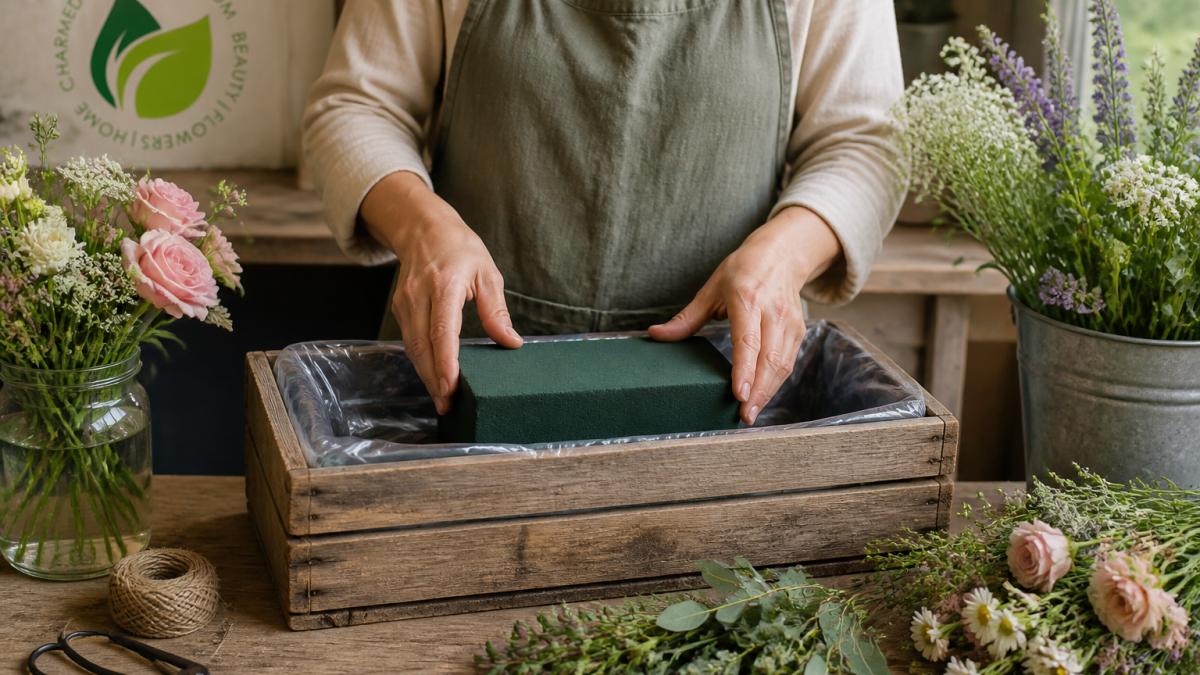
Step 1: Prepare Your Base and Floral Mechanics
Secure your floral foam by lining a wooden crate with plastic and fitting foam snugly inside.
Add a grid of floral tape across the top of the foam in a hashtag pattern to prevent stems from sinking too deep.
Fill the container with water. Check water levels throughout the event, dry foam is the #1 reason centerpieces fail.
Step 2: Add Greenery and Foliage Structure
Cut foliage stems to varying heights and insert them at different angles. Step back and check that the silhouette feels balanced.
Use olive leaves or eucalyptus as primary greenery, they last longer and hold their shape. Tuck ruscus or leather leaf into gaps.
Step 3: Layer Your Focal Flowers
Place the largest flowers first, slightly off-center and at varying heights to create depth and movement.
Insert stems at angles for a natural look. Cluster flowers of the same type together rather than scattering them.
Leave space between focal flowers. You'll fill those gaps in the next step.
Step 4: Fill Gaps and Add Texture
Now bring in secondary flowers and filler. These are your wildflowers, ranunculus, and delicate greenery.
Fill empty spaces between focal flowers.
Add texture through varied flower types. Don't repeat the same flower shape throughout.
Step back frequently. Turn the arrangement and look at it from different angles.
Step 5: Test Stability and Make Adjustments
Give the arrangement a gentle shake. Flowers shouldn't move or rattle.
Check that no stems are bent or crushed. Damaged stems won't drink water properly.
Top off the water. The foam will have absorbed quite a bit during assembly.
Let the arrangement rest for an hour if possible.
Color Palettes and Design Principles for Rustic Arrangements
Color tells the story of your centerpieces. Rustic designs favor natural, earthy tones that feel organic rather than formal.
Earthy Tones and Natural Textures
Classic rustic palettes include:
- Cream, ivory, and white with greenery (timeless, elegant)
- Blush pink and sage green (soft, romantic)
- Burgundy, rust, and gold (warm, dramatic)
- Dusty blue and taupe (moody, sophisticated)
Limit yourself to 3-4 colors maximum. Too many colors look chaotic.
Texture matters as much as color in rustic design. Mix smooth petals with spiky foliage. Combine full blooms with delicate, airy flowers.
Include natural elements that add tactile appeal. Wrap stems with burlap or lace. Tie twine around the container.
Incorporating Seasonal Elements
Work with what's available in your season. Spring offers ranunculus and fresh greenery. Summer brings dahlias, wildflowers, and abundant foliage. Fall features rich colors and textured blooms.
Seasonal flowers are fresher, more affordable, and feel authentic to the time of year. A winter wedding with spring flowers looks disconnected.
At Charmed Valley Farm, we source seasonal blooms that thrive in local conditions. Seasonal flowers have traveled shorter distances, meaning they arrive fresher and last longer in arrangements.
Common Mistakes to Avoid
Learning what NOT to do saves time and frustration.
Using only one flower type. Single-flower arrangements look boring. Mix textures and shapes.
Forgetting the greenery. Foliage isn't decoration, it's structure.
Cutting stems too short. Short stems limit where you can place flowers.
Not testing water absorption. Check that foam stays moist throughout the event.
Transporting without securing. Unsecured arrangements slide around in vehicles, bruising petals and loosening stems.
Transporting and Setting Up Your Centerpieces
The moment between arrangement and display is critical. Proper transport and setup protect your work.
Transport safely:
- Place arrangements on flat surfaces, never on seats or floors
- Avoid stacking centerpieces
- Keep them away from air conditioning vents (causes rapid water loss)
- Drive smoothly, sudden stops and sharp turns shift stems
- Transport in a cool vehicle if possible
Set up at the venue:
- Arrive 2-3 hours before guests to allow flowers to adjust
- Place centerpieces on tables and check they're level
- Fill water containers one final time
- Mist arrangements lightly with water if the venue is warm or dry
- Check arrangements hourly during the event and top off water as needed
Protect from common hazards:
- Keep centerpieces away from direct sunlight
- Avoid placing near heating vents or air conditioning
- Keep them away from fruit bowls (ethylene gas ages flowers)
- Ensure table placement won't cause guests to bump or lean on arrangements
- Use stable, level surfaces only
Have a backup plan. Keep extra flowers, greenery, and supplies at the venue. If a centerpiece wilts or gets damaged, you can make quick repairs.
Conclusion
Creating beautiful rustic wedding centerpieces is absolutely within reach. You don't need professional training or expensive materials.
Start with quality flowers and fresh greenery. Invest in basic tools. Prepare your base carefully. Layer flowers with intention.
At Charmed Valley Farm, we believe in the power of fresh, high-quality flowers to elevate any celebration. Our wholesale and bucket programs give florists and DIY event hosts access to seasonal blooms that thrive in arrangements. Whether you're creating one centerpiece or a dozen, we're here to support your vision with flowers that last and designs that inspire.
University of Florida's guide to flower care and conditioning provides additional technical information on extending floral vase life. American Society of Florists' design principles offers professional standards for arrangement stability. Smithsonian Magazine's article on the history of wedding flowers explores how rustic floral design connects to garden traditions.
Ready to create your own centerpieces? Start with fresh flowers from a trusted source, follow these steps, and trust your instincts.
Frequently Asked Questions
What are the best flowers for a rustic wedding centerpiece?
Garden roses, hydrangeas, ranunculus, and dahlias create a classic rustic look with full, romantic blooms. Wildflowers like Queen Anne's lace and foraged greenery such as olive leaves add texture and an earthy charm. These flowers work well together because they have sturdy stems and good vase life, making them ideal for DIY arrangements. Choose varieties that are in season to ensure freshness and better pricing.
How far in advance should I arrange garden flowers for a wedding?
Arrange centerpieces 1-2 days before the wedding for optimal freshness. Prepare your containers, floral foam, and greenery the day before, then add focal flowers and delicate blooms the morning of the event. If you must arrange earlier, keep finished arrangements in a cool space (50-55°F) and mist them lightly. This timing balances flower longevity with the freshness guests expect on the day.
How do I keep garden flowers fresh for a wedding event?
Cut stems at a 45-degree angle and remove leaves below the waterline to prevent bacterial growth. Use floral preservative in your water and change it every two days before the event. Keep arrangements in a cool, dark space away from direct sunlight and ripening fruit. Mist foliage lightly to maintain hydration. These steps extend vase life significantly, ensuring your centerpieces stay vibrant throughout the celebration.
What containers work best for rustic wedding centerpieces?
Wooden crates, mason jars, and galvanized buckets complement rustic themes perfectly. Choose containers that match your color palette and allow proper water depth for stem hydration. Containers should be sturdy enough to support the weight of wet floral foam and flowers without tipping during transport or setup.