
Last Updated: October 24, 2026
Quick Summary
Condition flowers before arranging by removing lower foliage, recutting stems at a 45-degree angle with a sharp knife, and placing them in cool water for 4 to 12 hours depending on flower type. This reopens sealed stems, removes air bubbles, and allows flowers to absorb water and nutrients so they stay vibrant longer.
- Most flowers need between 4 and 12 hours of conditioning before arranging, with times varying by stem type and handling history.
- Strip all leaves below the waterline before conditioning, as submerged foliage rots and breeds bacteria that clog water vessels.
- Cut stems at a 45-degree angle with a sharp knife to create more surface area for water uptake than a straight cut.
- Keep flowers in a cool room between 65 and 72 degrees away from direct sun, heating vents, and ripening fruit during conditioning.
- Change bucket water every two days to prevent bacterial buildup that clogs stems and blocks water absorption.
Table of Contents
- What Does Conditioning Flowers Mean and Why It Matters
- Preparing Your Flowers Immediately After Cutting or Purchase
- How to Prepare Flowers for a Vase: Essential First Steps
- How Long to Condition Flowers Before Arranging
- Using Homemade Flower Food and Conditioning Solutions
- How to Make Cut Flowers Last Longer During and After Conditioning
- Troubleshooting Common Conditioning Problems
- Begin Your Conditioning Process Today
- Frequently Asked Questions
What Does Conditioning Flowers Mean and Why It Matters
Flower conditioning is preparing cut flowers to absorb water and nutrients before arranging, so they stay vibrant longer.
Cut flowers lose water immediately: stems seal over and air bubbles form.
Flowers lasting a week versus three weeks often comes down to conditioning, the step most people skip.
When you condition flowers before arranging, you protect your investment in fresh flowers and the work behind an arrangement.
Preparing Your Flowers Immediately After Cutting or Purchase
The clock starts the moment a flower is cut. Garden flowers should be conditioned within minutes; florist purchases or shipments as soon as the box arrives. Find reputable local flower farms to source quality fresh flowers for conditioning.
Fill a sanitized bucket with cool water, never one that held chemicals or soil.
Place flowers in the bucket immediately and keep them in a cool room (65-72 degrees) away from direct sun, heating vents, and ripening fruit, ethylene speeds wilting.
For florist or online orders, remove packaging and floral foam, then strip leaves below the waterline, submerged foliage rots and breeds bacteria that block water uptake.
How to Prepare Flowers for a Vase: Essential First Steps
Preparing flowers for a vase takes three steps: removing lower leaves, recutting stems, and hydrating.
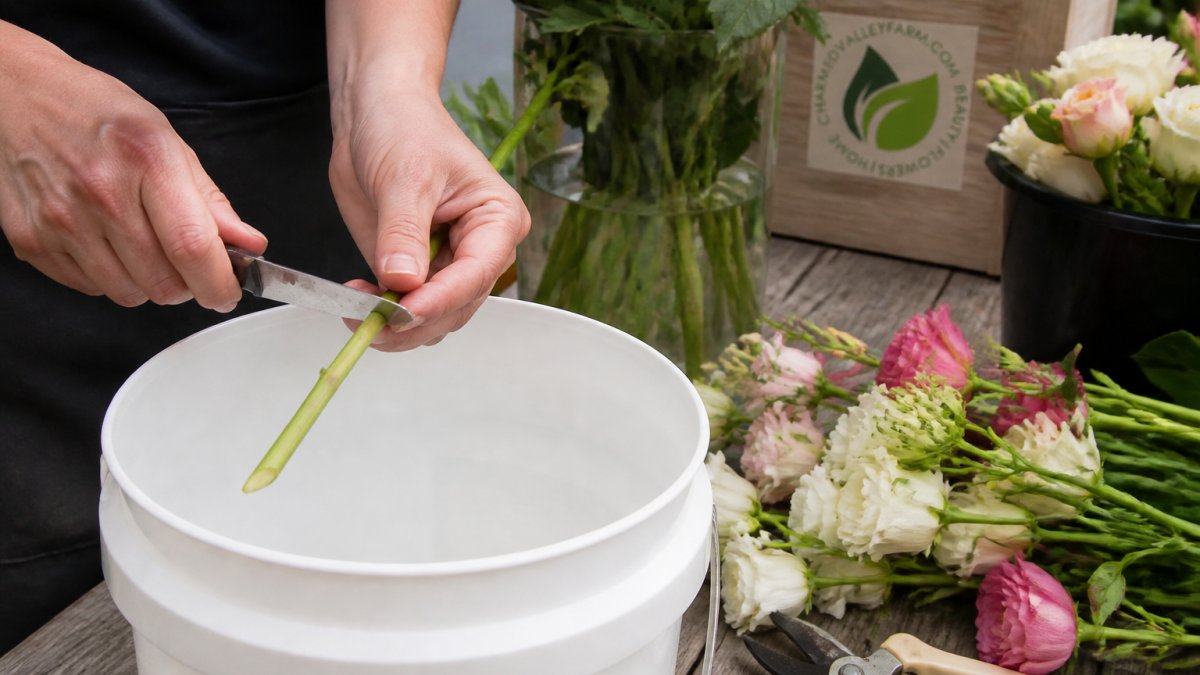
Removing Leaves Below the Waterline
Strip off any leaf or foliage that sits underwater, by hand or with a clean knife, working from the bottom of the stem upward.
Submerged leaves rot and release bacteria that clog the stem's water vessels, once clogged, the flower can't drink no matter how much water you provide (Postharvest bacterial succession on cut flowers and vase water).
Recutting Stems at an Angle
Cut one-half to one inch off the bottom to remove the sealed-over portion and expose fresh tissue.
The 45-degree angle creates more surface area for water uptake than a straight cut.
Cut under running water if possible to prevent air bubbles; if not, cut quickly and get the stem into the bucket.
How Long to Condition Flowers Before Arranging
Conditioning time is not one-size-fits-all. The right duration depends on stem type, how the flowers were handled before they reached you, and when you need them arranged. Most flowers need between 4 and 12 hours of conditioning before arranging, according to Light & Well's professional flower conditioning guide. But the useful answer is more specific: match the timeline to the flower and to your event schedule.
A Flower-by-Flower Conditioning Reference
Use this chart to set stem-cutting method, water temperature, and minimum hydration time. Treat times as minimums; overnight conditioning is better when you have the hours.
| Flower | Stem cut | Water temperature | Minimum conditioning time | Notes |
|---|---|---|---|---|
| Roses | 45° angle, remove thorns below waterline | Cool to room temperature | 6-8 hours | Recut under water if heads droop |
| Tulips | Straight cut, minimal recut | Cool | 4-6 hours | Stems continue to grow and bend; condition upright |
| Hydrangeas | 45° angle, scrape or split woody base | Cool | 8-12 hours or overnight | Heads can be submerged in cool water if wilting |
| Dahlias | 45° angle | Cool | 4-6 hours | Hollow stems; avoid crushing |
| Ranunculus | 45° angle | Cool | 6-8 hours | Hollow stems; change water if cloudy |
| Sweet pea | 45° angle | Cool | 6-8 hours | Short vase life even when conditioned |
| Lilac | Split or scrape woody base | Cool | 8-12 hours or overnight | Remove lower foliage aggressively |
| Sunflowers | 45° angle | Cool | 6-8 hours | Heavy drinkers; check water level |
| Carnations | 45° angle, cut above node | Cool | 4-6 hours | Ethylene-sensitive; keep away from fruit |
| Greenery and branches | 45° angle, split woody stems | Cool | 12+ hours or overnight | Condition separately from blooms |
Readiness Cues: How to Know Conditioning Is Done
Look for observable signs that stems are ready:
- Firm, upright stems that no longer feel limp at the neck.
- Hydrated blooms that are fully open or opening evenly, not papery at the edges.
- Turgid leaves that feel cool and crisp rather than soft or curled.
If flowers still look stressed after the minimum time, give them another 4-6 hours in fresh cool water.
Conditioning Timelines for Event Work
For event work, work backward from the arrangement time: condition overnight the day before, then arrange the morning of the event.
- Two days before: Receive or cut flowers, strip foliage, recut stems, and place in clean buckets with conditioning solution. Keep in a cool, dark room.
- One day before: Check water clarity and top off or change water. Remove any spent blooms. Confirm stems are firm.
- Morning of event: Recut stems by one-half inch, arrange, and move finished pieces to a cool holding area away from sun and heat.
What Changes Conditioning Time
Several factors shorten or lengthen the window:
- Shipped flowers often arrive partially dehydrated and need the longer end of the range.
- Garden-cut flowers condition faster if they go into water within minutes of cutting.
- Woody stems need more time because water moves slowly through dense tissue.
Measure success by stem firmness and bloom condition, not the clock alone.
Using Homemade Flower Food and Conditioning Solutions
Flower food isn't required but helps.
A simple homemade solution works well:
- 1 quart of cool water
- 1 tablespoon of sugar
- A few drops of bleach (just a few, too much damages stems)
Mix fresh each time: sugar feeds the flower, bleach keeps bacteria down, cool water hydrates.
No bleach? You can also explore DIY flower food recipes that actually work for more options.
Change bucket water every two days to keep bacteria from building up; with a conditioning solution, you can go longer between changes.
How to Make Cut Flowers Last Longer During and After Conditioning
Longevity starts with conditioning but doesn't end there. A few habits add days to vase life.
Keep flowers cool. A cool room slows respiration and water loss.
Change the water regularly.
Use clean tools. Dirty knives and shears transfer bacteria, so keep them sanitized between cuts.
Condition in the dark if possible.
Remove spent flowers immediately.
Troubleshooting Common Conditioning Problems
Most conditioning problems trace back to one of three causes: air blocking the stem, bacteria building up in the water, or tissue damage that prevents water uptake. Diagnosing which one you are dealing with saves time and prevents you from repeating the same mistake.
Wilting During Conditioning
Wilting means water is not reaching the flower. The usual culprit is an air bubble lodged in the stem, often from a cut made in open air or from a stem that sat dry too long.
- Fix: Recut the stem under running water, removing at least one-half inch, and place it directly into cool water. Do not let the cut end dry off before it goes in the bucket.
- If wilting continues: The stem tissue may be crushed or damaged from handling. Some flowers do not recover from poor shipping conditions, and no amount of conditioning will reverse that.
- Flower-specific note: Hydrangeas are the exception. If the bloom wilts but the stem is sound, submerge the entire head in cool water for 30-60 minutes, then return the stem to the bucket.
Drooping Leaves but Firm Stems
When the stem is firm but leaves droop, the flower has taken up water but the leaves are stressed, often from long transit or dry storage. Give the flowers more time in cool water, typically another 12 hours. Most will perk up. If leaves yellow instead of reviving, remove them; yellowing foliage releases ethylene and shortens vase life for the whole bucket.
Cloudy Water
Cloudy water is a bacterial bloom. It means organic matter, usually submerged foliage or plant debris, is feeding bacteria faster than your water changes remove them.
- Fix: Change the water immediately, rinse the bucket, and recut stems by one-quarter inch. Check that no leaves sit below the waterline.
- Prevention: Change water every two days during conditioning, or daily if the room is warm.
Slimy Stems
Slimy stems indicate bacterial rot, usually from foliage left underwater or from water that was not changed often enough. Remove affected stems from the bucket so they do not contaminate healthy flowers. Sanitize the bucket with hot water and a small amount of bleach, rinse thoroughly, and restart with fresh cool water and clean tools.
Flowers That Won't Open
Some flowers are cut too young and will not open regardless of conditioning. Others need warmth to open. Try moving tight buds to a slightly warmer room, around 70 degrees, for another 12 hours. If buds remain hard and green after that, they were likely harvested at an immature stage.
Bent or Broken Stems
A broken stem cannot transport water, and splinting or taping will not restore the vascular tissue. Remove the flower from the conditioning bucket. If the break is high on the stem, you can shorten the stem below the break and condition the remaining length, provided the flower still has enough stem to arrange.
Preventing Problems Before They Start
Most troubleshooting is avoidable with three habits:
- Sanitize tools between cuts. Dirty shears transfer bacteria from stem to stem. Wipe blades with rubbing alcohol or a diluted bleach solution and let them dry before the next cut.
- Keep foliage out of the water. Strip leaves below the waterline before the stems go in the bucket, not after.
- Match water temperature to the flower. Cool water is the default, but do not use ice-cold water on soft-stemmed flowers, which can shock tissue.
When to Cut Your Losses
Not every stem recovers. Discard flowers with mushy stems, blackened cut ends, or blooms that stay limp after a recut and 12 hours in fresh water. Keeping failing stems in the bucket risks spreading bacteria to healthy flowers and shortens the vase life of the entire arrangement.
Begin Your Conditioning Process Today
Conditioning flowers before arranging isn't complicated, but it does require planning and care. Start by cutting or purchasing fresh flowers. Prepare them immediately with clean water and sanitized tools.
The investment in conditioning pays off every single time. Flowers last longer. Arrangements hold up better.
If you're sourcing fresh flowers for events or arrangements, quality starts with the flowers you choose. Then learn how to arrange those flowers like a professional once they're fully hydrated and ready.
Start with properly conditioned flowers, and everything that follows gets easier.
| Step | Time | What to Do |
|---|---|---|
| Cut or purchase | Immediate | Remove packaging, place in cool water |
| Remove foliage | 5 minutes | Strip all leaves below the waterline |
| Recut stems | 5 minutes | Cut at 45° angle with sharp knife |
| Initial hydration | 2-4 hours | Let flowers drink in cool, dark space |
| Full conditioning | 4-12 hours | Keep in conditioning solution, change water if needed |
| Ready to arrange | After conditioning | Stems are firm, flowers are hydrated |
Frequently Asked Questions
What does it mean to condition flowers before arranging?
Conditioning flowers means preparing cut stems and blooms to absorb water efficiently and remain fresh longer. This involves removing lower foliage, recutting stems, cleaning containers, and allowing flowers time to fully hydrate in cool water before you arrange them. Proper conditioning removes air pockets in stem ends and eliminates bacteria that block water uptake, extending vase life significantly.
How long should flowers condition before arranging?
Most cut flowers benefit from a 4-12 hour conditioning period before arranging, according to professional floral guidance. This allows stems to absorb water fully and recover from transport or cutting stress. Garden-cut flowers may need less time if harvested early in the morning, while florist-purchased or shipped flowers often need the full 12-hour window to rehydrate completely.
Can I make homemade flower food instead of buying commercial solutions?
Yes. A simple homemade flower food combines one tablespoon of sugar, one-quarter teaspoon of bleach, and one quart of water. Sugar feeds the blooms, while bleach prevents bacterial growth. Mix fresh batches every few days, or use clean water alone if you prefer a chemical-free approach, changing water every 2-3 days achieves similar results without additives.
How do I know if my flowers are properly conditioned and ready to arrange?
Properly conditioned flowers feel firm to the touch, petals are crisp and hydrated, and stems are turgid rather than limp. Blooms should look vibrant and show no signs of wilting or drooping. If flowers still feel slightly soft after the conditioning period, give them another 2-3 hours in cool water. Healthy, hydrated flowers hold their shape and color far longer once arranged.
Conditioning flowers before arranging transforms how long they last and how beautiful they look. The process takes time but requires minimal effort. Start with fresh flowers from a trusted source, prepare them properly, and give them space to hydrate. Your arrangements will reward that care with weeks of vibrant color instead of days.
