
Table of Contents
- Why Some Organic Ingredients to Avoid Matter More Than You Think
- How to Read Skincare Labels and Spot Hidden Risks
- Safe Alternatives to Synthetic Fragrances and Problem Botanicals
- Natural Skincare for Sensitive Skin: What Actually Works
Last Updated: August 22, 2026
Why Some Organic Ingredients to Avoid Matter More Than You Think
Not all organic ingredients are created equal. Just because something grows in nature doesn't mean it belongs on your skin, especially if you're over 40 and dealing with sensitivity, reactivity, or mature skin concerns. The label "organic" has become marketing shorthand for "safe," but some botanicals can trigger contact dermatitis, disrupt your skin barrier, or accumulate in your body through repeated dermal absorption. At Charmed Valley Farm, we believe transparency about what to avoid is just as important as knowing what to use.
Many consumers assume "natural" means gentler, but certain plant-based compounds, even when organically grown, can be problematic for aging or sensitive skin. Understanding which organic ingredients to avoid puts you in control of what touches your face, rather than relying on marketing claims or greenwashing.
How to Read Skincare Labels and Spot Hidden Risks
The ingredient list appears in descending order by concentration; the first five ingredients make up about 80% of what's in the bottle. If you see a problematic ingredient listed first or second, that's a red flag. Look for full transparency: brands that hide behind vague terms like "fragrance" or "botanical blend" aren't telling you what you're actually applying.
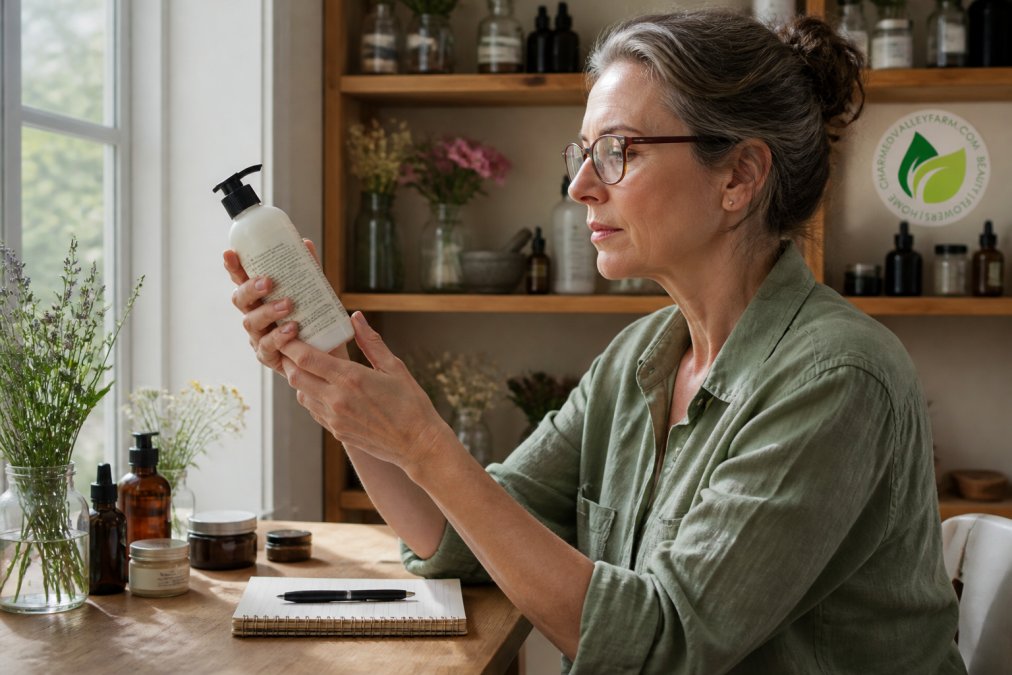
Start by identifying active ingredients versus fillers. Many organic skincare lines rely on preservative systems that sound natural but carry real risks, formaldehyde-releasing preservatives, for example, are technically "organic" but trigger sensitization over time. Brands committed to clean beauty make this easy by listing what they avoid, not just what they include. Charmed Valley Farm's #Farm2Face philosophy means every ingredient is traceable, so you know exactly what's going into your routine.
Safe Alternatives to Synthetic Fragrances and Problem Botanicals
Synthetic fragrances are one of the most common culprits behind contact dermatitis and cumulative toxicity concerns. Instead, look for products scented with named essential oils like lavender or chamomile. Plant-based alternatives exist for nearly every problematic ingredient: squalane from olives instead of mineral oil, plant-derived preservatives instead of parabens, and physical sunscreens with zinc oxide instead of chemical UV filters that absorb into your bloodstream.
The shift away from synthetic polymers opens the door to plant-based alternatives like vegetable glycerin and hyaluronic acid derived from fermentation. These alternatives support your skin barrier function rather than coating it. A simple oil cleanser with jojoba or sunflower oil outperforms many expensive botanical blends, especially for mature skin where barrier repair matters most.
Natural Skincare for Sensitive Skin: What Actually Works
Sensitive skin in your 40s and beyond demands a different approach. Your skin barrier thins with age, making it more vulnerable to irritants and sensitizers (peer-reviewed research). What actually works is a simplified routine: a gentle cleanser, a hydrating toner or essence, a barrier-supporting moisturizer, and SPF.
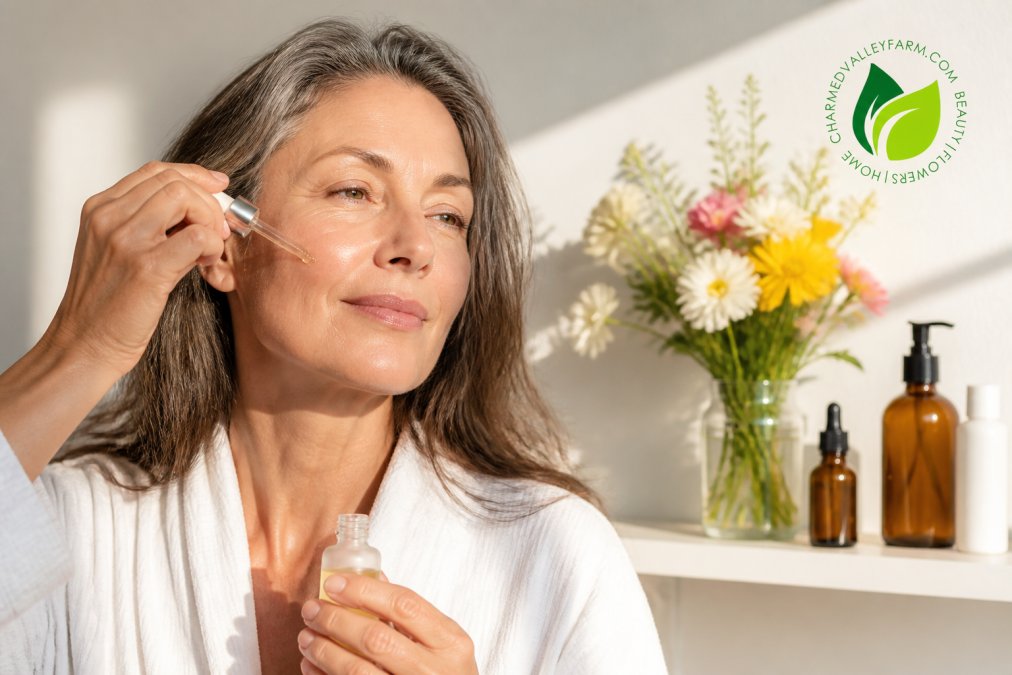
For mature, reactive skin, hypoallergenic formulations matter more than trendy ingredients. Look for products that skip endocrine disruptors entirely, no parabens, phthalates, or synthetic estrogen-mimicking compounds. Plant-based alternatives like bakuchiol work similarly to retinol without irritation. Ceramides from plant sources rebuild your skin barrier. The best natural skincare for sensitive skin is often the simplest: fewer ingredients, each doing one job well, with nothing that causes inflammation or bioaccumulation over time.
Navigating organic skincare means questioning what "organic" actually guarantees. The real protection comes from reading labels carefully, understanding which organic ingredients to avoid, and choosing formulations designed for mature, sensitive skin. Charmed Valley Farm's commitment to chemical-free, traceable ingredients reflects a philosophy that transparency and simplicity are the foundation of real skincare wellness. Start by auditing what you're currently using, you may find that removing problematic ingredients matters more than adding the next trending botanical.
Frequently Asked Questions
Q: What are the most common organic ingredients to avoid in skincare?
A: Organic ingredients to consider avoiding include essential oils that may trigger contact dermatitis, plant-derived preservatives that could cause sensitization, certain botanical extracts high in allergens, and natural fragrance compounds that can irritate reactive skin. Even though they're plant-based, these ingredients can potentially cause dermal absorption issues and inflammation. Always check the full ingredient list rather than relying on the 'organic' label alone.
Q: Does 'organic' on a label mean a skincare product is safe and non-toxic?
A: No. Organic certification means the ingredients were grown without synthetic pesticides, but it doesn't guarantee safety or that the product is free from irritants. Some organic ingredients like certain essential oils and plant extracts can be potent sensitizers. Regulatory oversight of 'organic' skincare is limited, so greenwashing is common. Read the full ingredient list and research individual components rather than trusting the label claim alone.
Q: How can I find safe alternatives to synthetic fragrances in natural skincare?
A: Look for products scented with fragrance-free formulas, single botanical extracts (like rose water or chamomile), or essential oils in very low concentrations. Safer alternatives include unscented products, those using CO2 extracts, or brands that disclose exact fragrance sources. For sensitive skin, fragrance-free is often the safest choice. Test any scented product on a small patch first to check for contact dermatitis or irritation before full facial use.
This article was written using GrandRanker