
Table of Contents
- Why Organic Sunscreen Options for Sensitive Skin Types Need a Closer Look
- Mineral Sunscreen for Sensitive Skin: How Zinc Oxide and Titanium Dioxide Work
- Sunscreen Ingredients to Avoid for Sensitive Skin
- Broad-Spectrum SPF for Sensitive Skin: Choosing the Right Level
- How to Patch-Test Sunscreen on Sensitive Skin
- Application, Reapplication, and Water Resistance for Daily Use
- What to Ignore When Shopping for Organic Sunscreen Options
- Conclusion
- Frequently Asked Questions
Last Updated: October 9, 2026
Why Organic Sunscreen Options for Sensitive Skin Types Need a Closer Look
Organic sunscreen options for sensitive skin types are not a marketing category but a specific set of formulations built around mineral filters, fewer inactive ingredients, and fragrance-free bases.
Here at Charmed Valley Farm, our #Farm2Face skincare line is rooted in chemical-free ingredients and a commitment to wellness.
Below, we break down how mineral filters work, which ingredients to avoid, how to patch-test, and how to apply and reapply without irritation, plus what to ignore on a label.
Mineral Sunscreen for Sensitive Skin: How Zinc Oxide and Titanium Dioxide Work
Mineral sunscreen for sensitive skin relies on two active ingredients: zinc oxide and titanium dioxide. Both sit on top of the skin and deflect UV radiation rather than absorbing it, causing fewer reactions in reactive or acne-prone skin.
Zinc oxide covers a broader slice of the UV spectrum on its own, including UVA. Titanium dioxide is excellent for UVB but weaker against UVA. Many formulas combine both for full broad-spectrum coverage.
The trade-off is texture: mineral filters leave a white cast on deeper skin tones and feel thicker than chemical sunscreens, and non-nano zinc feels heavier still, usually worth paying if your skin reacts to everything else.
Zinc Oxide vs. Titanium Dioxide: Which Suits Reactive Skin Best
Zinc oxide is the safer bet for reactive skin: broader UVA and UVB coverage and a long history in diaper creams and post-procedure formulas.
Titanium dioxide suits people who find zinc too drying and want a lighter feel, though you will still get some white cast.
| Filter | UV Coverage | Best For | Main Drawback |
|---|---|---|---|
| Zinc oxide | Broad UVA + UVB | Very reactive, acne-prone skin | Thick texture, white cast |
| Titanium dioxide | Strong UVB, weaker UVA | Normal-to-dry sensitive skin | Incomplete UVA protection alone |
| Both combined | Full broad-spectrum | Most sensitive skin types | Still heavier than chemical formulas |
Sunscreen Ingredients to Avoid for Sensitive Skin
Sunscreen ingredients to avoid for sensitive skin fall into two groups: certain chemical active filters and a long list of inactive additives. The additives are the more common culprit, and most shoppers never check them.
Watch for these on the label:
- Oxybenzone and avobenzone, common chemical filters linked to irritation and allergic reactions in sensitive skin
- Fragrance and parfum, the single most frequent cause of contact dermatitis in cosmetics
- Drying alcohols, denatured alcohol and SD alcohol strip the skin barrier
- Parabens, preservatives that some reactive skin types tolerate poorly
If you are dealing with mature, reactive skin, a fragrance-free, paraben-free, silicone-free mineral formula removes most of the risk in one step.
Active vs. Inactive Ingredients: What Actually Triggers Reactions
Active ingredients are the UV filters. Inactive ingredients are everything else: preservatives, emulsifiers, thickeners, and fragrance. In practice, the inactive list causes more reactions than the active one.
That is why two mineral sunscreens with identical zinc oxide percentages can behave completely differently: one uses a fragrance-free base with minimal preservatives, the other adds botanical fragrance and drying alcohol.
Broad-Spectrum SPF for Sensitive Skin: Choosing the Right Level
Broad-spectrum SPF for sensitive skin should be SPF 30 or higher for daily use, but the number on the bottle tells you less than most shoppers assume.
The "broad-spectrum" label matters most, and in the United States it is a testing standard, not a marketing phrase. Under FDA rules, a product can only carry the claim if it passes a critical wavelength test, meaning UVA protection extends to at least 370 nanometers.
What SPF Actually Measures, and What It Does Not
SPF is a ratio, not a percentage of total protection. SPF 30 filters out roughly 97% of UVB rays under test conditions; SPF 50 filters out roughly 98%.
UVA protection is not captured by the SPF number at all. For mineral formulas, UVA coverage comes from the filter itself: zinc oxide blocks UVA and UVB across a broad range, while titanium dioxide is strong in UVB but weaker in UVA, which is why a titanium-dioxide-only formula can be labeled broad-spectrum only if it passes the critical wavelength test.
Matching SPF Level to Real-World Use
| Situation | Practical SPF Target | Why |
|---|---|---|
| Daily commute, office, incidental sun | SPF 30, broad-spectrum | Adequate for brief exposure; lighter texture layers well under makeup |
| Extended outdoor time, errands, lunch walks | SPF 30-50, broad-spectrum | Higher UVB margin for longer exposure windows |
| Hiking, beach, water sports, high altitude | SPF 50, broad-spectrum, water-resistant | Reapplication discipline matters more than the number |
| Sensitive or reactive skin, any situation | SPF 30-50, broad-spectrum, fragrance-free | Balances protection against irritation risk from heavy bases |
A common pattern among sensitive-skin users is to over-buy on SPF and under-apply. A well-tolerated SPF 30 you actually reapply every two hours outperforms an SPF 70 you avoid because it stings or pills. Choose the highest SPF your skin will comfortably wear daily, then commit to reapplication.
Why Higher SPF Is Not Automatically Better for Reactive Skin
Higher-SPF mineral formulas typically increase the concentration of zinc oxide or titanium dioxide. More filter means more opacity, more white cast on deeper skin tones, and a thicker film that can trap sweat in acne-prone skin.
If you spend most of your day indoors with brief sun exposure, an SPF 30 broad-spectrum mineral formula is a reasonable daily default. If you are outdoors for hours, step up to SPF 50 and treat reapplication as the real protection strategy.
How to Patch-Test Sunscreen on Sensitive Skin
How to patch-test sunscreen comes down to one rule: test on a small area for two to three days before you put it on your face.
Here is the process we recommend:
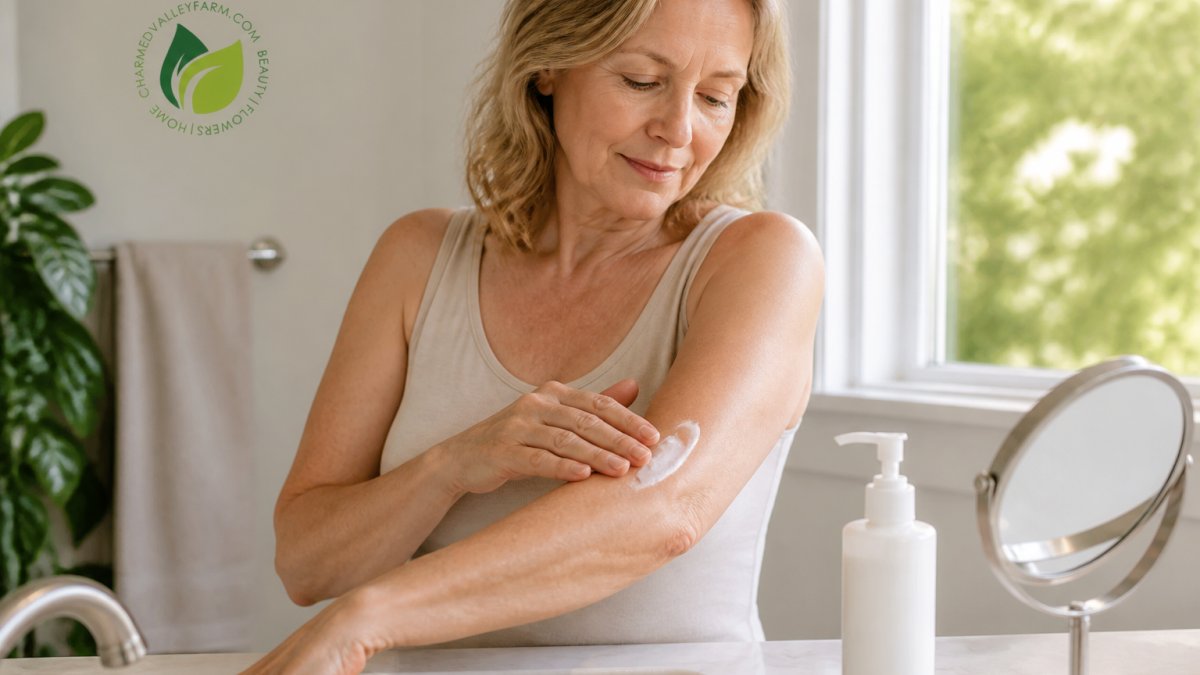
- Apply a small amount to the inner forearm or behind the ear
- Wait 24 hours and check for redness, itching, or bumps
- Reapply to the same spot on day two
- Check again after another 24 hours
- If there is no reaction, test on a small patch of jawline before full-face use
Do not test a new product the morning of an event. Reactions can take a full day to appear, and reactive skin is unpredictable.
Application, Reapplication, and Water Resistance for Daily Use
Daily use sunscreen only works if you apply enough and reapply on schedule.
Apply roughly a nickel-sized amount for the face and neck. For the body, use about a shot glass worth.
Water resistance is measured in minutes, not hours. A "water-resistant" label means the SPF holds for either 40 or 80 minutes in water; after that window, you reapply.
What to Ignore When Shopping for Organic Sunscreen Options
Ignore the front of the bottle. "Organic," "natural," "clean," "reef-friendly," and "chemical-free" are not standardized sunscreen terms in the United States, and any brand can print them. The back label holds the regulated information.
Decoding the Claims: What Each Label Does and Does Not Guarantee
| Claim on the Bottle | What It Legally Means | What It Does Not Tell You |
|---|---|---|
| "Organic" | For sunscreen, the term is not defined by FDA labeling rules. If the product carries a USDA organic seal, it meets that program's agricultural standards, but the seal does not evaluate UV protection. | Whether the UV filters are mineral or chemical, or whether the formula suits reactive skin |
| "Natural" | No regulatory definition for sunscreen | Anything about irritation risk; botanical extracts are a common allergen source |
| "Chemical-free" | No regulatory definition | Whether the formula contains fragrance, drying alcohol, or preservatives that trigger reactions |
| "Broad-spectrum" | A defined FDA testing standard (critical wavelength ≥ 370 nm) | The specific SPF level, or whether the formula is fragrance-free |
| "Reef-friendly" | No federal definition; some states regulate specific ingredients in certain contexts | Whether the product is gentle on your skin |
| "Water-resistant" | Must state 40 or 80 minutes, based on FDA test protocol | That the product is waterproof, it is not |
| "Non-comedogenic" | No standardized regulatory definition | Whether your particular skin will break out |
A Transparent Scoring Approach for Sensitive Skin
Rather than trusting any single claim, score each candidate formula against the same criteria, the method we use for reactive skin, so you can compare products across brands on equal footing.
- Active filter: Zinc oxide, titanium dioxide, or both. Note the percentage, higher is not always better for texture, but it does affect coverage.
- Broad-spectrum status: Confirm the claim appears alongside the SPF number.
- SPF level: Match to your actual daily exposure, not the highest available.
- Fragrance: Ideally absent. "Fragrance-free" and "unscented" are not the same, unscented products may contain masking fragrance.
- Inactive ingredients: Scan for drying alcohols (denatured alcohol, SD alcohol), parabens, and silicones if you are acne-prone.
The Trade-Offs You Should Expect
No mineral sunscreen wins on every criterion. A formula with excellent UVA coverage from high zinc oxide will likely feel thicker and leave more white cast.
The point of scoring is not to find a perfect product but to identify which trade-offs you will accept for your skin and routine, and to decide from the back label rather than the front.
Conclusion
Finding an organic sunscreen that respects reactive skin takes more label-reading than most people expect, and the wrong pick can set your skin back weeks. At Charmed Valley Farm, our #Farm2Face line is built on chemical-free, botanical-based formulas with transparent ingredients, crafted for mature skin issues like fine-lines, sunspots and crepiness, and for sensitive, reactive skin. Explore our Flower Face skincare collection to see the full range, or join one of our workshops and retreats to learn how we approach natural skincare from the ground up.
Frequently Asked Questions
What is the best organic sunscreen for sensitive skin?
The best organic sunscreen for sensitive skin uses zinc oxide or titanium dioxide as its active ingredient, is fragrance-free, and carries a broad-spectrum SPF 30 or higher. Look for formulas labeled non-comedogenic and paraben-free, since these reduce the chance of clogged pores and irritation. Mineral sunscreens sit on top of the skin rather than absorbing into it, which is why dermatologists often suggest them for reactive or acne-prone skin. Patch-test any new product for three days before applying it to your face.
Which sunscreen ingredients should people with sensitive skin avoid?
Watch for oxybenzone, avobenzone, octinoxate, and homosalate, which are common chemical filters linked to irritation in reactive skin. Also check inactive ingredients: added fragrance, parabens, silicones, and drying alcohols frequently trigger redness or stinging. Some people react to preservatives like methylisothiazolinone. A short ingredient list is usually safer than a long one. If you have rosacea or eczema, fragrance-free and chemical-free formulas tend to cause fewer flare-ups.
How do you patch-test sunscreen on sensitive skin?
Apply a small amount to the inner forearm or behind the ear, two areas with thin skin similar to the face. Wait 24 hours, then check for redness, itching, or bumps. If your skin stays calm, repeat the test on a small patch of your jawline for another 24 hours. Most reactions show up within 48 hours. Stop using the product at the first sign of irritation and try a simpler mineral formula instead. Patch-testing costs nothing and saves you a breakout.
How often should you reapply sunscreen?
Reapply broad-spectrum SPF every two hours during sun exposure, and sooner if you are swimming, sweating, or toweling off. Even water-resistant formulas lose effectiveness after about 40 to 80 minutes in the water. For daily use, one morning application covers a typical commute, but reapply if you will be outside at midday. A general guideline is one ounce for the body and a nickel-sized amount for the face and neck. Sunscreen only works when it stays on your skin.