
Table of Contents
- Start with a Waste Audit: Measure Before You Reduce Floral Waste
- Florist Inventory Management That Prevents Overordering
- Cold Chain, Temperature, and Humidity Control for Cut Flowers
- How to Extend Vase Life of Flowers with Conditioning and Preservatives
- Zero-Waste Floral Design Techniques and Reusable Mechanics
- What to Do with Leftover Flowers: Donate, Repurpose, or Compost
- Costs, Savings, and Return on Investment of Waste Reduction
- Conclusion: Build a Circular Floral Business
- Frequently Asked Questions
Last Updated: October 12, 2026
Start with a Waste Audit: Measure Before You Reduce Floral Waste
Reducing floral waste starts with knowing exactly how much you throw away and why. A waste audit is a structured count of every stem you toss, wilt, or give away, tracked over two to four weeks.
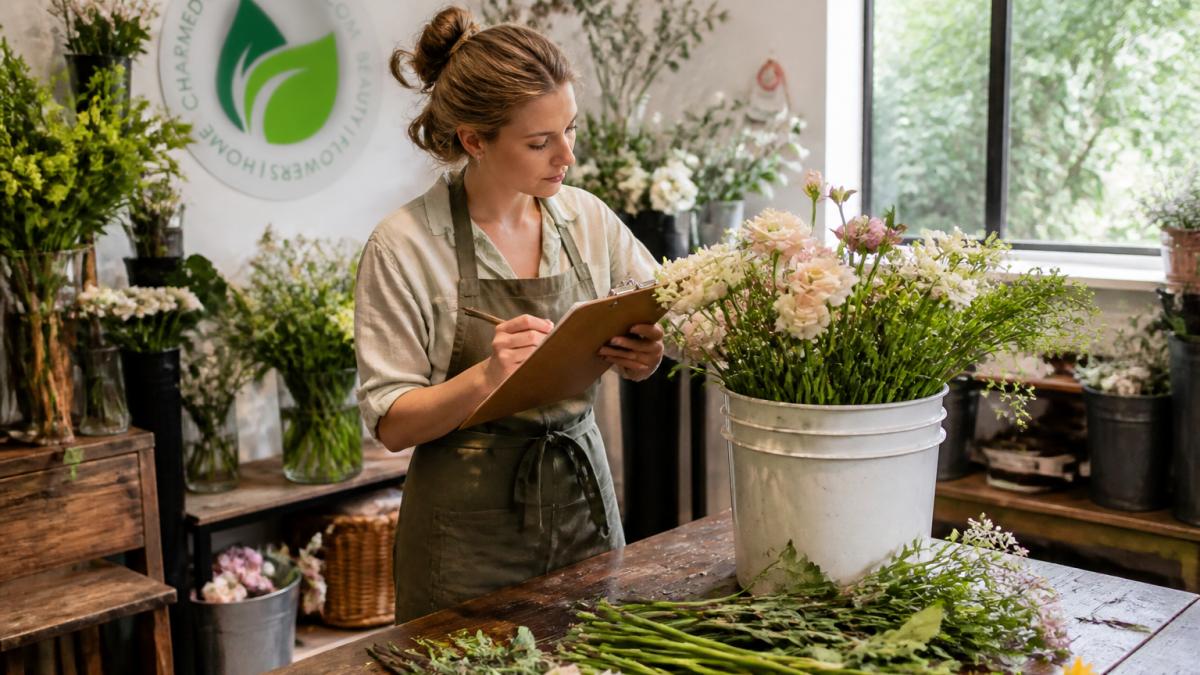
At Charmed Valley Farm, we think of it this way: you cannot manage what you never measure. Most florists assume the problem is damaged blooms.
Categorize Every Loss Before You Count It
A useful audit sorts waste into buckets, because each bucket points to a different fix. Use these five categories and log them separately:
- Overstock spoilage, stems that wilted before they sold. Fix: tighter forecasting.
- Handling damage, stems bruised, snapped, or crushed in transit or processing. Fix: receiving and storage protocol.
- Trim and scrap, leaves, thorns, and stem ends removed during conditioning. Fix: this is largely unavoidable, but track it so it does not inflate your spoilage number.
- Design surplus, leftover stems from arrangements built larger than the order required. Fix: recipe discipline.
- Event returns, arrangements recovered after an event. Fix: a surplus plan (see below).
Separating these matters because a single blended 'waste' number hides the real problem. A shop with 12 percent total waste might be running 3 percent spoilage and 7 percent design surplus, two very different fixes.
Calculate Your Waste Rate
Once you have two to four weeks of data, run three simple ratios:
- Stem waste rate = stems discarded ÷ stems purchased. Track this weekly.
- Cost of waste = discarded stems × your average cost per stem. This is the number that gets owner attention.
- Category share = each category ÷ total waste. This tells you where to aim first.
Most practitioners find that one or two flower types and one or two categories account for the majority of loss. Fixing the top category usually moves the total more than spreading effort across everything.
Review on a Fixed Cadence
An audit only pays off if you act on it. Set a weekly review, Friday afternoon works for many shops, and answer three questions: Which category grew? Which flower type drove it?
Log the change and check the same metric the following week. Over a quarter, this loop turns a one-time audit into a habit, and the waste rate becomes a number you manage like any other cost.
Florist Inventory Management That Prevents Overordering
Good florist inventory management is the single biggest lever for cutting waste. Overordering is the quiet culprit behind most spoilage. When stems sit too long, they wilt before anyone buys them.
Demand Forecasting and Purchasing Workflows
Demand forecasting means matching your orders to what you actually sold last week, not what you hope to sell. A simple workflow beats a fancy system.
Try this approach:
- Pull your sales from the same week last year
- Adjust up or down for local events and holidays
- Order 10 percent less than your gut says
- Keep a small buffer only for your top-selling stems
- Review every Friday and adjust for next week
This keeps you from buying flowers you cannot move. It also frees up cash for stems that sell fast.
Stock Rotation and Inventory Turnover Targets
Stock rotation means first in, first out. New flowers go behind old ones so the oldest stems sell first. Track your inventory turnover, which is how fast your stock sells and gets replaced.
A healthy turnover target depends on your volume. Busy shops may turn stock several times a week. Slower shops turn it once or twice. Find your number, then aim to beat it slightly each month.
Cold Chain, Temperature, and Humidity Control for Cut Flowers
Flower freshness depends on the cold chain, the unbroken run of cool temperatures from farm to vase. Temperature control is the difference between a week of vase life and three days.
Set your cooler between 34 and 38 degrees Fahrenheit for most cut flowers. Keep relative humidity around 90 percent to stop stems from drying out. Check the cooler twice a day with a thermometer, not just the dial.
Step-by-Step Handling Protocols by Flower Type
Not every flower wants the same care. A step-by-step protocol by type prevents needless loss.
- Roses: Strip lower leaves, cut stems at an angle, and hydrate in cool water
- Tulips: Keep them cool and upright; they keep growing after cutting
- Hydrangeas: Dunk the whole head in water to revive wilted blooms
- Lilies: Remove pollen-heavy stamens to protect petals and fabrics
- Dahlias: Condition in shallow, cool water and handle gently
Post-harvest handling like pre-cooling and clean cuts matters more than most florists expect. Get it right and your flowers hold up for days longer.
How to Extend Vase Life of Flowers with Conditioning and Preservatives
Learning how to extend vase life of flowers comes down to two habits: conditioning and clean water. Conditioning is the prep work you do the moment flowers arrive. Preservatives keep the water working in your favor.
Do this every time:
- Strip all leaves that would sit below the waterline
- Cut stems at an angle with a sharp, clean tool
- Place stems in cool water with floral preservatives
- Change the water every two days
- Recut stems each time you change water
Floral preservatives feed the flowers and slow bacteria that clog stems. Clean buckets matter just as much. A dirty bucket undoes everything else.
Zero-Waste Floral Design Techniques and Reusable Mechanics
Zero-waste floral design means building arrangements that leave nothing behind. The old standard was floral foam, a single-use block that cannot be recycled. Today, reusable mechanics do the same job and last for years.
Swap single-use materials for options you can use again:
- Chicken wire or mesh for stem support
- Reusable containers and vases instead of disposable ones
- Compostable twine and paper wrap
- Potted plants and dried stems as lasting elements
Sustainable floristry also leans on local flowers and seasonal flowers. Buying stems grown nearby cuts shipping waste and keeps money in your community. Charmed Valley Farm grows chemical-free blooms for florists and DIY hosts who want that freshness close to home.
What to Do with Leftover Flowers: Donate, Repurpose, or Compost
Leftover flowers rarely need to hit the trash. Most can be donated, repurposed, or composted with a little planning.
- Donate: Nursing homes, hospitals, and shelters often welcome fresh blooms
- Repurpose: Break large arrangements into smaller bouquets or bud vases
- Dry: Hang stems upside down for dried designs and crafts
- Compost: Turn green waste into nutrient-rich soil for your garden
Event Floristry Surplus Plan
Events create the biggest surplus, so plan for it before the event day. Build a surplus plan into every quote.
- Estimate stems per centerpiece, then add a small buffer
- Assign a helper to collect arrangements after the event
- Sort blooms by condition the same night
- Deliver usable flowers to a donation partner within 24 hours
- Compost the rest instead of paying disposal fees
This turns a cost into goodwill and keeps usable stems out of the landfill.
Costs, Savings, and Return on Investment of Waste Reduction
Waste reduction pays for itself, but the size of the payoff depends on your operation. The savings show up in three places: less overordering, fewer disposal fees, and new revenue streams. The way to prioritize is to put a number on each.
Build a Simple Savings Model
You do not need a spreadsheet model to make this useful. Four inputs get you most of the way:
- Annual flower spend, total dollars you paid suppliers last year.
- Your waste rate, from the audit above (stems discarded ÷ stems purchased).
- Average cost per stem, annual spend ÷ stems purchased.
- Disposal cost, what you pay per pickup or per dumpster, if anything.
From those, the annual cost of spoilage is roughly: annual flower spend × waste rate. If you cut the waste rate in half, that is your first-year savings target. A shop spending $40,000 a year on flowers with a 10 percent waste rate is losing about $4,000 to spoilage; halving it recovers roughly $2,000.
Where the Savings Actually Come From
- Lower purchases, smarter demand forecasting trims overordering, the largest single source of loss for most shops.
- Fewer disposal fees, composting on-site or through a municipal program can eliminate hauling charges for green waste.
- New revenue, dried designs, workshops, and upcycled arrangements turn would-be waste into product.
- Reduced shrink on hard goods, reusable mechanics and containers replace single-use foam and disposable vases over time.
Weigh the Costs Honestly
The changes are not free. Reusable mechanics, a dedicated compost bin, and staff time for auditing all carry a cost. A common pattern is that the first changes, better forecasting and stock rotation, cost almost nothing and deliver the fastest payback. Capital changes like a second cooler or a commercial composter take longer to justify.
Prioritize in this order:
- Forecasting and rotation (near-zero cost, fast payback)
- Audit and review cadence (staff time only)
- Composting and donation logistics (small setup cost)
- Reusable mechanics and containers (capital, longer payback)
Track It Like Any Other Metric
Pick two numbers and watch them monthly: your waste rate and your cost of waste. If both trend down, the program is working.
A circular economy approach keeps materials in use as long as possible. Composting, upcycling, and repurposing all feed that loop. For florists, this is both a values choice and a profitability one, and the profitability case is strongest when you can show the numbers.
Conclusion: Build a Circular Floral Business
Cutting waste is not about doing everything at once. It is about measuring first, then fixing the biggest leaks one by one. Reducing floral waste is a practical skill, and it grows with practice.
If you want fresh, chemical-free blooms from a farm that cares about how they are grown, Charmed Valley Farm can help. Our wholesale and bucket programs give florists and DIY hosts steady access to high-quality cut flowers.
Get started with Charmed Valley Farm and build a floral business that wastes less and earns more. Learn More Here
Frequently Asked Questions
What are the best ways for florists to reduce flower waste?
Start with a measurable waste audit so you know what is being thrown out and why. Then tighten florist inventory management with demand forecasting, order only what events require, and rotate stock using first-in-first-out. Store stems at the correct temperature and humidity, condition flowers with clean water and floral preservatives, and design with reusable mechanics instead of single-use foam. Finally, donate, repurpose, or compost whatever is left so organic material never reaches a landfill.
How can florists manage inventory to prevent flowers from going to waste?
Track how much you buy, sell, and discard each week by flower type, then compare that against upcoming orders. Buy to confirmed demand rather than guessing, set par levels for your top-selling stems, and review inventory turnover weekly. Local and seasonal flowers can shorten the supply chain and reduce spoilage, while a simple spreadsheet or POS report is enough to spot overordering patterns before they become a habit.
How should cut flowers be stored to extend their vase life?
Pre-cool flowers quickly after harvest or delivery, then hold them in a clean cooler at the temperature range recommended for that species, with high relative humidity to slow water loss. Recut stems at an angle, strip leaves below the waterline, and use fresh water with a floral preservative. Keep ethylene-producing produce away from the cooler, and rotate older buckets to the front so nothing sits forgotten at the back.
Can unsold flowers be donated or composted?
Yes. Stems that are still visually sound can go to nursing homes, hospitals, shelters, or community groups, which keeps them out of the waste stream and builds goodwill. Anything past its prime should be composted rather than landfilled. Remove wire, foam, rubber bands, and plastic wrap first, then add green waste to a compost pile or send it to a commercial composting facility that accepts floral material.