
Last Updated: October 31, 2026
Quick Summary
To start a flower subscription, set your price per delivery from your cost of goods plus labor and delivery, then build in a margin, and match delivery frequency to what your harvest and route can support every week. Line up a tested backup supplier before your first delivery, and write your pause, cancellation, and substitution terms before you sell.
- The global flower subscription services market was valued at USD 3,537.4 million in 2026.
- Break-even is fixed costs divided by contribution margin per delivery.
- Launch one delivery frequency first, run it for a season, then add a second tier.
- Promise a style and size range instead of a set stem count when your crop is uncertain.
Table of Contents
- Why a Flower Subscription Belongs in Your Business Model
- Flower Subscription Pricing: Setting a Price Per Delivery That Holds Up
- Flower Subscription Delivery Frequency and Subscription Duration
- Sourcing Flowers and Securing a Backup Supplier
- Flower Subscription Box Ideas That Fit Your Growing Season
- How to Market a Flower Subscription Before Your First Delivery
- Terms, Pauses, and Cancellations: The Fine Print That Keeps Subscribers
- Order Management and Recurring-Order Workflows That Save Your Week
- Frequently Asked Questions
Why a Flower Subscription Belongs in Your Business Model
A flower subscription is a recurring plan that delivers fresh cut flowers to a customer on a set schedule, and it can smooth out the feast-or-famine rhythm that makes floral income so hard to predict. The global flower subscription services market was valued at USD 3,537.4 million in 2026 and is projected to reach USD 7,795.9 million by 2035, according to Market Reports World's flower subscription market analysis. That growth is happening because subscriptions turn one-time buyers into recurring revenue you can plan around.
At Charmed Valley Farm, we offer fresh-cut flowers through our wholesale and bucket programs.
Here's the honest part most guides skip. A subscription is not a magic fix for a slow season. It is a promise to deliver on a schedule, and that promise has to survive heat waves, crop failures, and a customer who wants to pause for two weeks in July.
But get the basics right, and the payoff is real:
- Predictable sales you can budget against
- Less waste, because you harvest to a known order count
- Stronger customer loyalty, since subscribers buy again and again
- A reason to sell in your peak bloom months instead of scrambling
The rest of this guide covers pricing, delivery frequency, sourcing, marketing, and the fine print that keeps subscribers around, so you can start a flower subscription without overcommitting your farm or your week.
Flower Subscription Pricing: Setting a Price Per Delivery That Holds Up
Start with your cost of goods, add your labor and delivery, then build in a margin, and set your flower subscription pricing from that number, not from what feels fair. Price per delivery is the single figure that decides whether a subscription makes money or quietly drains it.
Cost of Goods, Margins, and Perceived Value
Your cost of goods for each delivery includes the stems, the wrap, the container if you use one, and the card. You can check wholesale bucket pricing to calculate cost of goods and set profitable subscription prices. Add the drive time and the hour of design work. That total is your floor.
Then ask what the customer sees. A weekly bouquet wrapped in kraft paper with a handwritten note feels more valuable than the same stems in a plastic sleeve. Perceived value is why subscribers stay, so build it into the price instead of discounting your way to a sale.
Watch out: pricing a subscription below your cost of goods because you assume volume will fix it. Volume makes a loss bigger, not smaller.
A Full Contribution-Margin Model, Not Just a Profit Line
The single-table model most guides show hides the costs that decide whether a subscription works. Build your price from contribution margin per delivery, then from break-even subscriber count.
Here is a worked monthly-bouquet example. Swap in your own numbers.
| Line Item | Amount |
|---|---|
| Price per delivery | $55.00 |
| Stems and wrap | $18.00 |
| Design labor (30 min at $24/hr) | $12.00 |
| Packaging (box, tissue, card) | $2.50 |
| Delivery cost (fuel, vehicle wear, driver time) | $8.00 |
| Payment processing (about 2.9% + $0.30) | $1.90 |
| Spoilage allowance (5% of stem cost) | $0.90 |
| Total variable cost | $43.30 |
| Contribution margin per delivery | $11.70 |
| Contribution margin % | 21.3% |
That 21% is your real number: what each delivery contributes toward fixed costs like your website, software, insurance, and unpaid admin time. A 30% margin gives you room for a bad week; a 10% margin does not.
Break-Even Subscriber Count
Break-even is fixed costs divided by contribution margin per delivery.
Run that math before you publish a price. It tells you whether your tier structure can ever pay for itself, and it tells you which frequency is actually the most profitable per route mile.
Spoilage, Failed Payments, and Redelivery Costs
Three costs can erode subscription margins:
- Spoilage: harvest to your confirmed order count, adding a small buffer only for same-week signups. A 5% allowance is a planning number, not a license to over-harvest.
- Failed payments: recurring billing fails more often than one-time checkout. Budget for a dunning sequence and card-update prompt, and count the processing fee on every retry.
Perceived Value Without Discounting
Raise perceived value instead of cutting price. A printed card with the grower's name and a note on what is blooming can make a delivery feel more personal. Discounts train subscribers to wait for the next sale; presentation trains them to renew.
Flower Subscription Delivery Frequency and Subscription Duration
The right flower subscription delivery frequency is the one your harvest and your delivery route can actually support every single week.
Match frequency to your capacity first:
Duration matters just as much.
One more thing. Do not launch every frequency at once. Pick one, run it for a season, then add a second tier once the first runs smoothly.
Sourcing Flowers and Securing a Backup Supplier
A backup supplier is a second source you have already tested and can call when your own crop underdelivers, and every subscription needs one before the first delivery goes out. Flower sourcing is where subscriptions live or die.
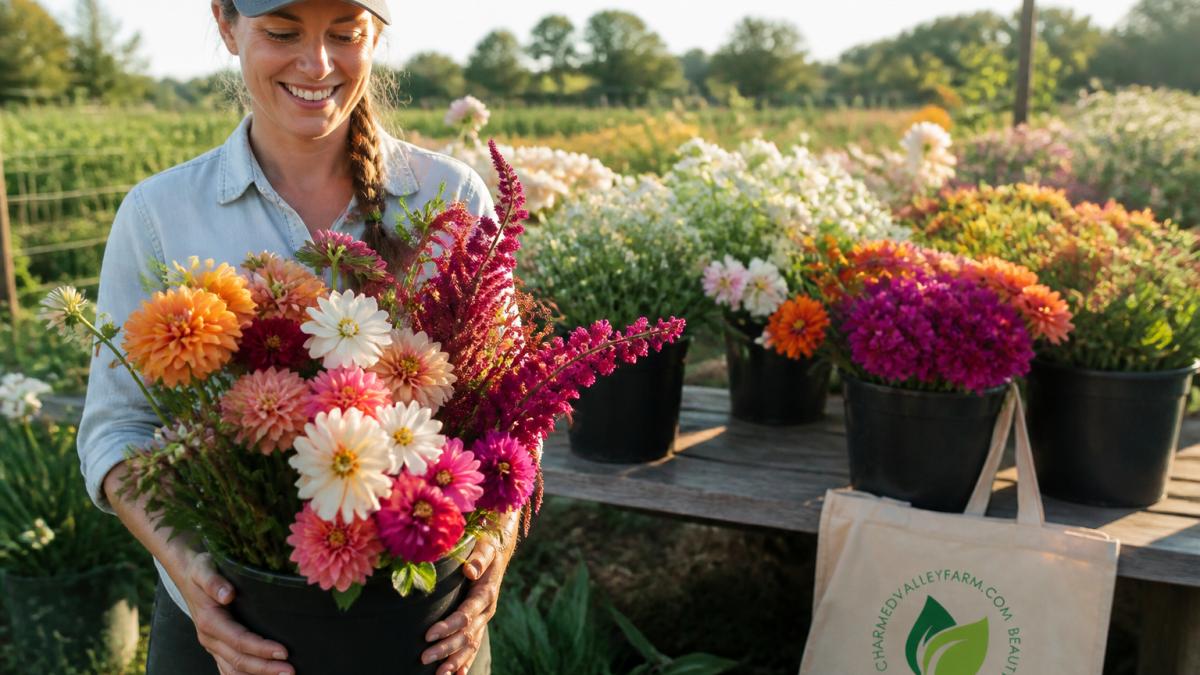
Start with local flowers from your own fields or nearby growers. Then build a backup plan:
- Line up one or two growers who can fill a gap on short notice
- Test a small order from each before you need them in a crisis
- Keep a written list of who to call, for what, and by when
- Track which varieties hold up best in a delivery box
Watch out: promising a set number of stems per delivery when your crop is uncertain. Promise a style and a size range instead.
Flower Subscription Box Ideas That Fit Your Growing Season
Build each flower subscription box around what is actually blooming that month, not around a fixed recipe you have to force year-round.
A simple approach is to design three or four box styles and rotate the varieties inside them:
Then map each box to your bloom calendar.
How to Market a Flower Subscription Before Your First Delivery
How to market a flower subscription comes down to showing the schedule and the value clearly.
Try these in order:
Keep the message simple: what arrives, how often, and when it starts. Then make it easy to sign up.
Terms, Pauses, and Cancellations: The Fine Print That Keeps Subscribers
Write your subscription terms before you sell, covering pauses, cancellations, refunds, and substitutions, because clear rules prevent the disputes that drive subscribers away. Customer loyalty is built on trust, and trust is built on plain language.
Put these in writing:
Then back those terms with quality. Vase-life tips help you promise delivery quality and reduce complaints that drive cancellations.
Order Management and Recurring-Order Workflows That Save Your Week
Recurring-order workflows turn a pile of individual orders into one weekly production list, the difference between a calm farm and a chaotic one.
The Minimum Viable Stack
You do not need custom software to run a few dozen subscribers. You need four things that talk to each other:
- A subscriber record with tier, frequency, delivery address, start date, and pause status
- Recurring billing that charges on schedule and retries failed cards automatically
- A production list generated from confirmed deliveries for the week
- A route plan grouped by delivery area, not by signup order
A spreadsheet can hold the subscriber record and production list at small scale.
Recurring Billing Mechanics That Prevent Churn
Recurring billing is where subscriptions quietly break. Set these rules up front:
Route Planning and Delivery Windows
Group deliveries by geography and set a single delivery window per area. Prep boxes the day before and load by route to finish in half the time. Keep packaging and delivery logistics on the same schedule so the production list, box count, and route sheet all match before the van leaves.
Retention Metrics That Tell You If It Is Working
Tracking these numbers monthly can help you understand how a subscription is performing:
- Renewal rate: the share of subscribers who renew at the end of a term, your single best health metric.
- Churn rate: the share who cancel or lapse each month. Rising churn usually shows up in delivery complaints before it shows up in revenue.
- Average order value: total revenue divided by deliveries, showing whether upsells and tier mix are working.
- Delivery cost per order: total delivery spend divided by deliveries. Watch it climb as routes sprawl.
- Customer lifetime value: average order value times average deliveries per subscriber. Compare it to acquisition cost before spending more on marketing.
Reducing Churn With Simple Levers
Most churn is preventable and cheap to fix:
Frequently Asked Questions
How much does a flower subscription cost to run, and what should I charge?
Your price per delivery has to cover stems, packaging, labor, and delivery before it produces a margin. Work backward from cost of goods: if a bouquet uses $12 in stems and $4 in packaging and delivery, a price of $35 leaves roughly $19 before labor. Check Charmed Valley Farm's site for current wholesale and bucket program details.
How often should a flower subscription deliver flowers?
Pick a flower subscription delivery frequency you can actually staff through your busiest weeks. Weekly delivery suits customers who want a standing arrangement for a reception desk or dining table. Biweekly and monthly delivery are easier to run alongside wedding and event work. Many growers limit subscriptions to their peak bloom window rather than promising year-round supply, then add a pause option for customers who travel.
What should go in a flower subscription box?
A good box pairs one focal flower with supporting stems and greenery that hold up in transit. Build two or three tiers so customers can choose a wrapped bunch, a vase-ready arrangement, or a larger statement piece. Seasonal flowers and local flowers add value customers can see. Flower subscription box ideas also include a small card naming the varieties, which costs little and makes the delivery feel considered.
How do I market a flower subscription before I have subscribers?
Start with the customers already buying from you. Ask them what they would pay and how often they want delivery, then offer a short seasonal trial instead of a full-year commitment. Post photos of real bouquets from your field, not stock images. How to market a flower subscription comes down to proof: show the stems, name the varieties, and make signing up a two-step process.
