Last Updated: October 29, 2026
Quick Summary
Michigan flower season runs roughly from April through October, moving from sparse spring bulbs and branches to peak summer abundance and a frost-driven fall wind-down. The exact dates shift with the last frost, so southern Michigan blooms one to two weeks ahead of the northern Lower Peninsula and three to four weeks ahead of the Upper Peninsula.
- The safe planting window for tender annuals opens around late May in much of the state.
- Peony availability lasts roughly two to three weeks per variety, stretching from late May into mid-June.
- Summer peak bloom is a rolling wave, with something new opening every week from late June through August.
- Upper Peninsula cut-flower availability typically runs early June through late September.
- Lakeshore microclimates near Lake Michigan can extend the season by one to two weeks.
Table of Contents
- Michigan Flowers in Season by Month
- Michigan Flower Bloom Times: What Opens When
- Spring Blooms and Early-Season Flowers
- Summer Flowers and Peak Bloom Periods
- Fall Flowers and the End of the Growing Season
- Michigan Wedding Flowers by Season
- Michigan Flower Farm Bloom Calendar: Regional Timing and Source Guide
- Plan Your Flower Order With Charmed Valley Farm
- Frequently Asked Questions
Michigan Flowers in Season by Month
A Michigan flower season calendar is a month-by-month guide to which fresh cut flowers are blooming, harvestable, or purchasable locally as the growing season moves from the first spring thaw through the first hard frost.
The single most useful thing to understand is this: Michigan flower season runs roughly from April through October, but the character of each month is completely different. April is sparse and precious. July is abundant to the point of overwhelm. October is a slow, beautiful wind-down.
Below, we walk through what opens when, how timing shifts across the state, and how to plan a wedding, a bucket order, or a simple weekly bouquet around it.
Michigan State University Extension gardening resources
Michigan Flower Bloom Times: What Opens When
Michigan flower bloom times follow a predictable arc: early bulbs and blooming trees in April, perennials and peonies in late May and June, peak abundance from July through September, and a frost-driven decline in October. The exact dates move year to year with weather, but the sequence is reliable.
The variable that matters most is the last frost. In much of the state, the safe planting window for tender annuals opens around late May, and the first fall frost typically arrives between late September and mid-October depending on where you are, a working window of roughly five to six months.
Here is the practical takeaway: if you want a specific flower for a specific date, you are really asking about frost dates and accumulated warmth, not about the calendar month alone.
Spring Blooms and Early-Season Flowers
Spring in Michigan is not a single season, it is a staggered sequence of micro-seasons, and the flowers available for cutting change dramatically from late March through May. The difference between a bouquet on April 15 and one on May 15 is night and day.
Late March to early April: The Bulb Window
The first cuttable stems come from hardy bulbs that overwinter in the ground. Daffodils and narcissus are the earliest reliable cut flowers, often appearing in southern Michigan within a week or two of the last snowmelt.
Mid-to-late April: Flowering Branches and Early Perennials
While bulbs fade, flowering shrubs and trees take over. Forsythia, flowering quince, and early cherries can be cut in bud and forced indoors, giving you tall, architectural stems when little else is blooming. Cut branches two to three weeks before an event and let them open in warm water.
May: The Peony and Iris Transition
Late May is when spring truly accelerates. Bearded iris opens first, followed by the earliest peonies, usually the single and semi-double varieties. Once you have them, learn how to arrange flowers like professional florists.
Regional Timing Differences
Southern Michigan (USDA zones 5b-6a) runs roughly one to two weeks ahead of the northern Lower Peninsula (zones 4b-5a), and the Upper Peninsula (zones 3b-4b) can be three to four weeks behind the southern border. Lakeshore microclimates, especially near Lake Michigan, moderate both spring warm-up and fall frost, which can extend the spring window by a week or more. If you are planning a May event, the specific location matters as much as the date.
What to Expect for Cutting Versus Viewing
Spring is the season of scarcity for local cut flowers. Farms and farmers markets will have limited stems, and florists often supplement with imported blooms. Gardens and festivals are for viewing, tulip displays and cherry blossoms are spectacular but not designed for harvest.
A common mistake in spring is expecting consistent volume. A cold snap can delay a whole crop by a week or more, and a warm spell can push it early. Plan for flexibility, not precision, and keep your flower choices broad enough to absorb a shift of ten days in either direction.
Summer Flowers and Peak Bloom Periods
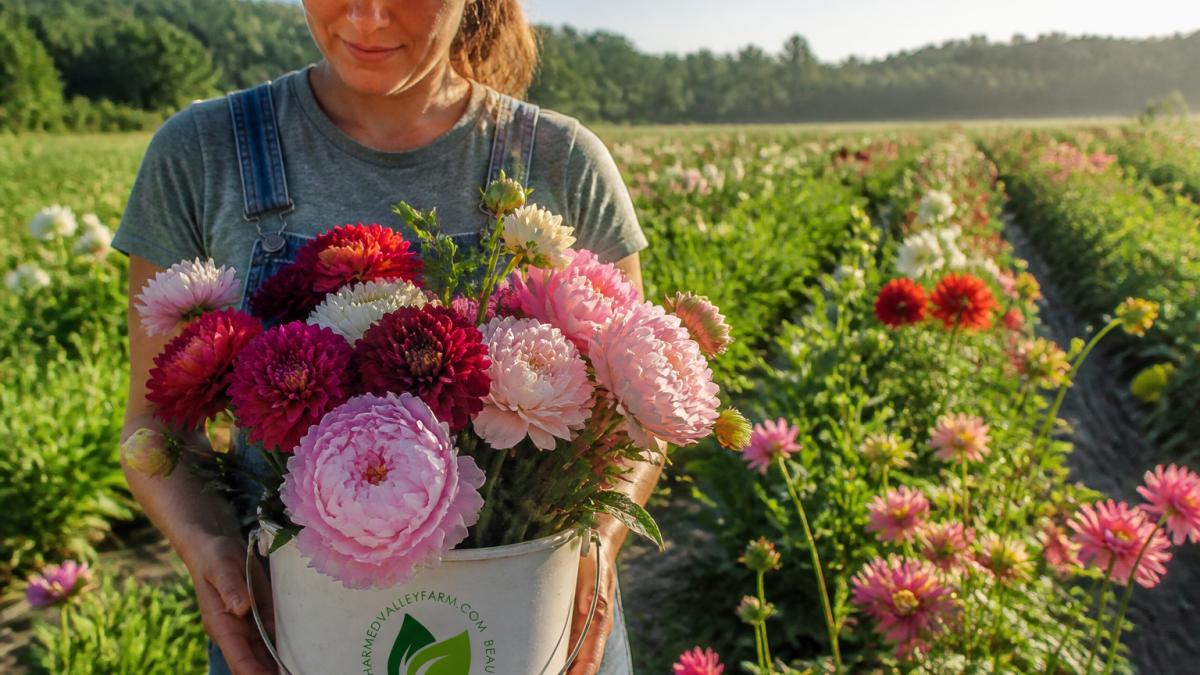
Summer is peak bloom in Michigan, and it is glorious. From late June through August, the flower farm is at full production: coneflower, garden lilies, sweet clover, zinnias, sunflowers, dahlias, and dozens of other varieties all competing for attention. This is when locally grown flowers are both most abundant and most affordable.
Summer is also when the gap between garden flowers and cut flowers becomes obvious. Many spectacular garden perennials have short vase lives, while others hold for a week or more. Knowing which is which saves a lot of disappointment.
What most guides miss is that peak bloom is not a single moment. It is a rolling wave. Something new opens every week, which is exactly why a weekly bucket program works so well in summer.
Fall Flowers and the End of the Growing Season
Fall blooms in Michigan carry a different mood entirely: dahlias at their most dramatic, late coneflower, asters, ornamental grasses, and the last of the warm-season annuals. The growing season ends with a slow fade as frost approaches.
The end of the season is when flower care matters most. Stems cut in cooler weather can last surprisingly well, but the first frost changes everything overnight. To stretch the life of these final blooms, our collection of DIY homemade flower food recipes is worth keeping on hand.
Watch out: the first frost can arrive with little warning in some years and take an entire field of tender annuals in a single night. If you have a fall event, book your flowers early and keep a backup plan.
Michigan Wedding Flowers by Season
Michigan wedding flowers should be planned around what is actually blooming, not around a color palette pulled from a magazine. A July wedding can have almost anything. An April wedding is a study in restraint and should lean into bulbs, branches, and early greens.
Seasonal planning is the difference between flowers that look effortless and flowers that look forced. Couples who embrace the season get better quality, better freshness, and a more coherent look. For hands-on guidance, our article on arranging garden flowers for rustic wedding centerpieces covers the practical side of turning a bucket of stems into a table.
Michigan Flower Farm Bloom Calendar: Regional Timing and Source Guide
Regional Timing: Three Broad Bands
Southern Michigan (zones 5b-6a): This is the earliest and longest season in the state.
Northern Lower Peninsula (zones 4b-5a): Expect a one-to-two-week delay in spring and an earlier end in fall.
Upper Peninsula (zones 3b-4b): The shortest season in the state. Last frost can stretch into late May or early June, and the first fall frost may arrive in mid-September.
Lakeshore microclimates: Areas within a few miles of Lake Michigan, especially in the fruit belt counties, benefit from moderated temperatures.
Month-by-Month Availability by Source
The table below summarizes what is typically available from each source type, month by month. Use it as a planning baseline, not a guarantee, weather shifts everything.
| Month | Flower Farms (cut stems) | Farmers Markets | Local Florists | Gardens & Festivals (viewing) |
|---|---|---|---|---|
| April | Daffodils, tulips, hyacinths, flowering branches (southern MI) | Limited bulbs and branches | Mostly imported, some local branches | Tulip displays, cherry blossoms |
| May | Tulips, iris, early peonies, columbine, wisteria | Bulbs, early peonies, greens | Local peonies starting, imported fill | Peony gardens, lilac festivals |
| June | Peonies, iris, sweet William, early perennials | Peonies, mixed bouquets | Local peonies, early annuals | Rose gardens, perennial displays |
| July | Zinnias, sunflowers, coneflower, lilies, dahlias starting | Full mixed bouquets | Local and imported mix | Flower farms open for visits, lavender festivals |
| August | Dahlias, zinnias, sunflowers, celosia, amaranth | Peak variety | Local abundance | Sunflower mazes, dahlia shows |
| September | Dahlias, asters, ornamental grasses, late annuals | Late-season mix | Local dahlias, transitioning | Fall garden displays |
| October | Dahlias (until frost), asters, grasses, dried stems | Limited, frost-dependent | Mostly imported, some local | Fall festivals, pumpkin patches with flowers |
Source-by-Source Trade-offs
Flower farms: The freshest stems and the widest seasonal variety, but availability is strictly seasonal and often requires advance ordering.
Farmers markets: Good for casual weekly buying and discovering what is in season, but selection varies by vendor and week.
Local florists: The only year-round option, but the local percentage of their inventory depends on the shop. Many florists blend local and imported flowers, especially outside peak season.
Gardens and festivals: For viewing and inspiration, not purchasing.
Year-to-Year Variability
Every date in this guide is a baseline, not a fixed appointment.
If you are sourcing locally, our guide on how to find reputable local flower farms covers what to ask and what to check before you commit.
Plan Your Flower Order With Charmed Valley Farm
Planning beats hoping, every single time. If you know your dates, we can tell you what will realistically be blooming and build your order around it rather than around wishful thinking.
Our wholesale and bucket programs are designed for florists and DIY event hosts who want fresh, high-quality cut flowers. We also love pairing flowers with the rest of a nature-centered life, which is where our #Farm2Face skincare line and our workshops come in. And if you are thinking about reducing waste alongside your order, our guide on reducing plastic waste in floristry is a natural next read.
Frequently Asked Questions
What flowers are in season in Michigan each month?
Michigan flower season generally runs from April through October, though the mix shifts each month. April and May bring tulips, daffodils, iris, and early peonies. June through August delivers peonies, garden lilies, coneflower, sweet clover, and dahlias. September and October feature dahlias, coneflower, and late-season blooms before frost ends the growing season. Locally grown flowers are scarce from November through March, so plan winter orders around imported or dried options.
When do dahlias bloom in Michigan?
Dahlias typically start blooming in late July and continue through the first hard frost, which in much of Michigan arrives between late September and mid-October. They are one of the most reliable late-summer and fall cut flowers for Michigan wedding flowers by season, because their bloom window overlaps with peak event dates. Planting timing matters: dahlias go in after the last frost, so a cold spring can push first blooms into August.
Are locally grown flowers available in Michigan in winter?
Rarely. Michigan's short growing season means local flower farms are usually dormant from November through March. A few growers extend the season with greenhouses or high tunnels, but fresh-cut availability in winter is limited. For winter weddings and events, florists typically rely on imported blooms or dried and preserved flowers. If local sourcing matters to you, book your event between May and October and confirm the bloom window with your grower.
How can I find out what flowers are currently in season?
Ask your local flower farm directly, since bloom times shift with weather conditions and regional variation across the state. A farm in the northern Lower Peninsula may run two to three weeks behind one in the southern part of the state. Many growers publish a weekly availability list for florists and DIY event hosts. For current availability, visit the Charmed Valley Farm website or request a quote.
The challenge is simple: stop guessing what will be in bloom and start planning around it. Charmed Valley Farm can help you do exactly that, with fresh cut flowers from our wholesale and bucket programs, chemical-free botanical products from our #Farm2Face line, and workshops and retreats that keep you connected to the season. Get started with Charmed Valley Farm and build a flower plan that actually matches the year.
