
Last Updated: November 17, 2026
Quick Summary
To store bulk flowers in a cooler, keep them cold, humid and away from ethylene, which is the gas released by ripening fruit that speeds wilting. Recut the stems, use clean conditioned water, and hold the cooler steady, usually around 38 to 40 degrees Fahrenheit for mixed stems, with tropicals kept warmer.
- Recut stems about one inch off the bottom at an angle before storing.
- Set a mixed bulk order near 38 to 40 degrees Fahrenheit, since tropicals and cold-sensitive stems need warmer or cooler settings.
- Measure air temperature at flower height, not the cooler's display setting.
- Keep flowers away from ripening fruit such as apples, bananas, pears and tomatoes.
- Dump and scrub cloudy or sour water with diluted bleach to prevent bacterial clogging.
Table of Contents
- Prepare Bulk Flowers for Cooler Storage Step by Step
- Set the Right Flower Cooler Temperature
- Why a Regular Household Refrigerator Is Not a Floral Cooler
- How Long Flowers Can Stay in the Fridge or Cooler
- Keeping Flowers Fresh Overnight Without a Cooler
- Troubleshooting Wilting and Ethylene Damage
- Booking Your Next Bulk Flower Order with Charmed Valley Farm
- Frequently Asked Questions
Cut flowers keep living after they leave the field. They still breathe, lose water and age. Cool temperatures slow all of that down.
Here is what decides how long your bulk flowers last:
- Temperature: Cooler storage slows aging and water loss.
- Humidity: Dry air pulls moisture out of petals and foliage.
- Water quality: Clean, conditioned water keeps stems drinking.
A cooler set in the right range can make a significant difference.
Storage is also where most flower loss happens. Plan well, and your flowers arrive looking their best and stay that way through the event or the sale.
Prepare Bulk Flowers for Cooler Storage Step by Step
Prep work decides how well everything else works. Flowers stored in a cooler with dirty stems or stale water will not last long, no matter how perfect the temperature is.
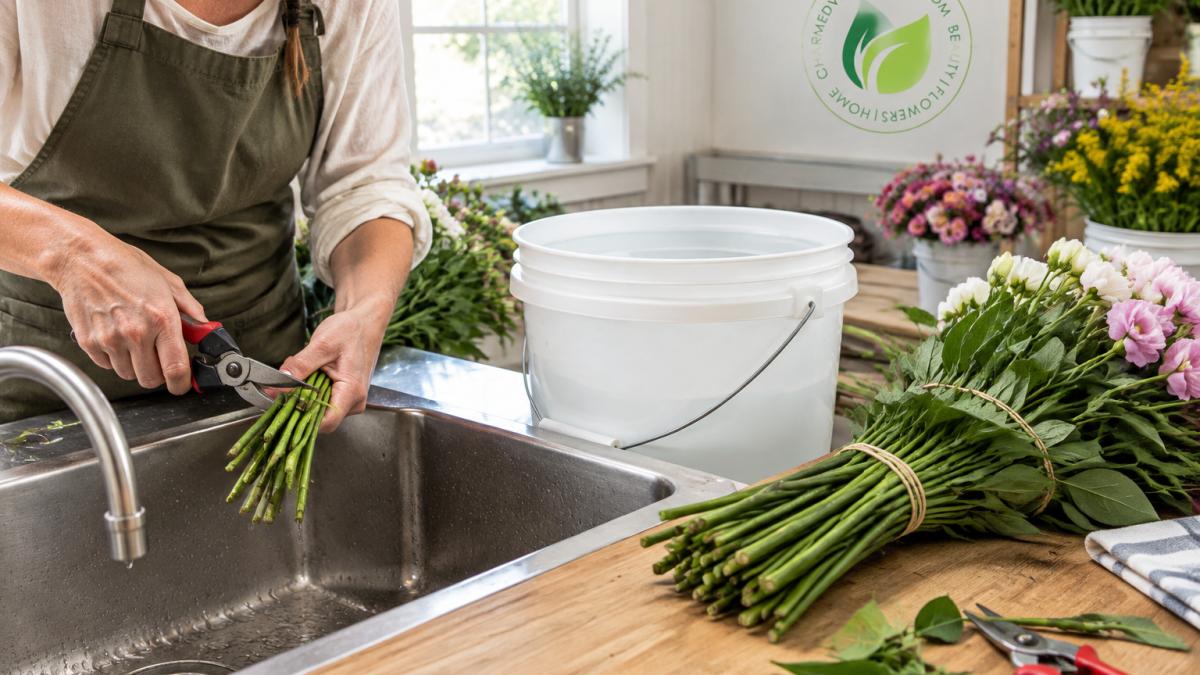
Start with clean tools and a clean workspace. Dirty knives and buckets can carry bacteria into the water and onto the stems.
- Strip the lower leaves. Remove any foliage that would sit below the water line. Leaves left in water rot fast and feed bacteria.
- Recut the stems. Make a fresh angled cut, about one inch off the bottom, to open up more surface for water uptake.
- Sort by variety and bloom stage. Keep open blooms apart from tight buds. Open flowers release more ethylene and need different handling.
- Mix in flower food. Add commercial floral preservative to clean water, following the label directions.
- Place stems in clean buckets. Fill them about halfway with conditioned water so stems can drink right away.
- Cover loosely and label. A light cover slows moisture loss. Label each bucket with the variety and date.
Watch out: Skipping the fresh recut is the most common mistake. A stem sealed with a dried end cannot drink, even if it sits in water all night.
Set the Right Flower Cooler Temperature
Temperature is the lever you control most directly, and it is also where most guides get vague. Because chilling injury can show first as browning at the edges, temperature control matters when flower stems turn brown.
Temperature needs vary by stem type. Check the care guidance for your specific varieties.
- Tropicals (anthurium, bird of paradise, ginger, orchids): 55 to 65 degrees Fahrenheit. These are the exception to every cold-storage rule. Below about 50 degrees they blacken and drop.
- Cold-sensitive temperate stems (hydrangea, lilac, stock, sweet pea, freesia): 38 to 42 degrees. Hydrangeas in particular wilt fast below 38 and benefit from the warmer end of the floral range.
- Most standard cut flowers (roses, carnations, chrysanthemums, alstroemeria, gerbera, tulips): 33 to 38 degrees. This is the classic floral cooler band and the one to default to when you do not know the variety.
A mixed bulk order almost always contains at least one tropical or cold-sensitive stem, so the safe move for a single cooler is 38 to 40 degrees.
Three measurement rules matter more than the dial:
- Measure air temperature, not the set point. Cooler dials drift by several degrees. Put a calibrated thermometer at flower height in the middle of the cooler and check it twice a day.
- Watch the swing, not just the average. A cooler cycling between 34 and 46 degrees does more damage than one held steady at 40. Door openings during load-in are the usual cause; load fast and close up.
- Keep flowers off the evaporator. Cold air blowing directly on blooms causes localized freezing and dehydration. Leave at least a foot between buckets and the fan.
Watch out: Do not trust a cooler's digital display as the flower-level temperature.
Target temperatures differ by stem type, so match the cooler setting to the flowers you are holding.
| Flower group | Temperature | Note |
|---|---|---|
| Tropicals (anthurium, bird of paradise, ginger, orchids) | 55 to 65°F | Blacken and drop below about 50°F |
| Cold-sensitive temperate (hydrangea, lilac, stock, sweet pea, freesia) | 38 to 42°F | Hydrangeas wilt fast below 38°F |
| Most standard cut flowers (roses, carnations, tulips, etc.) | 33 to 38°F | Default band when variety is unknown |
| Hardy woody and field-grown (peonies in tight bud, lilies, delphinium) | 33 to 36°F | Tight buds tolerate cold and open slowly |
| Mixed bulk order (single cooler) | 38 to 40°F | Safe compromise for mixed stems |
Temperature
Why a Regular Household Refrigerator Is Not a Floral Cooler
A household fridge seems like an easy stand-in, but it is usually set much colder than a floral cooler. Flowers stored too cold can suffer chilling injury, browning, limp petals and poor opening.
Some fruits and vegetables stored alongside flowers release ethylene, which can speed up wilting.
If you must use a household refrigerator for a short time, follow these rules:
- Use it only for a few hours, not several days.
- Keep flowers far away from fruit, especially apples, bananas, pears and tomatoes.
- Wrap buckets or stems loosely to hold in humidity.
How Long Flowers Can Stay in the Fridge or Cooler
There is no single answer, because flower type, bloom stage and water quality all change how long bulk stems hold up. Using qualified guidance is safer than promising a fixed number of days.
In general, most cut flowers last longer in a properly set floral cooler than in a household fridge.
Watch for these signs that flowers are running out of time:
- Petals feel soft or papery.
- Stems bend near the top of the bucket.
- Water turns cloudy or smells sour.
When you see these signs, use the flowers quickly or refresh them with a new cut and clean water.
Keeping Flowers Fresh Overnight Without a Cooler
Not everyone has a floral cooler. To keep flowers fresh overnight, a cool, dark room away from heaters, sunny windows and ripening fruit often works well.
Consider these simple steps:
- Recut the stems and refresh the water with flower food.
- Place buckets in the coolest room you have, away from direct sun.
- Keep buckets away from vents, radiators and the stove.
- Cover loosely to slow moisture loss.
- Check in the morning and recut again if needed.
A common mistake is leaving buckets in a hot car or on a sunny porch. Heat builds fast in those spots and can ruin a batch overnight.
Troubleshooting Wilting and Ethylene Damage
Most storage guides treat wilting as one problem. It is at least four, and the fix depends on which one you have. The section below separates them, then covers ethylene, the gas that quietly ruins more bulk orders than any temperature mistake, and the one most home and venue setups ignore.
Diagnose before you treat
- Stems limp but water is clean: air embolisms or a clogged stem end. The stem sealed itself when it was cut dry. Recut about an inch off the bottom under water, then move straight to fresh conditioned water. Do not let the cut end hit air.
- Petals soft, water cloudy or sour: bacterial bloom. Dump the water, scrub the bucket with a diluted bleach solution (about one part household bleach to ten parts water), rinse, and refill with fresh preservative solution. Bacteria clog the xylem the same way a scab clogs a pipe.
- Buds will not open, edges brown: chilling injury. Move the bucket to 60 to 65 degrees and leave it. Do not recut again, the damage is in the petal tissue, not the stem.
Ethylene: the gas you cannot see
Ethylene is a natural plant hormone that triggers ripening and senescence (A quick guide to harvesting and storing melons, squash, and pumpkins). Cut flowers can be sensitive to it. Damage shows up as petal drop (delphinium and lilac are notorious), bud abortion, yellowing leaves, and flowers that open too fast and then collapse.
Common sources in a home or venue setup, in rough order of how often they cause problems:
- Ripening fruit and vegetables: apples, bananas, pears, tomatoes, avocados, stone fruit. A bowl of fruit in the same room is enough in a closed space.
- Wilting or damaged flowers and foliage: dying plant tissue releases ethylene, so one bad bucket can accelerate the decline of the whole cooler.
- Exhaust fumes: running a car or gas-powered equipment near a loading area, or storing flowers in a garage, exposes them to combustion ethylene.
What to do about it:
- Separate. Keep flowers out of any room with ripening produce. In a household fridge, this is the single most important rule, a crisper drawer full of apples is a flower killer.
- Ventilate. Ethylene is a gas; it accumulates in closed coolers and sealed boxes. Run the cooler fan and open the door briefly during checks. Do not seal buckets under plastic for days.
- Remove the source. Pull wilting stems and dropped petals out of the cooler immediately. One dying bucket is a source, not just a victim.
- Use an ethylene absorber if you are holding for days. For a home setup, a small open container of fresh baking soda in the cooler is a low-cost partial measure, not a substitute for ventilation.
- Know which varieties are most sensitive. Delphinium, lilac, snapdragon, sweet pea, freesia, carnation and gypsophila are high-sensitivity. Roses, tulips and chrysanthemums are more tolerant. If your order is heavy on the sensitive list, treat ethylene control as a primary task, not an afterthought.
Emergency revival before an event
If flowers look tired 12 to 24 hours before you need them, work in this order:
- Recut about an inch off each stem at an angle with a clean, sharp knife.
- Hydrate hard. Fill buckets with lukewarm (about 100 degrees Fahrenheit) water plus preservative. Warm water moves into stems faster than cold and helps clear air blocks.
- Cool and cover. Move the buckets to the coolest spot you have, cover loosely with a breathable sheet, and leave them alone for 4 to 6 hours. Fussing slows recovery.
- Triage. Stems still limp after a full hydration cycle are not coming back; pull them so they do not release ethylene onto the healthy batch.
Prevention still beats rescue. Clean tools, fresh cuts, steady cool storage and separation from produce prevent most of what goes wrong.
Booking Your Next Bulk Flower Order with Charmed Valley Farm
Storing bulk flowers well is easier when the flowers arrive in good shape to begin with. At Charmed Valley Farm, our bucket programs serve florists and DIY event hosts in Northern Michigan. For larger arrangements or events, see our Events collection.
Pricing depends on quantity, dates and delivery, so check our website or request a quote for current prices.
Ready to plan your next order? Learn more here.
Frequently Asked Questions
What temperature should a flower cooler be?
Published recommendations vary across sources, with ranges given as 33-35°F, 34-38°F and 38-42°F. Because the ranges differ and no single range fits every variety, check the care guidance for the specific flowers you are storing and keep the cooler steady rather than fluctuating. Consistency matters as much as the exact number, since repeated temperature swings stress cut stems and shorten vase life. Use a standalone thermometer inside the cooler to confirm the actual reading, because the dial setting alone does not tell you what the flowers experience.
Can you store flowers in a regular refrigerator?
A household refrigerator is not necessarily a suitable substitute for a floral cooler. Home refrigerators are usually kept much colder than floral coolers, which can damage some blooms. The supplied sources do not provide a controlled comparison or quantify the effect, so treat a home fridge as a short-term option only. If you must use one, keep flowers away from fruit, which releases ethylene gas that speeds wilting, and check the stems regularly.
How long can cut flowers stay in a cooler?
The research available for this guide does not establish a single verified number of days for every flower type, so storage life depends on the variety, its stage of bloom and how well it was conditioned before going in. Flowers stored in a cooler at a steady temperature, with clean water and stems prepared correctly, generally hold quality longer than flowers left at room temperature. Inspect the bunches every day, remove any stems that show wilting or browning, and use the oldest stock first.
