
Last Updated: November 2, 2026
Quick Summary
Facial redness after exercise usually fades on its own within 30 to 60 minutes as your body cools down. To reduce it faster, slow your movement for 5 to 10 minutes, move to a cool ventilated spot, and apply a cool compress to your cheeks and neck for 2 to 3 minutes at a time.
- Exercise in a cool, well-ventilated space and wear lightweight, breathable fabric to limit overheating.
- Avoid jumping into a cold shower or pressing ice directly on your face after a workout.
- Rinse with lukewarm to cool water and skip exfoliating acids, scrubs, and cleansing brushes right after exercise.
- Moisturize while skin is still slightly damp, choosing a light lotion over a heavy occlusive balm if skin feels hot.
- See a dermatologist if redness lasts for hours or days, or comes with bumps, stinging, or visible blood vessels.
Table of Contents
- Why Your Face Turns Red During Exercise
- How to Prevent Red Face When Working Out
- Cool Down Gradually to Calm Facial Flushing
- Build a Post-Workout Skincare Routine That Soothes Skin
- Botanical Ingredients for Sensitive Skin
- Normal Flushing vs. Rosacea: When to See a Dermatologist
- Track Your Triggers to Manage Exercise-Induced Redness
- Find Calming Skincare at Charmed Valley Farm
- Frequently Asked Questions
Why Your Face Turns Red During Exercise
Facial redness after exercise is a normal response to increased blood flow, and it usually fades on its own within 30 to 60 minutes. When you work out, your body pushes more blood toward the skin to release heat (Mechanisms and modifiers of reflex induced cutaneous vasodilation and vasoconstriction in...). That rush of blood through widened vessels is what you see in the mirror.
Here is the simple version: your body temperature rises, your blood vessels widen to cool you down, and your face flushes.
This guide from Charmed Valley Farm walks you through how to reduce facial redness after exercise, step by step. Below, we cover cooling methods, a timed post-workout routine, and how to tell ordinary flushing from something that needs a doctor.
Most guides stop at "drink water and cool down." That advice is fine, but it leaves out the part that matters: what to do in the first ten minutes after you stop moving.
How to Prevent Red Face When Working Out
The best way to prevent a red face when working out is to keep your body from overheating in the first place. You cannot stop flushing completely, but you can turn down the volume.
A review of physical activity and skin health notes that cleansing and moisturizing skin promptly after exercise may help maintain the skin barrier and prevent flare-ups. That makes the post-workout window worth protecting.
Try these habits before you start:
- Exercise in a cool, well-ventilated space. A fan or open window helps heat dissipation.
- Wear lightweight, breathable fabric. Light colors reflect heat better than dark ones.
- Drink water before you sweat. Start hydrated, not thirsty.
- Lower your workout intensity on hot days or when you feel flushed early.
- Choose shade for outdoor sessions.
One honest note: some redness is not preventable. What you can do is shorten it.
Cool Down Gradually to Calm Facial Flushing
A gradual cooldown is a gentle way to calm post-workout flushing. Easing down rather than jumping straight into a cold shower lets your blood vessels narrow at a natural pace.
Here is the sequence we recommend:
- Slow your movement for 5 to 10 minutes. Walk, stretch, or do light movement.
- Move to a cool, ventilated spot out of direct sun.
- Apply a cool compress to your cheeks and neck for 2 to 3 minutes at a time.
- Mist your face with cool water if you feel overheated.
- Sip water steadily rather than gulping it all at once.
Low-intensity movement is the key. It brings your heart rate down without a sudden temperature swing, and your facial flushing fades with it.
Build a Post-Workout Skincare Routine That Soothes Skin
The right post-workout skincare routine calms redness and protects your skin barrier. Sweat left on the skin can trigger irritation, so timing matters more than the number of products you use.
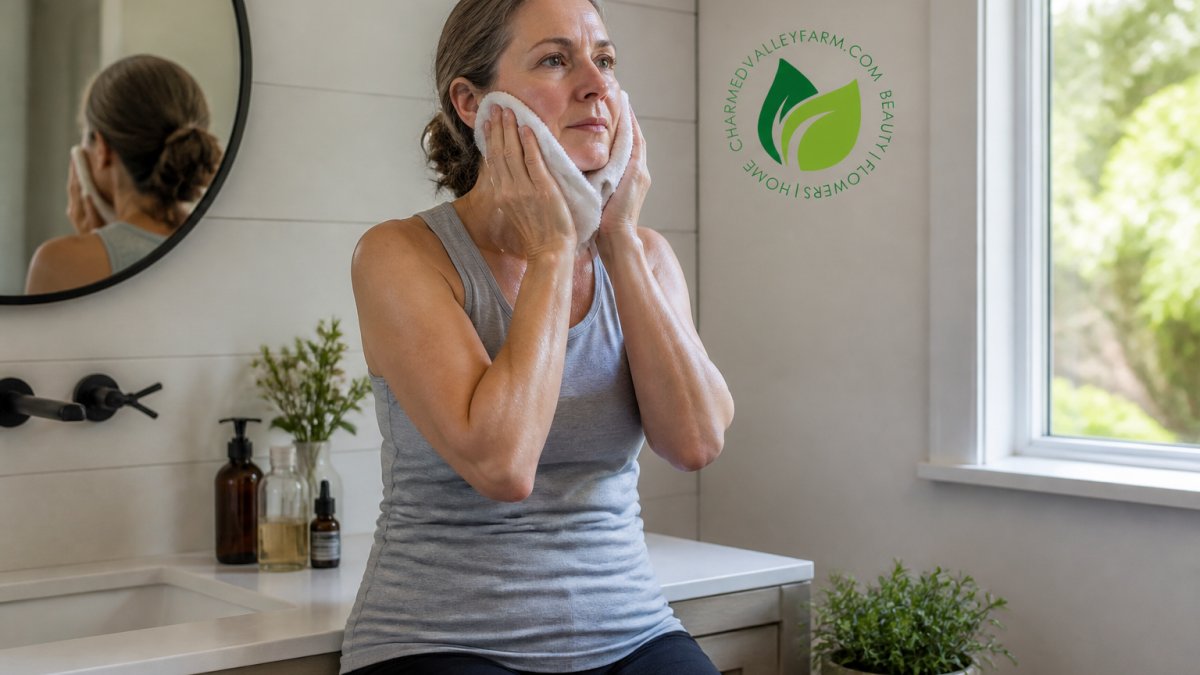
Follow this timed routine, in order:
- Minutes 0-5: stop the heat load. Step out of direct sun, get near a fan or open window, and loosen or remove damp clothing. Do not jump into a cold shower or press ice directly on your face. A sudden cold shock can sting already-warm skin and, in people with reactive skin, trigger more flushing rather than less. A cool, not ice-cold, damp washcloth on the cheeks and neck for 2 to 3 minutes at a time is the safer first step.
- Minutes 5-10: rinse, do not scrub. Use lukewarm to cool water, or a gentle non-foaming cleanser if you are sweaty or wore sunscreen. Keep your hands light; friction and hot water both strip the barrier. Skip exfoliating acids, scrubs, and cleansing brushes right after a workout, your skin is warm and more permeable, and those steps are more likely to sting now than later.
- Minutes 10-15: pat dry and check in. Pat with a clean towel instead of rubbing. This is also the moment to notice whether redness is fading or intensifying; if it is spreading, stinging, or coming with dizziness, stop the routine and cool down further.
- Minutes 15-20: moisturize while skin is still slightly damp. A simple moisturizer with ceramides, glycerin, or squalane helps seal in water. A flower-based face toner for sensitive skin can also fit this step for gentle, soothing hydration. If your skin feels hot, a light lotion beats a heavy occlusive balm, which can trap heat.
- Minutes 20-30: leave it alone. Give the barrier time to settle before applying makeup, retinol, vitamin C, or anything with fragrance. If you must go out, mineral sunscreen is the gentlest choice on flushed skin.
Watch out: hot showers, ice directly on the face, harsh scrubbing, and layering strong actives immediately after exercise can all make post-workout redness worse. If your skin stings or burns rather than simply feels warm, rinse with cool water and stop adding products.
A realistic expectation: this routine may soothe discomfort and support the barrier, but no cleanser or moisturizer has been shown to switch off exercise-induced flushing. Most of the visible fading comes from cooling down and time, usually within 30 to 60 minutes.
Botanical Ingredients for Sensitive Skin
Botanical ingredients for sensitive skin work by calming irritation rather than masking redness. Think of them as support for your skin barrier, not a cure.
Ingredients worth looking for include:
- Chamomile and calendula for soothing
- Aloe for cooling hydration
- Green tea for antioxidant support
- Rose and floral extracts for gentle calming
These plant-based ingredients fit a farm-to-face approach, where what touches your skin stays close to nature. If you want the deeper science, read our guide to the benefits of botanical ingredients in skincare.
Watch out: "organic" on a label is not a guarantee. Look for full ingredient lists, not marketing claims.
Normal Flushing vs. Rosacea: When to See a Dermatologist
Normal facial flushing fades within about an hour and comes with no pain. Rosacea is different: redness persists, often with bumps, stinging, or visible blood vessels (the American Academy of Dermatology). This section is general education, not a diagnosis, only a clinician can tell you what is causing your redness.
Facial redness is the visible reddening of the skin caused by widened blood vessels near the surface. It is common during and after exercise and usually harmless.
A useful way to think about it is by pattern, not by a single episode. Ordinary exercise flushing tends to be:
- Triggered by exertion or heat and eased by cooling down.
- Short-lived, typically fading within 30 to 60 minutes, and rarely lasting more than a couple of hours.
- Symmetric and even, without raised bumps, pus, or crusting.
- Comfortable, warm, perhaps, but not painful or itchy.
Redness that behaves differently deserves a closer look. Consider seeing a dermatologist if you notice:
- Duration: redness that lasts for hours or days after you have cooled down, or that never fully clears between workouts.
- Recurrence: flushing that now comes from triggers that never bothered you before, sun, heat, spicy food, alcohol, or mild skincare.
- Accompanying signs: bumps, pustules, stinging, burning, itching, swelling, or visible broken blood vessels across the cheeks and nose.
- Progression: symptoms that keep getting worse over weeks or months rather than staying stable.
- Systemic symptoms: flushing with dizziness, fainting, palpitations, wheezing, or hives, seek medical care promptly rather than waiting.
If you suspect rosacea, a gentle routine matters more than a complicated one, and care from a clinician comes first. You can follow an organic skincare routine for rosacea-prone skin while you wait to see a professional.
Watch out: do not use a redness-reducing product to "test" whether you have rosacea. If you are already exploring options, our organic anti-aging skincare for rosacea review covers products formulated for reactive skin. If redness is persistent, painful, or spreading, stop experimenting with new products and get a professional skin evaluation.
Track Your Triggers to Manage Exercise-Induced Redness
A simple symptom log is the most underrated tool for managing exercise-induced redness. Most people guess at their triggers; a log shows them.
Track these for two weeks:
- Workout type and duration
- Room temperature and ventilation
- What you drank before and during
- How long the redness lasted
- Any dietary triggers, like spicy food or alcohol
| What You Track | Why It Matters | What to Do With It |
|---|---|---|
| Workout intensity | Higher intensity means more heat | Lower intensity on hot days |
| Environment | Heat and poor airflow worsen flushing | Add a fan or move to shade |
| Hydration | Dehydration worsens temperature regulation | Drink water before you start |
| Redness duration | Shows whether flushing is normal | See a doctor if it persists |
| Dietary triggers | Some foods widen blood vessels | Note patterns, adjust |
After two weeks, patterns appear. You will know which workouts leave you flushed longest, and which cooling steps actually help.
Find Calming Skincare at Charmed Valley Farm
Redness after exercise is normal, but you do not have to just wait it out. A cool environment, a gradual cooldown, steady hydration, and a gentle post-workout routine all shorten the flush.
At Charmed Valley Farm, our #Farm2Face line is built on chemical-free, organic ingredients for sensitive, mature skin. The Flower Face collection is a customer favorite. You can also join one of our wellness workshops and retreats to build habits that support your skin and your whole self.
Your face will still flush after a hard workout, and that is fine. What changes is how quickly you recover and how well your skin barrier holds up. Charmed Valley Farm makes chemical-free, botanical skincare rooted in our #Farm2Face philosophy. Explore the Flower Face collection and build a post-workout routine your skin will thank you for. Get started with Charmed Valley Farm and give your skin the calm it deserves.
Frequently Asked Questions
How long does a red face last after exercise?
For most people, exercise-induced facial redness fades within 30 to 60 minutes as your body temperature drops and blood vessels return to normal. A gradual cooldown, cool compress, and drinking water can shorten that window. If redness lingers for several hours or appears without exercise, track how long it lasts and share that pattern with a dermatologist, since persistent flushing can point to rosacea or another condition.
What are the best natural ingredients to soothe skin redness?
Look for botanical ingredients known for calming sensitive skin, such as chamomile, calendula, aloe, and oat extract. These appear in gentle moisturizers and mists that support the skin barrier after sweat and heat. Patch-test any new product on your inner arm first, especially if your skin is reactive. A short, fragrance-free routine with one or two soothing botanicals usually works better than layering many products at once.
Can skincare products help reduce exercise-induced flushing?
Skincare cannot stop the blood flow that causes flushing, but it can support recovery. Cleansing promptly after sweat and applying a gentle moisturizer may help maintain the skin barrier and prevent flare-ups, . Avoid harsh exfoliants or strong actives right after a workout. A simple post-workout skincare routine with calming, fragrance-free formulas gives sensitive skin the best chance to settle.
When should I be concerned about post-workout facial flushing?
See a dermatologist if redness lasts for hours, comes with burning, stinging, or bumps, or shows up when you are not exercising. Ordinary flushing is temporary and symmetrical. Persistent redness, visible blood vessels, or flare-ups triggered by heat, spicy food, or skincare products are worth a skin evaluation. Bring notes on how long symptoms last and what triggers them so your dermatologist can distinguish normal flushing from rosacea or other conditions.
